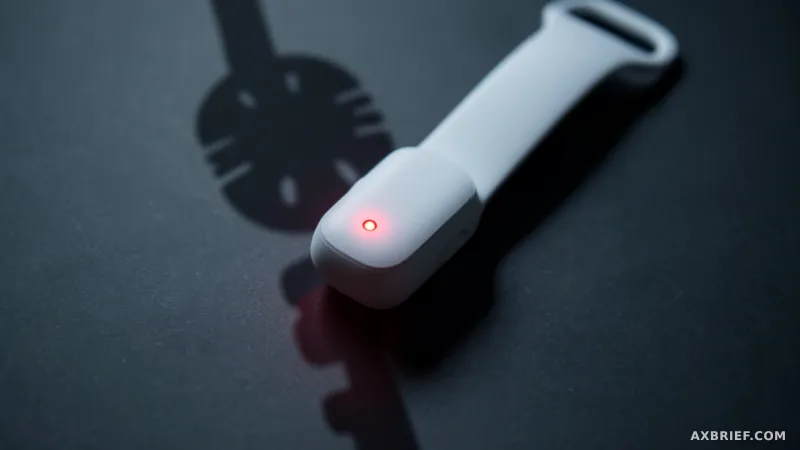
The modern professional exists in a state of perpetual documentation. Between back-to-back Zoom calls and fragmented Slack threads, the struggle to capture every actionable insight without missing the actual conversation has become a primary source of cognitive load. For years, the industry has chased the dream of ambient intelligence—a system that listens, understands, and remembers everything so the human can simply be present. Amazon is now attempting to materialize this dream through Bee, an AI-powered wrist wearable designed to turn the chaos of daily speech into a structured digital archive.
The Mechanics of Ambient Memory
Bee operates as a dedicated hardware bridge between physical conversation and cloud-based synthesis. The user experience begins with a physical interaction: once the device is synced with its companion mobile app and basic user information is provided, a single press of a physical button triggers the recording process. A flashing green LED provides the only visual cue that the device is active, signaling to the wearer and those around them that the conversation is being captured. Once the recording ends and the light goes out, the audio is processed through Amazon's cloud infrastructure to generate a full text transcription and a condensed, readable summary.
Beyond simple audio capture, Bee is designed to integrate deeply into the user's digital ecosystem. By syncing with the user's calendar, the device transforms from a passive recorder into a proactive assistant, providing schedule alerts and reminders based on the context of the recorded interactions. However, this level of integration requires an expansive set of permissions that has sparked immediate concern. To function, Bee demands access to the user's real-time location, stored photos, contact lists, calendar events, and mobile notifications. The data collection extends even further into the biological realm; users can optionally share sensitive health metrics, including sleep patterns and resting heart rate, to allow the AI to better understand the user's physical state.
The Friction Between Utility and Privacy
On the surface, Bee delivers a compelling value proposition for the high-volume meeting culture. In business scenarios, the device excels at segmenting conversations and producing summaries that are functionally equivalent to established AI transcription services like Otter or Granola. For a project manager or an executive, the ability to offload note-taking to a wrist-worn device is a significant productivity gain. Yet, this utility creates a fundamental tension: the hardware tax. Developers and tech enthusiasts are already questioning why a dedicated wearable is necessary when software-based solutions already exist on the smartphones everyone already carries.
This skepticism deepens when looking under the hood of the AI's performance. While the final summaries are polished, the raw transcription—the foundation upon which those summaries are built—is often erratic. Users have reported significant struggles with speaker identification, frequently requiring manual input to assign names to voices, or finding that critical chunks of dialogue have been omitted entirely. This creates a paradoxical user experience where the AI provides a clean narrative of a meeting, but the actual evidence of what was said remains messy and unreliable.
Then there is the psychological weight of the device itself. While Amazon emphasizes its security posture, citing encryption for data both in transit and at rest, as well as third-party security audits and continuous monitoring, the reality of wearing a 24/7 recording device is jarring. The requirement for such broad device permissions suggests that Bee is not just a tool for meeting minutes, but a data-harvesting node for Amazon's broader ecosystem. The trade-off is stark: the user gains a perfect digital memory, but in exchange, they grant a corporate entity unprecedented access to their physical location, social circle, and biological health.
Whether the market will accept a permanent wrist-worn microphone depends entirely on whether the convenience of an automated summary outweighs the discomfort of total surveillance.