The current era of generative AI is defined by a desperate scramble for compute. For the world's leading labs, the ability to scale a model is no longer just a matter of algorithmic brilliance or data quality, but a grueling logistical battle for H100 clusters and power-hungry data centers. Most AI companies have spent the last few years as tenants, renting their intelligence from a handful of hardware giants and hoping the supply chain holds. This dependency creates a ceiling on innovation, where the architecture of the model is forced to bend to the limitations of the available silicon.
The Blueprint for Silicon Independence
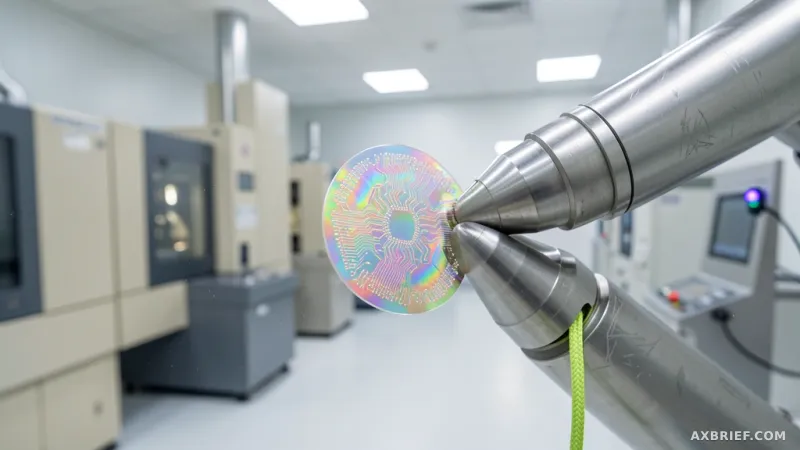
Anthropic is now moving to break this cycle by establishing a dedicated custom silicon team. The company has begun aggressively recruiting engineers with deep expertise in chip design, signaling a strategic pivot toward owning the physical layer of its computing stack. This internal organization is tasked with developing proprietary hardware specifically tailored to the operational demands of the Claude model family. By building a team capable of taking a chip from concept to tape-out, Anthropic is positioning itself to reduce its reliance on external hardware vendors and create a computing environment optimized for its specific workloads.
This move toward self-sufficiency does not mean Anthropic is abandoning its existing partnerships. The company continues to maintain critical infrastructure agreements with AWS, Google, Nvidia, and AMD. These relationships ensure a steady flow of the massive amounts of compute required for current training and inference cycles. Instead, the custom silicon initiative acts as a diversification strategy. By layering its own design capabilities on top of these established supply chains, Anthropic is creating a hybrid infrastructure model that balances immediate stability with long-term strategic autonomy.
The Shift Toward Hardware-Model Co-Design
The core objective of this initiative is the implementation of co-design, a process where the AI model and the hardware it runs on are developed in tandem. Traditionally, AI researchers build models and then optimize them to run on general-purpose GPUs. Co-design flips this script, allowing Anthropic to build accelerators that are mathematically aligned with the specific tensor operations and memory access patterns of its models. This approach eliminates the overhead inherent in general-purpose hardware, directly increasing execution speed and reducing the energy cost per token.
Anthropic is not alone in this pursuit of vertical integration. The industry is witnessing a systemic migration away from general-purpose silicon. OpenAI has collaborated with Broadcom to develop the Jalapeño chip, specifically engineered to handle inference workloads more efficiently. Google DeepMind has long leveraged the Tensor Processing Unit (TPU) to maintain a performance edge within the Alphabet ecosystem. Similarly, Meta has deployed its Meta Training and Inference Accelerator (MTIA) to optimize its own massive AI workloads. Each of these companies has realized that the most efficient path to scaling is to remove the gap between the software's intent and the hardware's execution.
To turn these designs into physical reality, Anthropic requires a manufacturing partner capable of cutting-edge fabrication. According to reports from The Information, Anthropic has been exploring a partnership with Samsung to manufacture its custom chips. Partnering with a foundry like Samsung allows Anthropic to exert greater control over the production pipeline, reducing the uncertainty of chip procurement and ensuring that the hardware is delivered on a timeline that matches the model's release cycle. As demand for Claude continues to surge, the ability to scale infrastructure without being throttled by a third-party roadmap becomes a competitive necessity.
Moving from a consumer of chips to an architect of silicon fundamentally changes the economics of AI. By optimizing the hardware for the specific needs of its models, Anthropic can drastically lower the cost of inference and unlock performance gains that are impossible on off-the-shelf hardware.
This strategic pivot transforms Anthropic from a pure-play AI research lab into a vertically integrated infrastructure power.