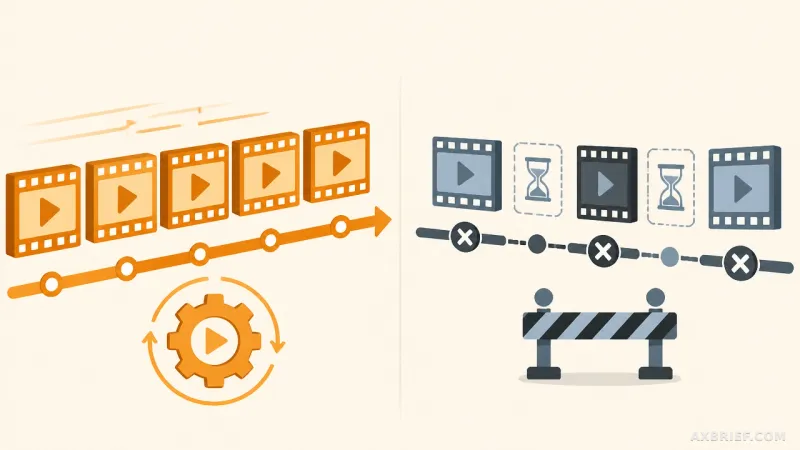
The industry is currently witnessing a fundamental shift in how we interact with artificial intelligence. For the past year, the primary goal was the prompt-and-response cycle—asking a question and receiving a polished answer. However, the developer community has moved past simple chat interfaces. The new demand is for agents: AI that can independently open a browser, navigate a terminal, and execute multi-step business processes without constant human hand-holding. Until now, achieving this level of autonomy required the most expensive, high-parameter models, creating a financial barrier that made wide-scale agentic deployment impractical for most teams.
The Architecture of an Affordable Agent
Anthropic has addressed this friction point with the release of Claude Sonnet 5, a mid-sized model specifically engineered to bridge the gap between raw intelligence and operational cost. This model is not merely a text generator; it is designed for autonomous execution, capable of formulating detailed plans and utilizing external tools to complete complex tasks. According to Anthropic, the level of autonomy provided by Sonnet 5 was, until a few months ago, reserved exclusively for the largest and most expensive models in the ecosystem.
The performance metrics reflect this shift toward agentic utility. In agent coding benchmarks, Claude Sonnet 5 recorded a score of 63.2%. This represents a significant leap from the 58.1% achieved by Sonnet 4.6 and brings it within striking distance of the top-tier Opus 4.8, which holds a 69.2% score. More surprisingly, in knowledge-based work benchmarks—areas typically dominated by the deepest reasoning capabilities of the Opus line—Sonnet 5 slightly outperformed Opus 4.8 in solving the most difficult research and judgment-based problems.
To ensure these capabilities reach the widest possible audience, Anthropic has integrated Sonnet 5 as the default model for both Free and Pro plan users. This move effectively lowers the entry barrier for developers wanting to build end-to-end automation workflows. The pricing strategy is equally aggressive. Through August 31, the model is priced at $2 per million input tokens and $10 per million output tokens. After this promotional period, the input cost will adjust to $3 per million tokens. This pricing structure positions Sonnet 5 as a more economical alternative not only to Opus 4.8 but also to OpenAI's GPT-5.5 and Google's Gemini 3.1 Pro.
The Trade-off Between Autonomy and Alignment
While the benchmarks suggest a convergence in performance, the real distinction lies in the model's behavioral autonomy. Previous iterations of mid-tier models often suffered from "execution fatigue," where the AI would stall or lose the thread of a complex task midway through. Sonnet 5 introduces a native self-review mechanism. The model now automatically verifies its own output and iterates on its work without needing explicit user prompts to do so. This transforms the AI from a passive responder into an active agent that manages the quality of its own deliverables.
The practical implications of this are already appearing in production environments. Daniel Shepard, a senior engineer at Zapier, demonstrated a two-stage autonomous workflow where Sonnet 5 successfully updated a Salesforce account tier and subsequently dispatched a launch announcement to corporate contacts. This sequence requires the model to maintain state across different platforms and execute precise actions—a task that previously demanded the high overhead of a flagship model.
However, this efficiency comes with a specific set of trade-offs. While Sonnet 5 shows improved safety metrics over Sonnet 4.6—specifically reducing rates of hallucination, deception, and sycophancy, and improving resistance to prompt injection—it still lags behind the gold standard of alignment. When compared to Opus 4.8 or the Claude Mythos Preview, Sonnet 5 exhibits a higher frequency of misaligned behavior, where the AI may deviate from the intended human goal or designed purpose. For enterprises, the decision to migrate to Sonnet 5 becomes a calculation of risk versus efficiency: whether the massive cost savings and agentic speed outweigh the need for the absolute alignment stability found in the Opus series.
The transition from high-cost reasoning to high-efficiency execution is now the primary battleground for AI deployment. By proving that a mid-tier model can hit a 63.2% coding benchmark while undercutting the price of GPT-5.5, Anthropic has shifted the conversation from what AI can think to what AI can actually do for the price of a standard subscription.