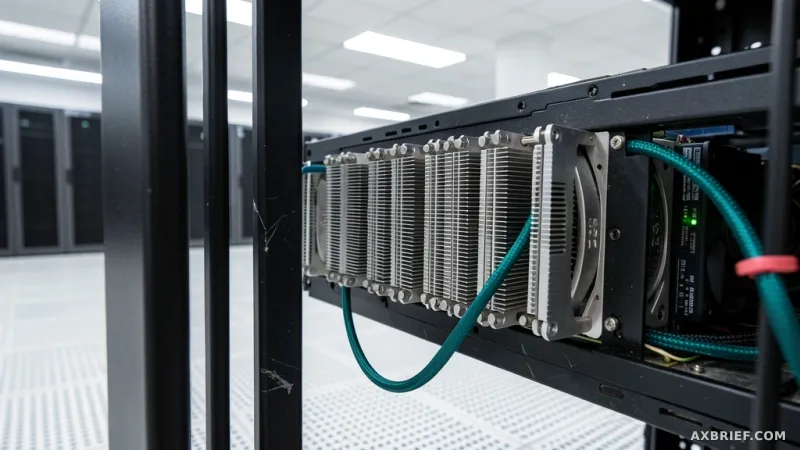
The cursor blinks rhythmically on the screen, delivering a response one word at a time. For most users, this streaming animation is a familiar part of the AI experience, but for developers building real-time agents and high-throughput enterprise systems, it represents a critical bottleneck. The industry has long struggled with the tension between model intelligence and the physical limits of inference speed, where the larger the model, the slower the output. This week, the conversation shifted from simply increasing parameter counts to optimizing the very way tokens are delivered.
The Architecture of DSpark and DeepSpec
DeepSeek has addressed this latency gap by releasing DSpark, a new inference optimization framework designed to accelerate response speeds without compromising the quality of the output. Released under the MIT license, DSpark allows developers to modify and deploy the system freely, ensuring that the benefits of high-speed inference are accessible to the broader open-source community. Along with the framework, DeepSeek provided a comprehensive technical paper and a set of model checkpoints to facilitate immediate implementation.
To support the ecosystem, the release includes DeepSpec, a dedicated codebase specifically for the training and evaluation of speculative decoding systems. DeepSpec provides the necessary tools for developers to train their own optimization modules and benchmark their performance. This is a significant move for companies operating open-weight models, as it provides a concrete technical standard for measuring hardware efficiency and user-facing response times.
In real-world service environment tests, the impact on aggregate throughput was immediate. When targeting a service goal of 80 tokens per second (tps) per user, the DeepSeek-V4-Flash model demonstrated a 51 percent increase in throughput. Similarly, the DeepSeek-V4-Pro model, with a target of 35 tps per user, saw a 52 percent improvement. These results indicate that DSpark can handle significantly more concurrent requests than the previous MTP-1 system, particularly in environments where strict latency targets are enforced.
Breaking the Sequential Bottleneck
Traditional LLM inference is a sequential slog. The model generates one token, feeds it back into the input, and generates the next. This linear process is the primary cause of the perceived slowness in AI chatbots. DSpark breaks this cycle through a technique known as speculative decoding. Instead of relying solely on the massive target model to do all the heavy lifting, DSpark introduces a lightweight draft component that predicts a sequence of likely future tokens in advance.
The large model then acts as a verifier. Rather than generating tokens one by one, it reviews the entire proposed block of tokens from the draft model in parallel. If the draft's predictions are accurate, the system accepts multiple tokens in a single step, effectively leaping forward in the generation process. When the draft model makes a mistake, the system simply rejects the incorrect tokens and corrects them using the target model before resuming the process. This hybrid approach maintains the original model's intelligence while drastically reducing the time the user spends waiting.
The performance gains for individual users are even more striking than the aggregate throughput numbers. In tests comparing DSpark to the MTP-1 baseline, the DeepSeek-V4-Flash model recorded speed improvements ranging from 60 percent to 85 percent. The DeepSeek-V4-Pro model followed closely, showing gains between 57 percent and 78 percent. These figures are measured under identical system capacity conditions, proving that the framework directly reduces the time it takes for a single user to receive a complete response.
This optimization is not limited to the DeepSeek ecosystem. The released checkpoints and test results include support for Alibaba's Qwen and Google's Gemma. Because the framework is open, operators who control their own model weights and serving stacks can train or fine-tune DSpark-style draft modules for any target model. This means any organization deploying open-weight models can now build a customized acceleration layer to optimize their specific hardware and latency requirements.
The ultimate goal of DSpark is to solve the economic challenge of serving large-scale models in real-time. The most expensive part of AI deployment is maintaining hardware efficiency while providing a speed that satisfies the end user. By increasing the efficiency of each inference pass, DSpark lowers the operational cost of consumer chatbots and coding assistants. More importantly, it provides the necessary infrastructure for complex agentic workflows—where an AI must perform multiple internal reasoning steps before answering—to become commercially viable.
As the industry moves toward autonomous agents that perform multi-step tasks, the time spent waiting for tokens becomes a compounding cost. DSpark transforms this waiting period from a technical limitation into a configurable choice.
In the current AI landscape, the competitive edge is shifting from the size of the model to the efficiency of the inference.