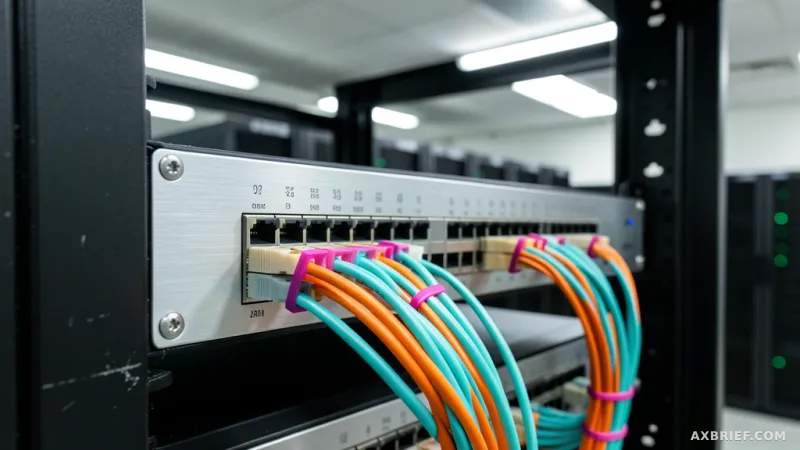
The transition from a successful AI pilot to a production-grade environment is where most enterprise projects currently stall. Engineering teams often find that while their models perform beautifully in isolated tests, the actual movement of data at scale becomes a silent killer of performance. The industry has spent the last year obsessing over GPU clusters and parameter counts, yet many organizations are discovering that their high-cost compute resources are spending a significant amount of time idling, waiting for data to arrive from storage. This gap between the storage layer and the compute layer is the primary friction point for the next wave of AI deployment.
The Architecture of Programmable Data Delivery
To address this systemic bottleneck, F5 has introduced a dedicated data delivery optimization layer designed specifically for AI workloads. The solution centers on the integration of Dell ObjectScale, a high-performance object storage solution, and F5 BIG-IP, an application delivery controller. Rather than allowing a direct, unmanaged connection between the AI compute layer and the S3 storage, F5 inserts a programmable control point that manages how data flows across the network.
This delivery layer is built upon three fundamental technical pillars. The first is observability, which provides real-time visibility into latency, throughput, and flow states, allowing operators to see exactly where data is stalling. The second is programmability, which enables the use of policy-based controls to manage dynamic routing, traffic optimization, rate limiting, and automated failover. The third is failure-awareness, ensuring that the system maintains resilience even when faced with network degradation, storage throttling, or total service interruptions. The efficacy of this approach was validated through testing by SecureIQLab, which confirmed that these security and resilience features could be integrated without degrading overall data throughput.
From Point-to-Point Fragility to Intelligent Routing
Most existing AI infrastructures rely on a point-to-point architecture where the S3 client connects directly to the S3 storage. In a controlled experimental setting, this simplicity is an advantage. However, in a production environment characterized by continuous and concurrent traffic, this model reveals a critical vulnerability. When a specific storage node fails or a sudden spike in traffic occurs, the system lacks a centralized control mechanism to mitigate the impact. This leads to a cascading failure of retries and timeouts that can freeze the entire AI pipeline.
F5 BIG-IP transforms the storage edge into a programmable control point, acting as the intelligence layer between the storage and the compute resources. By implementing Quality of Service (QoS) protocols, the system can prioritize traffic for mission-critical workloads, ensuring that high-priority AI tasks are not starved of data. Furthermore, it introduces rate limits and connection limits to protect the S3 storage infrastructure from what is essentially an accidental DDoS attack, which occurs when misconfigured AI compute layers flood the storage system with an unsustainable volume of requests.
This capability becomes even more vital in hybrid and multi-cloud environments. The complexity of managing different security policies, identity systems, and governance requirements across clouds often creates fragmented data paths. F5 addresses this by combining observability with programmable traffic management to create a closed-loop feedback system. This system intelligently routes and balances traffic in real time across distributed environments, enforcing consistent policies across various failure domains to ensure the data path remains open and optimized.
The shift in focus here is a move away from viewing AI performance through the narrow lens of GPU utilization. While a high GPU utilization percentage is often seen as a sign of efficiency, it is a misleading metric if the data path is unreliable. When the delivery layer is unoptimized, the resulting inefficiency manifests as a direct increase in operational costs and a degradation of service quality. In a Retrieval-Augmented Generation (RAG) system, for example, a delay in data delivery means the model cannot access the most recent context in time, which significantly increases the likelihood of hallucinations or outdated responses.
Ultimately, the goal is to move toward an engineering discipline where failure is treated as a normal state rather than an anomaly. Designing for a world where latency, congestion, and partial outages are inevitable allows teams to build a resilient data path that can absorb these shocks. By implementing an observable and failure-aware delivery layer, organizations can finally move their AI workloads out of the pilot phase and into a stable, scalable production environment.