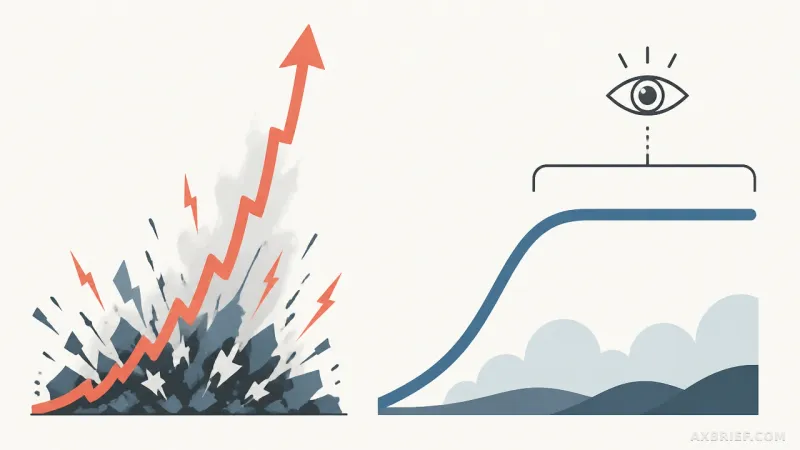
For months, the prevailing tension in the AI development community has not been about whether a model can solve a complex problem, but whether it can do so without bankrupting the project. Engineers have lived in a state of constant compromise, oscillating between high-intelligence models that are too slow and expensive for production and lightweight models that lack the nuance required for reliable agentic workflows. This gap between the prototype and the product has created a ceiling for AI deployment, where the token tax often outweighs the operational gain.
The New Economics of GPT-5.6
OpenAI has responded to this friction by aggressively restructuring the pricing of the GPT-5.6 series, targeting the low-end inference market with a drastic reduction in costs for its smallest model. The most significant shift is the pricing of Luna, the fastest and most compact model in the series. OpenAI has slashed the combined cost of Luna from 7 dollars per million tokens to just 1.40 dollars, representing an 80 percent price drop. When broken down by usage, the cost is now 0.20 dollars per million input tokens and 1.20 dollars per million output tokens.
The mid-tier model, Terra, also saw a price adjustment to make it more accessible for scaling. Its combined cost dropped by 20 percent, moving from 17.50 dollars to 14 dollars per million tokens, with a specific split of 2 dollars for input and 12 dollars for output. Meanwhile, the flagship Sol model maintains its standard mode pricing at 5 dollars for input and 30 dollars for output.
However, the most intriguing addition to the lineup is the introduction of Sol Fast Mode. This premium tier is designed for enterprises that cannot compromise on intelligence but are throttled by latency. While the cost is double that of the standard mode—totaling 70 dollars per million tokens with 10 dollars for input and 60 dollars for output—it delivers a throughput increase of up to 2.5 times. This creates a tiered ecosystem where Luna now costs one-tenth of Terra, and Terra remains 60 percent cheaper than the standard Sol model.
The Shift Toward Production Efficiency
This pricing overhaul is not a random discount but a calculated strike against the diverging strategies of Google and Anthropic. For a while, the industry was locked in a race for the highest benchmark score, but the battlefield has shifted toward the total cost of ownership for production-grade AI. Google has leaned heavily into this by releasing Gemini 3.6 Flash and 3.5 Flash-Lite, focusing on efficient agent workloads. Specifically, Gemini 3.5 Flash-Lite was positioned at a combined cost of 2.80 dollars, a price point OpenAI has now decisively undercut with the 1.40 dollar Luna offering.
Anthropic has taken a different path with the release of Claude Opus 5. Rather than cutting the price, they maintained the same pricing as the previous Opus 4.8 at 30 dollars combined. Their strategy is based on increasing the capability per dollar—essentially giving the user a more powerful engine for the same price. This creates a fascinating three-way tension: OpenAI is slashing the entry price, Google is optimizing for token efficiency, and Anthropic is boosting the value of the premium tier.
The real insight for developers lies in the intelligence-to-cost ratio. Data from Artificial Analysis indicates that the newly discounted Luna model actually outperforms Gemini 3.6 Flash and Gemini 3.1 Pro in several key areas. This means the industry is hitting a tipping point where the cheapest models are no longer just for simple classification or summarization; they are becoming capable enough to handle complex logic that previously required a flagship model.
For companies running latency-sensitive workloads, the Sol Fast Mode introduces a new variable into the equation. In autonomous agent systems where real-time response is the primary driver of user experience, the ability to increase throughput by 2.5 times justifies the premium cost. The decision-making process for CTOs has evolved from choosing the smartest model to finding the optimal point on the Pareto curve of intelligence, speed, and cost.
As the GPT-5.6 series pushes the boundaries of this efficiency curve, the barrier to deploying high-performance inference has effectively collapsed, turning what was once a luxury into a commodity.