Software engineers are currently witnessing a fundamental shift in how they interact with their IDEs. The industry has moved past simple autocomplete suggestions into the era of agentic workflows, where AI doesn't just suggest a line of code but reads entire repositories, plans multi-file refactors, and iterates on bugs autonomously. However, this shift has introduced a new bottleneck: the staggering cost of token consumption. When an agent enters a loop of reading, writing, and self-correcting, the API bill scales exponentially, often making high-end frontier models prohibitively expensive for large-scale production deployment.
The Architecture of Grok 4.5 and the Colossus Engine
SpaceX has entered this fray with the release of Grok 4.5, a model specifically engineered for coding and the execution of autonomous agents. This release marks the first tangible output of SpaceX's strategic $60 billion acquisition of Cursor, the AI coding startup. By integrating Cursor's specialized technical data with SpaceX's massive compute resources, the company is attempting to redefine the price-to-performance ratio of the LLM market.
The financial structure of Grok 4.5 is designed to undercut the current industry leaders. SpaceX has priced the API at $2 per 1 million input tokens and $6 per 1 million output tokens. This pricing represents a reduction of more than 50 percent compared to the premium tiers of OpenAI's frontier models or Anthropic's Claude Opus line. Beyond the raw price per token, SpaceX claims that Grok 4.5 is more efficient in its execution, utilizing roughly half the tokens required by competing models to complete the same task while maintaining higher throughput.
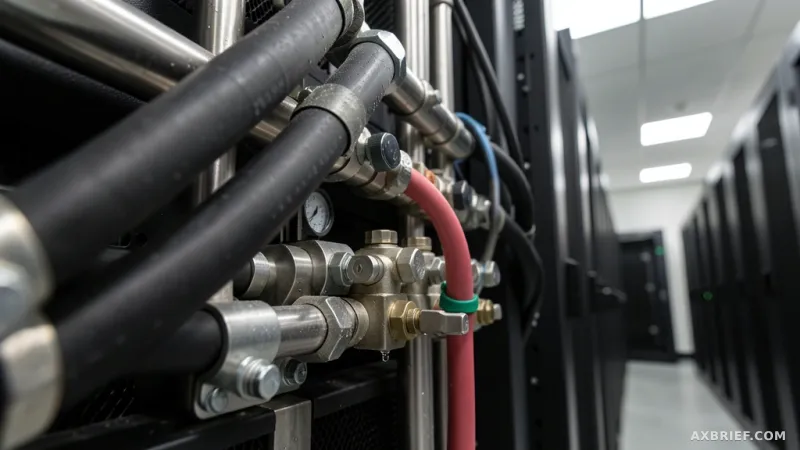
This performance is underpinned by the Colossus supercomputer located in Memphis. The infrastructure currently leverages approximately 200,000 Nvidia GPUs, with a roadmap to expand that number to 1 million. For the team formerly at Cursor, this access to Colossus solved a critical bottleneck in computing resources, allowing them to scale the training of Grok 4.5 using high-fidelity interaction data. This data consists of real-world production cycles where professional engineers write, review, and debug code, enabling the model to handle long-term tasks across multiple repositories and manage hundreds of distinct tools and skills.
Quantitative validation comes from Artificial Analysis via the GDPval-AA v2 index, which measures the knowledge capabilities of practical agents. Grok 4.5 achieved an Elo score of 1543, placing it 4th overall. While it trails slightly behind the most recent Claude releases in raw intelligence, its economic profile is disruptive. Artificial Analysis calculated the cost to complete a single task at $0.49, which is approximately 90 percent cheaper than the top-tier models. This positions Grok 4.5 on the Pareto frontier of performance versus cost.
The Shift from Raw Intelligence to Agentic Economics
The arrival of Grok 4.5 forces a pivot in how engineering leaders evaluate AI adoption. For the past two years, the primary metric for success was raw capability—the ability of a model to solve a complex logic puzzle or write a perfect function on the first try. But in an agentic workload, the paradigm shifts from a single-shot prompt to a continuous loop. Because agents consume tokens rapidly through iterative self-correction and repository scanning, the cost per task becomes the dominant variable in the ROI equation.
When the cost of completing a task drops by 90 percent, the economic incentive changes. A model that is slightly less intelligent but significantly cheaper allows a company to deploy agents across hundreds of developers without bankrupting the department. The tension now lies between absolute precision and operational scale. If a model can achieve the same result as a more expensive competitor but requires three attempts instead of one, the lower cost per token may still make it the more efficient choice for the organization.
However, this introduces the risk of the compounding quality effect. In complex software engineering, a single hallucination in a critical path can create technical debt that takes hours of human intervention to fix. A high-performance model that solves a bug correctly the first time is often more valuable than a cheap model that requires multiple iterations, as the human cost of reviewing and fixing AI errors is the most expensive part of the pipeline. Consequently, the decision to migrate to Grok 4.5 depends less on the Elo score and more on the perceived reliability, or the vibes, within a specific codebase.
This transition suggests that the AI race is moving away from a quest for the most intelligent model and toward a quest for the most sustainable agentic infrastructure.