The race to dethrone Nvidia has long been the primary narrative of the AI hardware sector. For years, the industry watched as challengers attempted to carve out a niche by promising faster inference or lower power consumption, betting that the world would eventually tire of the H100's dominance. Developers and enterprises alike were hunting for the silver bullet—a piece of silicon that could break the GPU bottleneck and deliver real-time AI responses without the massive overhead of traditional clusters. This week, one of the most prominent challengers decided that fighting the giant was less profitable than joining its ranks.
The $350 Million Pivot and the Valuation Reset
Groq has secured $350 million in new funding, a move led by Disruptive with planned participation from Nvidia itself. This capital injection comes with a stark adjustment in the company's market value. Groq is now valued at $3.5 billion, a significant drop from the $6.9 billion valuation it held in September of last year. While a reduction in valuation typically signals a down round and internal struggle, Groq frames this as a fundamental identity reset. The company explains that the valuation reflects a post-Nvidia license era. Following a licensing agreement with Nvidia, key personnel and founder Jonathan Ross transitioned to Nvidia, effectively stripping Groq of its original mission as a chip designer and transforming it into something entirely different.
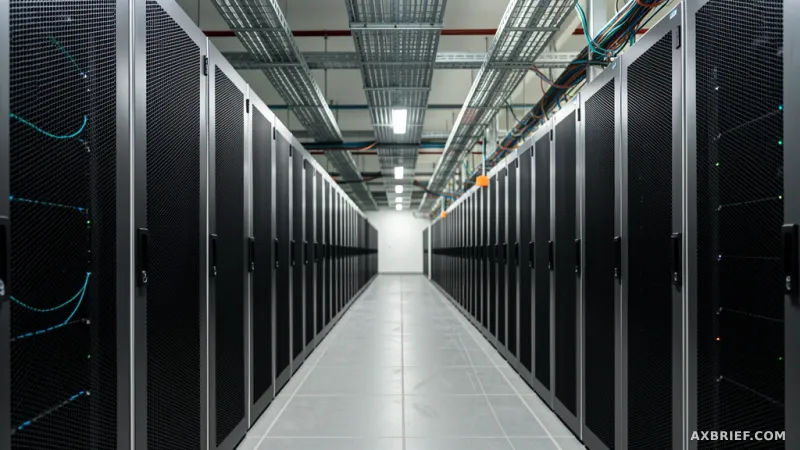
This funding is the second major wave of capital for this transition, following a $650 million raise in June. The primary objective is clear: Groq is no longer trying to build the engine; it is building the garage. The new funds are earmarked for the acquisition and deployment of mid-to-large scale Nvidia accelerated computing clusters. By shifting its business model, Groq is moving away from the high-risk venture of silicon fabrication and toward the high-demand business of AI infrastructure services, specifically targeting the Neocloud market.
From LPU Challenger to Nvidia Ecosystem Partner
For a long time, Groq's identity was tied to the LPU, or Language Processing Unit. The LPU was designed specifically for the sequential nature of large language models, promising inference speeds that made GPUs look sluggish. Groq didn't just want to compete with Nvidia; it wanted to render the GPU obsolete for the inference layer of the AI stack. However, the structural shift of its core engineering team to Nvidia forced a total abandonment of the LPU-first strategy. Groq has effectively ceased to be a chip manufacturer and has instead become a specialized cloud and data center provider that sells the very hardware it once sought to replace.
This transition places Groq in the company of other Neocloud providers like CoreWeave, Lambda, and Nebius. These firms operate as specialized intermediaries that secure massive allocations of Nvidia GPUs to provide optimized, flexible cloud environments for AI-native companies. Groq is already scaling this infrastructure rapidly, currently operating 13 data centers across North America, Europe, the Middle East, and Asia-Pacific. With a user base of over 6 million developers and enterprises, the company is now playing a game of power and scale. Groq intends to expand its current power capacity from 54 megawatts (MW) to over 200MW by 2027, betting that the inference market will become the most critical layer of the global AI infrastructure.
However, the Neocloud model introduces a different set of systemic risks. Unlike chip designers who profit from intellectual property, Neoclouds are capital-intensive businesses defined by massive capital expenditure (CapEx) and the relentless ticking clock of hardware depreciation. Even industry leaders like CoreWeave, despite securing massive contracts with Meta and Anthropic, face scrutiny over their heavy reliance on debt and the speed at which their hardware assets lose value. The central tension for Groq is no longer whether its architecture is superior, but whether it can convert rapid infrastructure growth into sustainable free cash flow before the next generation of hardware renders its current clusters obsolete.
For AI practitioners and enterprises, this shift signals a diversifying landscape of infrastructure. The reliance on a few massive hyperscalers is being challenged by these agile Neoclouds that can deploy the latest Nvidia clusters faster and with more specific optimization for certain workloads. The stability and pricing of these services will now depend entirely on how Groq manages the volatile cycle of hardware replacement and the cost of its capital.