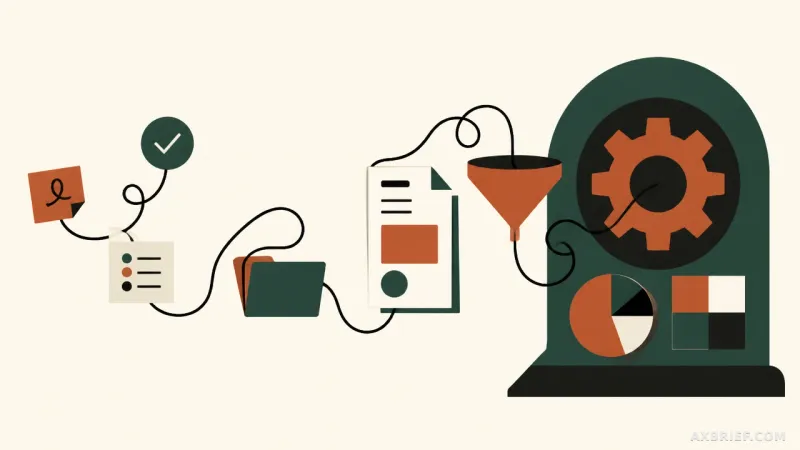
The modern app ecosystem has long been a graveyard of ambitious experiments, where even the deepest pockets often fail to find a sustainable hook for a new audience. For years, the industry viewed the launch of a new social platform as a high-stakes gamble on a single, brilliant idea. However, a shift is occurring in how the world's largest social media company approaches product iteration. The cycle of ideation, testing, and scaling has compressed, turning the traditional months-long development roadmap into a rapid-fire sequence of deployments.
The LLM-Powered Development Factory
Meta is currently deploying a suite of new applications and features at a pace that suggests a fundamental change in its engineering pipeline. This acceleration is visible in the recent release of Forum, a standalone app for Facebook Groups, and Seller, a dedicated application for Marketplace vendors. Beyond these utility-driven tools, the company is experimenting with vibe-coded gaming apps, a new photo-centric experience for Instagram, and AI-driven bedtime story experiments. These are not isolated launches but the result of a development process optimized by Large Language Models (LLMs).
At the core of this efficiency is the integration of LLMs into the recommendation engine. Every Reel and feed post across Instagram is now automatically analyzed by an LLM to determine its specific topic and tone. This analysis transforms raw content into high-dimensional data that the recommendation system can use to match users with precision. By automating the understanding of content nuance, Meta has moved beyond simple keyword matching to a deep semantic understanding of what users actually want to see.
This optimization extends into the engineering phase through the deployment of LLM-based agents. These specialized AI programs are tasked with content quality evaluation, trend detection, and the rigorous testing of ranking changes. By shifting these tasks from manual human oversight to automated AI agents, Meta has minimized developer intervention and accelerated the speed of system optimization. The result is a pipeline where data-driven testing happens in near real-time, allowing the company to pivot features based on actual performance metrics rather than intuition.
From App Incubators to Infrastructure Strategy
To understand why this current momentum is significant, one must look at Meta's history of failed experiments. Until 2015, the company operated internal incubators that produced apps like Slingshot, Paper, and Moments. Despite the technical polish, none of these products achieved meaningful commercial success. The pattern repeated in the early 2020s with the NPE Team, an internal R&D group that tested the market with apps like Bump, Spark, and Tune. Every single one of these projects was eventually shuttered, proving that simply building a standalone app is not a viable growth strategy.
The difference today is that Meta is no longer betting on the app itself, but on the LLM-native infrastructure supporting it. The milestone reached earlier this year, where every single Instagram post is processed by an LLM for topic and tone analysis, marks a pivot from product-centric growth to infrastructure-centric growth. The company has realized that the success of a new app depends less on its unique features and more on the sophistication of the recommendation engine that distributes its content.
This strategic shift is most evident in the trajectory of Threads. While the app benefited from an initial seeding of users from Instagram, its climb to 500 million monthly active users (MAU) was fueled by an AI-based recommendation system. By utilizing LLMs to generate high-quality training data and optimize content ranking, Meta was able to scale Threads far more effectively than its previous standalone attempts. The growth of Threads serves as a proof of concept for a two-stage strategy: using LLMs to build ideas quickly and then using LLM-native recommendations to scale them.
Mark Zuckerberg has pointed to these metrics as a signal that Threads is on a path to becoming a 1 billion user application. The success is not attributed to a lucky break in social trends, but to a systematic reduction in the difficulty of launching and scaling new products through AI integration.