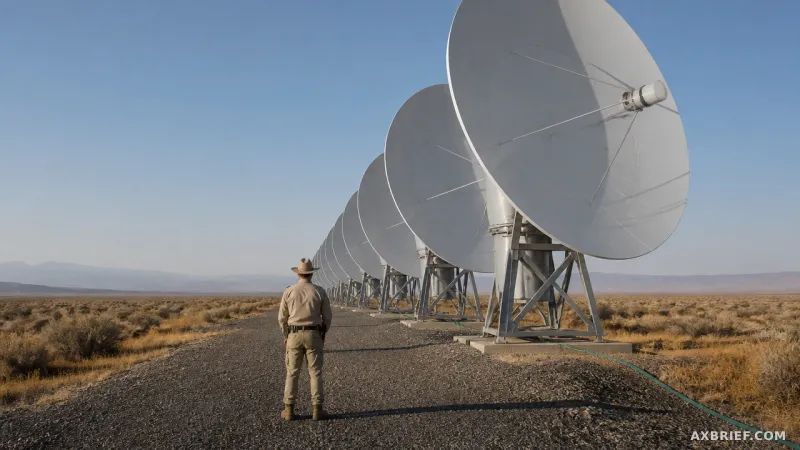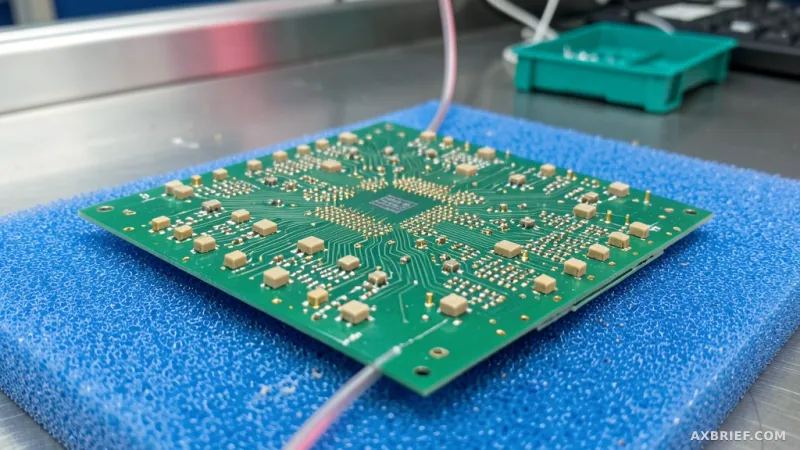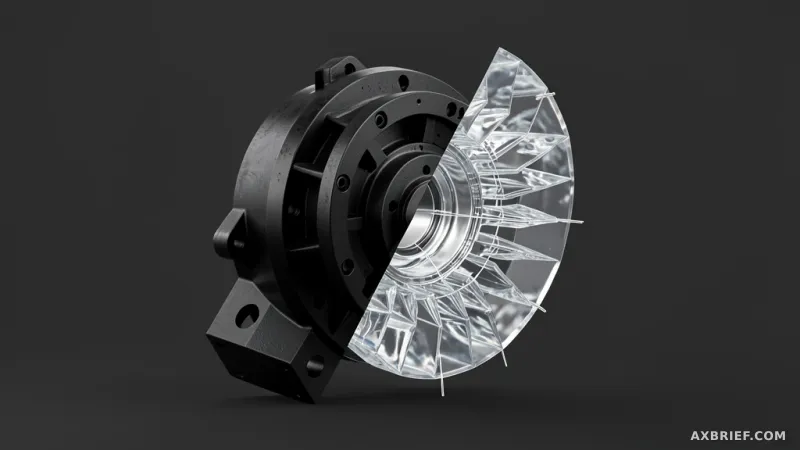
For an aerospace engineer or a semiconductor designer, the most frustrating part of the job is the waiting game. When a design parameter is tweaked, the resulting physics simulation can take hours, days, or even weeks to resolve. Until now, the promise of Large Language Models has felt distant in these high-precision environments because LLMs are designed for probability, not the rigid, uncompromising laws of thermodynamics or fluid dynamics. An AI that provides a plausible-sounding answer is useless when a structural failure in a turbine is the only outcome that matters. This gap between linguistic fluency and physical accuracy is exactly where Mistral AI is placing its biggest bet.
The Convergence of Physics AI and Industrial Logic
Mistral AI is pivoting from a provider of general-purpose models to a full-stack industrial powerhouse. At the center of this shift is the introduction of Physics AI, a specialized intelligence layer designed to predict physical behaviors in seconds rather than weeks. Unlike traditional physics solvers that calculate every interaction from first principles, Mistral's Physics AI is a data-driven model. It learns from the massive output datasets generated by those traditional solvers to infer results with startling speed. The goal is not to replace the first-principle solvers entirely—which remain essential for final validation and edge-case testing—but to act as a high-throughput accelerator for the iterative design loop. By handling the bulk of the repetitive simulations, the AI removes the primary bottleneck in the engineering workflow.
This capability was formalized through the acquisition of Emmi AI, which Mistral AI finalized in May 2026 to internalize core physics simulation expertise. The result is Mistral for Industrial Engineering, an integrated AI stack that blends the reasoning capabilities of an LLM with the predictive power of physics simulations. While previous AI waves focused on automating the white-collar work of document drafting or software coding, this stack targets the actual manufacturing floor and the design studio. It is a move toward what the company calls physical intelligence, where the AI understands the constraints of the material world.
The real-world impact of this integration is already appearing in high-stakes industrial partnerships. Airbus is deploying these tools across its entire spectrum, from commercial aircraft and helicopters to defense and space systems, integrating AI from the initial design phase down to onboard functions. BMW Group is pursuing a Large Industry Model initiative, utilizing multimodal reasoning to solve complex engineering challenges such as crash simulations. Perhaps the most striking result comes from ASML. By combining its internal engineering expertise with Mistral's models, ASML has accelerated its diagnostic solution speed by 120 times for lithography equipment operating 24/7 in customer fabs, all while maintaining a level of accuracy comparable to traditional methods. Furthermore, ASML has integrated AI agents as permanent code reviewers to intercept software defects before they ever reach a customer, proving that the union of linguistic and physical intelligence directly dictates product quality and production velocity.
The 1GW Gamble and the Sovereign Infrastructure Stack
Software intelligence is only as scalable as the hardware that hosts it, and Mistral AI has decided that relying on American hyperscalers is a strategic liability. The company is executing a massive infrastructure play under the name Mistral Compute, investing 4 billion euros to build its own data centers in France and Sweden. This is not merely a quest for more GPUs; it is a bid for total vertical integration. Mistral's roadmap is aggressive, targeting 200MW of power capacity by 2027 and scaling to 1GW by 2030. In the current AI arms race, power capacity is the ultimate currency, as it defines the physical ceiling for parameter scale and training throughput. Mistral AI views the business of AI as the process of converting electrons into tokens and intelligence, and owning the power grid connection is as critical as the model architecture itself.
The physical rollout is already underway. A 10MW inference-dedicated data center in Les Ulis, south of Paris, is scheduled to go online in the third quarter of 2026. In Borlänge, Sweden, Mistral is deploying NVIDIA's next-generation Vera Rubin GPUs to ensure that the latest hardware performance is immediately reflected in its models. Even more granular is the approach at the Bruyères-le-Châtel facility, a 40MW site that entered the training pipeline in early 2026. Here, Mistral is not just buying servers but designing the physical layout of server trays and fiber optic connections to minimize data transmission bottlenecks and maximize training speed. By controlling the hardware layer, Mistral is extending its optimization efforts from the software code down to the physical arrangement of the silicon.
Funding this expansion requires a financial structure as robust as the hardware. In March 2026, Mistral secured 830 million dollars in debt financing through a consortium of seven major banks, including Bpifrance, BNP Paribas, Crédit Agricole CIB, HSBC, La Banque Postale, MUFG, and Natixis CIB. To streamline the delivery of these capabilities, Mistral acquired the serverless platform Koyeb in February 2026, integrating it into Mistral Studio to enhance deployment efficiency. This creates a flexible ecosystem for enterprise clients: they can run inference on Mistral's owned hardware or deploy models within their own on-premises environments to satisfy strict security policies. This full-stack approach—from the power plant to the serverless API—removes the barriers for government and industrial clients who cannot risk data leakage to third-party cloud providers.
As part of this broader commercial evolution, Mistral is rebranding its consumer assistant, Le Chat, into Vibe, a dedicated enterprise productivity platform. With a revenue target of 1 billion euros by 2026, the company is signaling that its future lies in the deep integration of AI into the physical economy. The transition from text-based reasoning to the integration of physics simulations suggests that AI is moving past the stage of learning the language of the virtual world and is now beginning to compute the laws of the physical one. In the end, the leadership of industrial AI will not be decided by who has the most parameters, but by who can most precisely synchronize those parameters with physical reality.