The modern AI workflow is currently trapped in the era of the mega-prompt. Developers and project managers spend hours crafting exhaustive, multi-page instructions to force a single LLM to act as a project manager, a senior coder, and a QA engineer all at once. This approach creates a cognitive bottleneck where the model often loses track of specific personas or blends roles, leading to diluted outputs and fragmented logic. The industry has been searching for a way to move beyond the single-chatbot interface toward a more modular, departmental structure without the overhead of manual orchestration.
The Architecture of Instant Agent Teams
NanoCo has addressed this bottleneck with the release of NanoClaw, an integration for Slack that transforms a single natural language prompt into a fully operational team of specialized AI agents. Instead of configuring agents one by one, a user provides a single prompt that defines the necessary technical skills, the desired workflow, and the visual identity for an entire group of agents. NanoClaw then interprets this request to instantiate multiple agents, each equipped with its own custom avatar and a specific professional mandate, deploying them instantly into the Slack environment.
Control over the underlying intelligence is a core component of the NanoClaw framework. Organizations are not locked into a single provider but can select the specific LLM that powers their agents based on their own strategic priorities. This allows teams to optimize for raw performance by selecting high-reasoning models or minimize operational overhead by choosing more efficient, lower-cost models. The actual processing capability and operational efficiency of the deployed team are thus a direct result of the user's model selection, providing a level of flexibility essential for enterprise scaling.
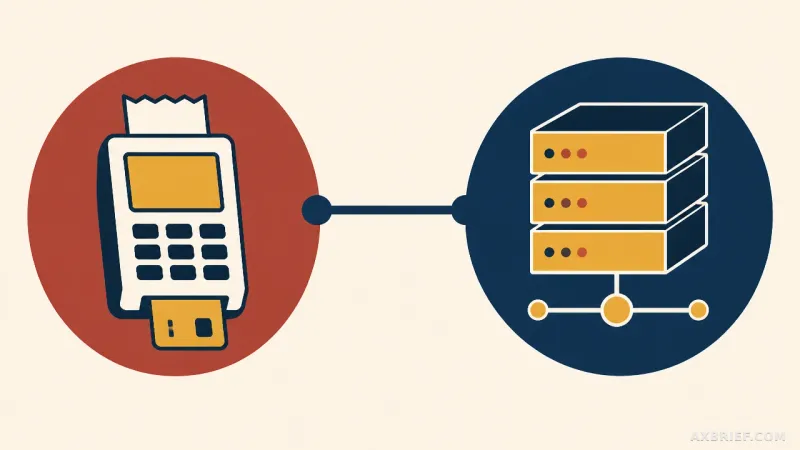
Security and infrastructure sovereignty are handled through a decentralized execution model. NanoClaw agents run on the customer's own infrastructure, ensuring that tokens and sensitive data remain within the organization's perimeter. The connection to Slack is established via Socket Mode, a method that allows the application to communicate with Slack without requiring a public-facing URL. According to the Marketplace listing, NanoCo does not store Slack tokens; these credentials remain exclusively on the user's machine, effectively eliminating the risk of external credential leaks and granting the customer total control over their infrastructure.
The technical orchestration is driven by a lead agent utilizing the Model Context Protocol (MCP). This standardized protocol allows the AI model to connect seamlessly to various data sources and tools. The lead agent uses MCP tools to define the personas of new agents, assigning them specific instructions, identities, and the precise set of tools they are authorized to use. Once these agents are defined, the lead agent employs additional tools to place them into specific rooms within shared Slack channels, essentially acting as a digital hiring manager and operations lead who designs the team and organizes the workspace.
From Chatbots to Digital Departments
The shift introduced by NanoClaw is not merely a matter of convenience but a fundamental change in how AI identity is managed in a professional setting. Traditional AI implementations treat the chatbot as an ephemeral session; once the context window resets or the prompt changes, the persona vanishes. NanoClaw agents, however, possess persistent identities. They are assigned unique names, avatars, roles, and dedicated memory contexts that survive long after a specific task is completed. This transforms the AI from a temporary tool into a permanent digital employee.
This structural difference solves the problem of prompt fatigue. In a standard setup, a user must remind the AI of its role and the project's constraints in every new session. In the NanoClaw model, the role and permissions are baked into the agent's identity. By separating roles, memory, and authority across multiple agents, NanoClaw replicates the operational structure of a small digital department. One agent can hold the memory of the project's architectural requirements while another focuses exclusively on security auditing, preventing the cross-contamination of instructions that often plagues single-model prompts.
Furthermore, NanoClaw removes the friction associated with the Slack developer experience. Traditionally, deploying a custom AI tool in Slack required a developer to navigate the admin interface, manually create an app, and collect a series of secrets, API keys, and tokens. This manual process is a significant barrier to entry for non-technical managers. NanoClaw replaces this entire pipeline with a Connect Slack option. Through a simplified authentication and installation flow, the complex API management phase is bypassed, allowing users to move from a conceptual team design to a live deployment in a few clicks.
This evolution marks the end of the era where the primary skill was writing a better prompt for a single bot. The new operational standard is the design of a digital organization, where the focus shifts to how specialized roles and separated memory contexts can be orchestrated to achieve a complex business goal.
AI is moving away from being a versatile tool we talk to and toward becoming a structured workforce we manage.