
The AI industry is currently witnessing a frantic reorganization of its defensive lines. For months, the conversation around AI safety has been dominated by a binary choice: the guarded secrecy of frontier labs or the wild west of open source. But this week, the tension shifted from theoretical debate to institutional action. A massive coalition of infrastructure providers, financial giants, and software firms has suddenly coalesced, not to build a new model, but to build a fortress around the very concept of open AI. This is no longer about who has the best weights, but who defines the standards for how those weights are secured and governed in a production environment.
The Architecture of the Open Secure AI Alliance
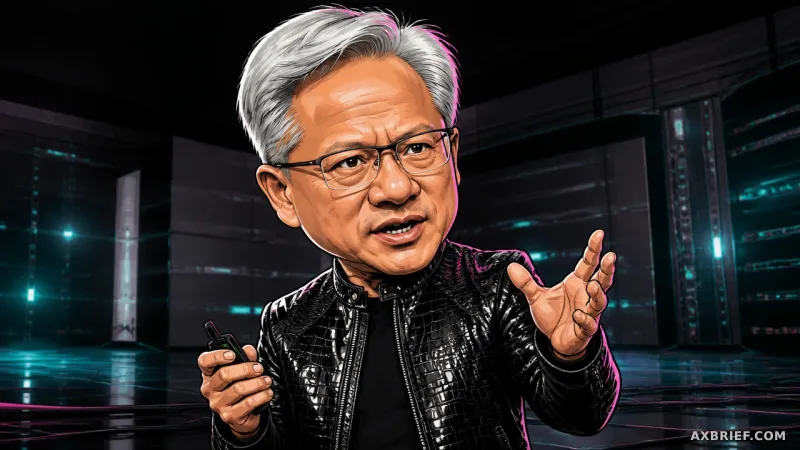
At the center of this movement is the Open Secure AI Alliance (OSAA), an industry group spearheaded by Nvidia. In just one week since its inception, the alliance has scaled to include more than 120 companies, creating a collaborative framework designed to support and secure open source AI efforts. The scale of the mobilization is evident in its immediate political outreach; the OSAA recently coordinated an open letter to the White House, signed by over 200 technology companies, urging the administration to support rather than suppress open source AI development.
The alliance operates on a principle of mutual contribution, where member companies donate their proprietary security tools to a shared open source pool. Nvidia has led by example, contributing its own open model families alongside Garak, a specialized vulnerability scanner for Large Language Models (LLMs) designed to probe for weaknesses before they can be exploited. Amazon has bolstered the toolkit by contributing Strands Agents, a framework for building open agents, and Cedar, a purpose-built authorization language that allows developers to define fine-grained permissions for AI actions.
Other industry leaders are filling critical gaps in the agentic workflow. Okta is currently developing identification technologies specifically for AI agents, while Red Hat is building and sharing agent governance tools. By converting these individual corporate security assets into standardized open source tools, the OSAA is effectively creating a baseline security stack that any organization can implement regardless of which model they deploy.
Beyond the software, the OSAA is establishing the operational protocols for when things go wrong. A dedicated working group known as the Shared AI Findings Exchange (SAFE) is developing guidelines for the confidential reporting of AI cybersecurity incidents and victim notification. Managed by the Linux Foundation, SAFE is championing a blame-free analysis culture. This approach ensures that when a vulnerability is discovered or a breach occurs, the technical lessons are shared across the alliance without the fear of immediate legal or reputational retribution against the reporting organization.
The Geopolitical Trigger and the Great Divide
To understand why 120 companies, including Microsoft, Intel, Cisco, BlackRock, and Visa, would suddenly align under Nvidia's banner, one must look at the geopolitical horizon. The catalyst for the OSAA's rapid formation was the news that the Trump administration is considering a ban on open-weight models originating from China. The speed of the alliance's assembly—occurring just weeks after these regulatory whispers—suggests that the industry views government intervention as a more immediate threat than the technical risks of open source AI.
The OSAA is betting on a fundamental thesis: that openness is the most viable path to actual security. The alliance argues that the speed at which an open ecosystem can verify, stress-test, and patch a model far exceeds the speed at which a closed organization can control it. In their view, the best defense against the perceived threat of Chinese AI research is not to close the doors of American AI, but to make the American open source ecosystem so robust and transparent that it becomes the global gold standard.
However, a glaring void exists in the OSAA membership list. While the infrastructure providers and the end-users of AI are all in, the architects of the current frontier models are missing. Anthropic, OpenAI, and Google are notably absent from the alliance. This creates a sharp divide in the industry. On one side, you have the compute and platform layer (Nvidia, Microsoft, Intel) and the enterprise layer (Visa, BlackRock) pushing for a transparent, standardized security layer. On the other side, the primary model creators remain tethered to a closed-door philosophy of safety through obscurity.
This divide suggests that the OSAA is not just a security project, but a strategic move to decouple AI safety from the control of a few dominant labs. By providing a standardized set of tools—using Garak for scanning, Cedar for authorization, and Red Hat's governance frameworks—the alliance is empowering the rest of the industry to secure AI agents without needing to rely on the proprietary safety guardrails of the model providers.
The battle for AI supremacy is shifting from the training of the largest model to the ownership of the security standards that allow those models to operate in the real world.



