The current AI gold rush has reached a precarious tipping point where the appetite for compute far exceeds the available balance sheets of the world's largest tech companies. For the past two years, the industry has relied on the deep pockets of hyperscalers to fuel the expansion of massive GPU clusters. However, the financial strain is becoming visible. Oracle is managing mounting debt, Google is navigating the complexities of new share issuances, and Meta continues to burn through staggering amounts of cash to maintain its lead. The market is beginning to ask a critical question: what happens when the primary buyers of AI hardware hit their credit limits?
The $500 Billion AI Factory Blueprint
NVIDIA has responded to this looming capital ceiling by orchestrating a massive financial pivot. The company announced a strategic agreement with a consortium of the world's most powerful financial institutions, including Apollo, BlackRock, Blackstone, Brookfield, Goldman Sachs, and KKR, to mobilize up to $500 billion for the construction of AI data centers. This is not a simple procurement deal, but a fundamental restructuring of how AI hardware is financed and valued.
At the heart of this initiative is a residual value guarantee mechanism designed to lower the risk for lenders. In traditional hardware financing, GPUs are treated as rapidly depreciating assets, similar to consumer electronics. Under NVIDIA's new framework, when financial institutions provide loans for data center construction using GPUs as collateral, NVIDIA will directly guarantee the value of those assets. Specifically, if the market value of the collateralized GPUs falls below expectations and the lender is forced to recover the assets, NVIDIA has committed to covering up to 25% of the difference.
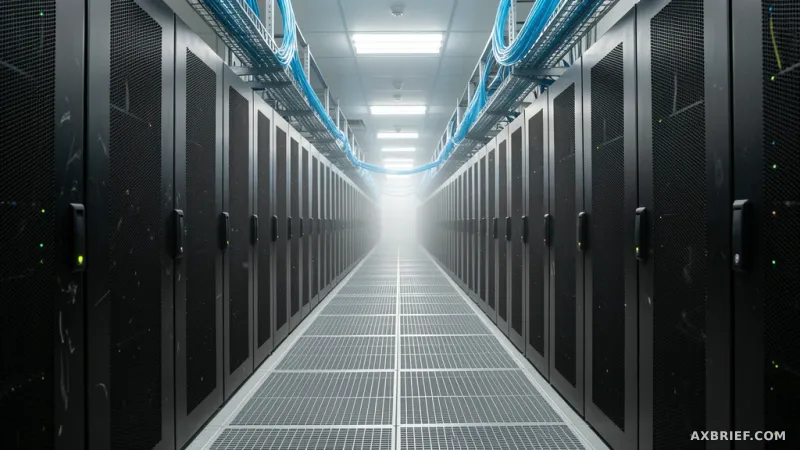
Jensen Huang has rebranded these installations as AI Factories. By shifting the terminology, NVIDIA is attempting to move the GPU out of the category of consumable IT equipment and into the realm of long-term industrial infrastructure, akin to railroads or aviation networks. The logic is that as long as there is a demand for intelligence, these factories will remain viable. Even if a specific customer's needs change, NVIDIA envisions an ecosystem where other cloud providers or operators can acquire and repurpose these factories, thereby protecting the residual value of the underlying hardware.
The Shift from Big Tech Balance Sheets to Institutional Capital
This move signals a profound shift in the AI economy. By bringing in institutional giants like BlackRock and KKR, NVIDIA is decoupling the growth of AI infrastructure from the immediate financial health of a few Big Tech firms. The goal is to create a sustainable pipeline of independent, long-term capital that can fund the next generation of data centers without relying on the quarterly earnings reports of the hyperscalers.
However, this strategy introduces a specific financial vulnerability known as wrong way risk. This occurs when the guarantor's ability to pay is positively correlated with the event that triggers the guarantee. In this scenario, if the overall demand for AI compute collapses, NVIDIA's own revenue from chip sales would plummet at the exact moment it is required to pay out billions in residual value guarantees to lenders. The financial pressure would hit NVIDIA from both sides: falling sales and rising guarantee liabilities.
Industry analysts have pointed to the ghost of Lucent Technologies from the dot-com era, where the company collapsed after lending money to its own customers to buy its equipment. NVIDIA is attempting to avoid this trap by ensuring it is not the primary lender. By letting external financial institutions carry the bulk of the loan risk and only guaranteeing a fraction of the asset value, NVIDIA maintains a layer of separation. This institutionalizes a trend already seen in neo-cloud providers like CoreWeave and Lambda, who have successfully used NVIDIA chips as collateral to raise capital, but now scales that model to a global, systemic level.
For the broader developer and enterprise ecosystem, this financial engineering will likely manifest as a more diverse and accessible hardware market. As NVIDIA actively manages the residual value of older architectures to keep the secondary market healthy, the cost of entry for AI infrastructure will drop. We are already seeing a trend where developers mix cutting-edge frontier models with cost-efficient open-weight models; a stabilized secondary market for GPUs will allow startups and mid-sized firms to deploy tuned, previous-generation hardware at a fraction of the cost of the latest H100 or B200 clusters.
The critical metric for the industry will now shift from pure peak performance to the recycling efficiency of older architectures. If NVIDIA succeeds in making AI servers a universal infrastructure, the way specific GPU generations are traded and price-protected will become the primary variable in the cost of AI adoption.
NVIDIA is no longer just designing the chips that power the AI revolution; it is designing the financial system that allows that revolution to be funded.