The AI arms race has officially migrated from the digital realm of algorithmic optimization to the physical realm of heavy industry. For years, the industry's primary bottleneck was the availability of H100 GPUs and the talent to tune them, but the conversation has shifted. Now, the most valuable currency in Silicon Valley is not venture capital or lines of code, but gigawatts of reliable power and thousands of acres of zoned land. The race to AGI is no longer just a software competition; it is a massive civil engineering project.
The Blueprint for Project Camellia
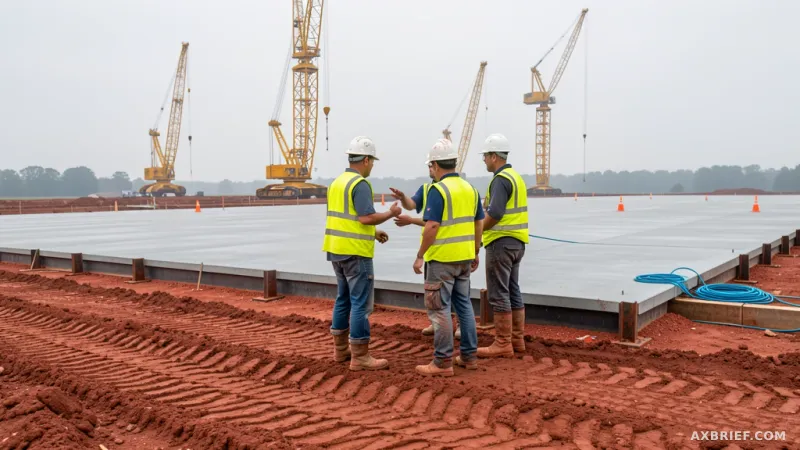
OpenAI is scaling its physical ambitions to an unprecedented degree, revising its infrastructure investment target to 750 billion dollars by 2030. This figure represents a 25 percent increase over the estimates the company provided earlier this year, signaling an aggressive acceleration in its build-out strategy. The cornerstone of this expansion is Project Camellia, a massive data center campus slated for a 1,400-acre site northwest of Savannah, Georgia. OpenAI is committing 20 billion dollars specifically to the construction of this campus, marking one of the largest single-site AI investments in history.
To fuel this facility, OpenAI has secured a power requirement of at least 3.2GW, to be supplied by Georgia Power. The timeline for this energy delivery is set between 2028 and 2032. In a departure from traditional corporate subsidies, the financial burden of this expansion rests almost entirely on OpenAI. The company has agreed to pay the full cost of the infrastructure required for the new data center as well as all associated electricity service costs. This arrangement includes a specific agreement with Effingham County for a 50 percent property tax abatement over the next 15 years. To maintain grid stability, OpenAI must also adhere to a strict load-management protocol, agreeing to reduce its power consumption by up to 1GW during peak demand periods. This concession ensures compliance with Georgia Public Service Commission regulations, which prevent new high-capacity users—those exceeding 100MW—from shifting their infrastructure costs onto existing ratepayers.
The Pivot Toward Raw Execution
This shift toward Georgia suggests a strategic pivot away from the previously discussed Stargate project, which has appeared to stall in momentum. OpenAI is no longer prioritizing the theoretical ideal of a perfect facility; it is prioritizing speed and physical reality. The most telling signal of this change is the recruitment of Brett Mayo, the executive who oversaw the rapid deployment of xAI's Colossus data center. By bringing in a leader known for the brute-force execution of physical infrastructure, OpenAI is signaling that the era of architectural planning is over and the era of rapid construction has begun.
However, this drive for speed creates a profound tension with the company's public-facing environmental commitments. The energy profile of Project Camellia is heavily reliant on fossil fuels. According to filings submitted by Georgia Power to the Public Service Commission, the majority of the new capacity will be derived from natural gas. The utility plans to secure approximately 5.8GW of natural gas generation capacity, some of which will come from simple-cycle turbines—units known for higher pollutant emissions than combined-cycle plants. This move will effectively double Georgia Power's natural gas generation footprint, with only a fraction of the remaining energy coming from solar power and grid-scale batteries.
This willingness to embrace carbon-intensive energy is a recurring theme among the frontier AI labs. xAI's Colossus facility recently faced lawsuits from the NAACP and the Southern Environmental Law Center after attempting to operate natural gas turbines without permits, claiming exemptions under the federal Clean Air Act. OpenAI is now entering a similar regulatory minefield, where the need for immediate, massive power contradicts the ESG mandates of the modern corporate world. The risk is no longer just a PR crisis, but a legal one that could potentially delay the operational date of the facility.
For the broader industry, the OpenAI-Georgia deal establishes a new precedent for how AI giants interact with public utilities. The era of receiving massive public grants to build data centers is ending, replaced by a model where the AI company acts as the primary financier for the regional power grid. When a single company can preemptively claim one-third of a utility's new capacity, the power grid itself becomes the ultimate competitive moat.
Physical infrastructure is now the primary governor of AI scaling laws.