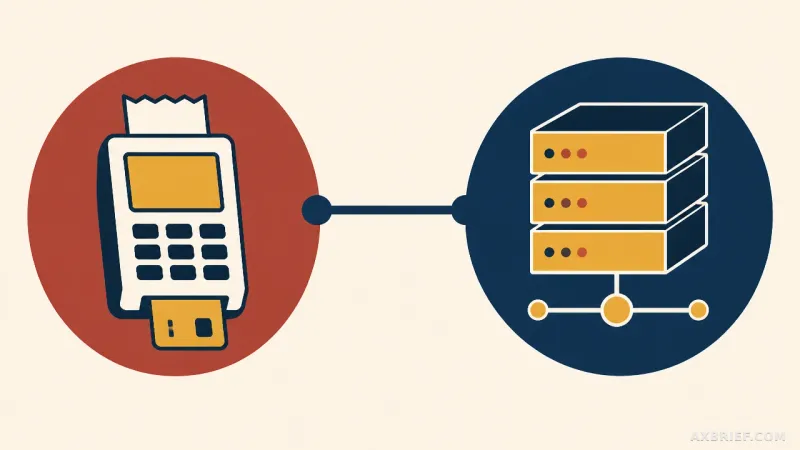
The current gold rush in retail AI is focused almost entirely on the conversation. Developers are racing to build the most intuitive chatbots and the most persuasive recommendation engines, operating under the assumption that if an AI can simply convince a user to buy a product, the sale is guaranteed. This week, however, a stark reality is emerging in the developer community: the more effective the AI is at creating purchase intent, the more fragile the actual transaction becomes. We are seeing a growing phenomenon where the seamlessness of the AI interaction makes the subsequent checkout process feel like a regression into the early 2000s.
The Friction Paradox in Agentic Commerce
In January 2025, Rezolve Ai conducted a comprehensive study involving 1,500 US consumers to understand how AI-driven recommendations affect the final stages of the purchasing funnel. The findings reveal a counterintuitive friction paradox. When consumers receive a high-quality recommendation from an AI, their psychological state shifts to a ready-to-buy mode. However, if these users encounter immediate friction during the payment process, they are significantly more likely to abandon the purchase than consumers who experienced friction at the top of a traditional shopping funnel. Essentially, the AI elevates the consumer's expectations so high that any subsequent technical hurdle feels like a betrayal of the experience.
This friction is particularly damaging when viewed against industry baselines. The Baymard Institute has long cited an average shopping cart abandonment rate of 70%, but that figure represents the pre-agentic commerce era. In the new paradigm, the gap between the AI interface and the brand's transaction layer is widening. A user may spend ten minutes collaborating with an AI assistant to compare specifications, verify compatibility, and settle on a specific model. They enter the checkout phase in a state of total decision certainty, only to be met with the same multi-step input forms, mandatory account creations, and clunky redirect loops that a standard organic search visitor would face. The AI has solved the cognitive load of choosing, but the infrastructure has failed to solve the mechanical load of paying.
From Discovery to Execution
For the past two decades, the enterprise commerce stack has been engineered to optimize a human-led journey. Every layer of the stack—from search tools and recommendation engines to personalization layers and checkout systems—was built on the premise that a human would manually navigate a brand's website. The goal was to make the product page easier to find and the product description more compelling. There was no architectural requirement for an infrastructure that could receive a pre-formed purchase intent from an external AI agent and execute it instantly.
In the era of agentic commerce, the primary driver of conversion is no longer front-end UX optimization, but back-end execution capability. For an AI agent to truly close a sale, the underlying system must do more than simply provide a URL to a product page. It requires a deep integration where the AI can trigger real-time inventory checks, apply complex pricing logic and promotional rules, suggest product bundles based on brand policy, and determine the most efficient fulfillment path—all while maintaining the context of the original conversation.
Most current corporate infrastructures are not built for this. Inventory, pricing, and order management data are often siloed or exposed via APIs that are not designed for the secure, high-velocity access required by AI agents. This creates a structural bottleneck. While companies have spent years investing in discovery—the act of helping a customer find a product—they have neglected execution. The competitive advantage is shifting; the winners will not be the companies with the smartest chatbots, but those with the most robust execution layers that can translate an AI's recommendation into a completed transaction without human intervention.
This creates what can be termed a conversion penalty. When a company invests heavily in AI-driven discovery while leaving the execution layer untouched, they aren't just losing sales; they are eroding trust. Because the AI lowered the friction of decision-making, the remaining friction of payment is magnified. The consumer feels a jarring disconnect between the intelligence of the assistant and the stupidity of the checkout process. This discrepancy leads to a higher abandonment rate for AI-referred traffic than for traditional traffic, as the perceived effort of the final step outweighs the now-resolved desire for the product.
For AI practitioners and commerce architects, the critical metric is no longer the accuracy of the chatbot's response, but the quality of the handoff. The goal is to move away from the model where an AI recommends a product and sends the user to a general product detail page. Instead, the system must ensure that the context—the specific options, quantities, and discount conditions identified by the AI—is carried through to the final payment screen, allowing the transaction to be completed in one or two clicks. If the abandonment rate for AI-driven paths is higher than that of traditional paths, it is a definitive signal that the backend infrastructure is incapable of supporting the agent's intent.
Modernizing the execution layer is the only way to prevent the high-efficiency purchase intent generated by AI from hitting a dead end.