The modern enterprise software landscape is currently defined by a precarious dance between established platforms and stealth-mode startups. For months, the industry watched a quiet but intense legal friction build between Rippling and Runlayer, a conflict that mirrored the broader tension of the AI gold rush: the thin line between a strategic partnership and intellectual property theft. This week, that tension snapped, not with a courtroom verdict, but with a simultaneous legal retreat and a strategic product launch that redraws the boundaries of AI security.
The Legal Pivot and the $42 Million Stake
On Wednesday night, Rippling and Runlayer officially moved to dismiss all mutual lawsuits filed against one another. According to court documents, the resolution was clean and abrupt, with both parties agreeing to stop all legal proceedings without any exchange of settlement payments or reimbursement of attorney fees. This sudden peace treaty marks the end of a dispute that centered on the Model Context Protocol (MCP) Gateway, a critical piece of infrastructure designed to govern how AI agents interact with sensitive corporate data.
The conflict began after Runlayer emerged from stealth mode in November 2025. Prior to the public launch, Rippling had spent over a year testing Runlayer's technology and collaborating with the startup. Runlayer subsequently alleged that Rippling used the insights gained during this testing phase to clone their product. Rippling responded with a countersuit, claiming that Runlayer had infringed upon its own existing patents. The legal battle reached the discovery phase, which had been underway for three weeks, before both sides decided to walk away.
Runlayer is not a typical early-stage player; it is a well-funded entity that has secured 42 million dollars in investment from high-profile backers, including Felicis and Keith Rabois of Khosla Ventures. The dismissal of the lawsuits was not a sign of failure for either party, but rather a clearing of the decks. The moment the legal filings were withdrawn, Rippling moved to fill the vacuum by immediately launching its own MCP Gateway, placing itself in direct competition with the very startup it had previously tested.
The Architecture of the AI Moat
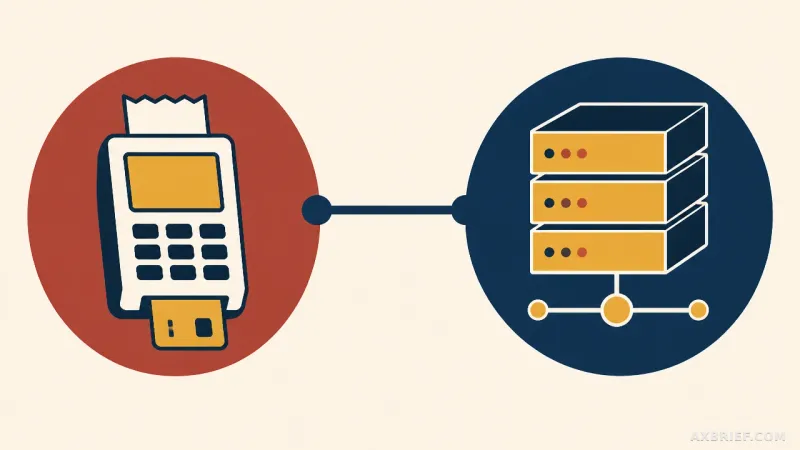
To understand why a gateway is the primary battleground for these two companies, one must look at the inherent danger of autonomous AI agents. In a standard implementation, giving an AI agent direct access to a company's internal software systems is a security nightmare. If a recruiter asks an AI agent for the details and emails of the top five candidates, granting the agent full system access creates a massive vulnerability. The MCP Gateway solves this by acting as a secure intermediary, ensuring the agent never actually touches the core database.
Instead of direct access, the agent sends a request to the gateway. The gateway then fetches only the specific data required—in this case, those five candidate profiles—and passes it back to the agent. This architecture introduces two critical security layers that are now standard for enterprise-grade AI. The first is Role-Based Access Control (RBAC), which ensures that an intern cannot request the same sensitive payroll data that a CFO can. The second is observability, where every single request and data path is logged, creating an audit trail that allows IT departments to track exactly what information the AI is accessing and why.
While the core logic of the gateway is similar, the strategic direction of the two products diverges sharply. Rippling has focused its MCP Gateway on operational efficiency and cost management. Their implementation includes sophisticated routing tools that can send different requests to different AI models based on complexity or cost, alongside a visual dashboard that tracks token consumption per employee. This transforms the gateway from a mere security tool into a financial management layer for AI spend.
Runlayer, conversely, is positioning its gateway as the foundation for a broader AI security ecosystem. Beyond simple data brokering, Runlayer provides tools for creating AI agents and, more importantly, a detection system for shadow AI agents. These are unauthorized agents deployed by employees within a company without the knowledge or approval of the IT department. While Rippling is building a management layer for approved AI, Runlayer is building a surveillance and governance layer to find the AI that shouldn't be there.
This clash places Rippling in a complex competitive web. By shipping the MCP Gateway, Rippling is no longer just competing in payroll and benefits. It is now stepping into the token management and routing arena occupied by Stripe, Ramp, and Databricks, while simultaneously challenging the AI security footprints of Amazon Bedrock and Docker. The gateway is no longer just a technical utility; it is a strategic land grab for the control plane of the enterprise AI stack.
The speed of AI development has fundamentally broken the traditional Proof of Concept (PoC) model. In previous software cycles, a year-long PoC was a stable way to vet a vendor. In the current era, a year is an eternity. Requirements shift monthly, and the gap between a startup's prototype and a platform's internal build has shrunk to almost nothing. For developers and IT leaders, the choice of a gateway now depends on whether they prioritize the granular RBAC and cost-tracking of a platform like Rippling or the shadow-AI detection and agent-creation tools offered by a specialist like Runlayer.