
The current AI gold rush has a physical bottleneck that no amount of software optimization can solve: concrete and cooling. For months, the industry narrative has focused on the scarcity of H100s and B200s, but the real crisis is the lead time required to house them. Enterprise teams are finding that while they can secure compute credits from hyperscalers, the actual deployment of dedicated, high-performance inference environments often requires years of zoning, construction, and utility negotiation. The industry is effectively trapped in a cycle where the speed of model iteration is throttled by the speed of industrial construction.
The Modular Blueprint for Instant Inference
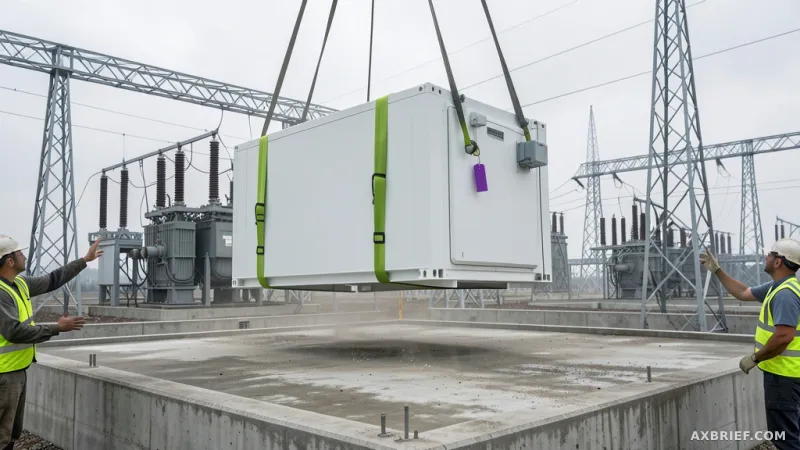
Runware is attempting to break this deadlock with the introduction of the Sonic Inference Pod. Rather than designing a traditional, monolithic data center that requires a massive footprint and years of development, Runware has engineered a dedicated modular data center. These pods are designed as single, transportable units that can be deployed rapidly and placed alongside existing infrastructure or in entirely new locations. This shift from permanent architecture to modular deployment allows companies to scale their compute resources in alignment with actual demand rather than betting on five-year construction forecasts.
This hardware pivot follows a significant financial foundation. In December, Runware secured 50 million dollars in Series A funding specifically to advance its image generation infrastructure. However, the company is moving beyond the role of a simple software vendor. Runware has redefined its core mission as the enablement of seamless inference infrastructure. By evolving its delivery model into these modular pods, the company is lowering the barrier to entry for enterprises that need the raw power of a data center without the bureaucratic and temporal overhead of building one from scratch.
Currently, the operational footprint of this strategy is already expanding. Ten pods are active and delivering services across the United States, Europe, and the Asia-Pacific region. High-profile clients, including the video generation AI firm Higgsfield AI and the website creation platform Wix, are already utilizing these systems to power their inference services. Beyond the active units, Runware has already secured 160 sites that are ready for immediate activation, meaning the network can expand as quickly as pods can be shipped.
From Monolithic Hubs to Distributed Intelligence
The true disruption of the Sonic Inference Pod lies in its departure from the traditional data center utility model. Standard data centers are notorious for their environmental toll, particularly their reliance on massive amounts of water for evaporative cooling. Runware has eliminated this dependency by implementing a closed-loop cooling system. In this architecture, the coolant remains within a sealed circuit, circulating continuously to dissipate heat without ever being exhausted or requiring a constant external water supply. This technical choice does more than just save water; it removes the geographical requirement for a facility to be near a major water source, allowing pods to be placed almost anywhere.
This capability enables a strategic shift toward distributed computing. Traditional AI infrastructure relies on a few massive, centralized hubs, which inevitably introduces latency as data travels from the end user to a distant server and back. By deploying modular pods closer to the end user, Runware reduces the physical distance data must travel, which is the most effective way to lower inference latency. Instead of expanding a single giant center through repeated, disruptive construction projects, the network grows organically by simply adding more pods to the grid.
Furthermore, the Sonic Inference Pod is designed to integrate with existing power grids rather than requiring the construction of new, high-capacity electrical substations. By utilizing current power availability and avoiding the need for new water infrastructure, Runware significantly reduces the carbon footprint associated with the construction phase of AI deployment. The tension between the energy demands of AI and environmental sustainability is often framed as an unsolvable conflict, but the modular approach suggests that efficiency can be found in how we distribute the load rather than just how we power the chip.
When the industry compares the traditional model—years of construction, massive water consumption, and centralized latency—against the modular model, the economic incentive becomes clear. The ability to deploy a fully functional inference site in a matter of days rather than years transforms compute from a long-term capital expenditure into a flexible operational asset.
Reducing the time to deploy inference hardware is now the most direct path to lowering the overall cost of AI intelligence.



