
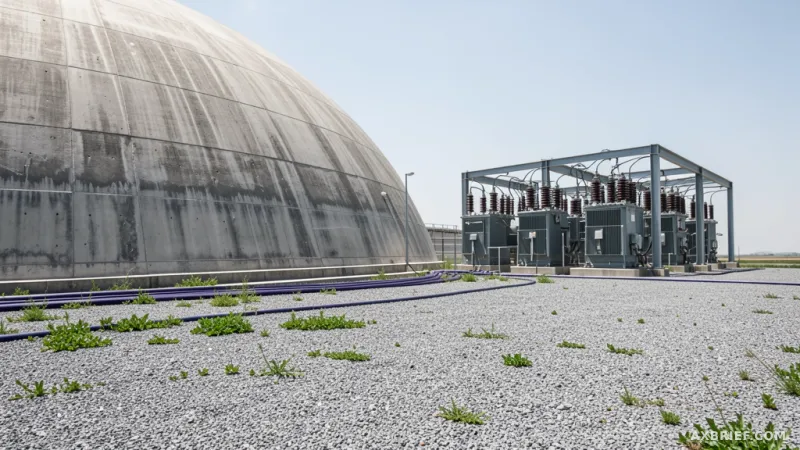
The modern AI data center is a creature of extreme contradiction. On one hand, it requires a baseline of power so massive it rivals small cities; on the other, its actual consumption is violently erratic. When a massive cluster of GPUs shifts from an idle state to a heavy training load or a burst of complex inference prompts, the power draw spikes almost instantaneously. For operators attempting to run behind-the-meter setups to avoid the bureaucracy and instability of the public grid, this volatility is a nightmare. Traditional power sources simply cannot pivot fast enough to keep up with the erratic heartbeat of a large language model.
The Natrium Blueprint and the Meta Deal
TerraPower, the nuclear innovation firm founded by Bill Gates, is stepping into this gap with a strategy that moves beyond simple power generation. The company plans to announce its first dedicated data center project this year, with a target for construction to begin in 2027. This initiative follows the groundwork being laid at its first power plant currently under construction in Wyoming, signaling a shift toward placing energy production hubs directly adjacent to the AI demand centers to maximize transmission efficiency.
The scale of this ambition is best illustrated by a landmark agreement reached in January. Meta has agreed to purchase eight Natrium plants, a move that represents one of the most aggressive attempts by an AI infrastructure operator to secure dedicated, large-scale power. The decision to acquire eight separate plants is a direct response to the physical constraints of scaling AI models. As model parameters grow and compute clusters expand, the sheer volume of electricity required makes reliance on the external grid a liability. By securing these plants, Meta aims to insulate its operations from grid instability and ensure a guaranteed energy floor for its next generation of AI hardware.
Solving the Nuclear Rigidity Problem
To understand why TerraPower's approach is different, one must first understand the inherent rigidity of nuclear energy. A traditional nuclear reactor is designed for constancy, not agility. Most conventional plants can only adjust their rated power output by approximately 5% per minute. While Small Modular Reactors (SMRs) improve this slightly, offering a response rate of roughly 10% per minute, they still struggle with the near-instantaneous load swings of a GPU-heavy environment. For a data center, a 5% or 10% ramp-up speed is often too slow, potentially putting immense strain on backup systems or natural gas turbines used to fill the gaps.
TerraPower solves this not by forcing the reactor to be agile, but by decoupling power generation from power delivery. The Natrium system utilizes a 345-megawatt molten salt-cooled reactor that maintains a steady state of fission. Instead of modulating the reactor's core output to match the data center's fluctuating demand, any excess heat generated by the reactor is diverted into massive molten sodium storage tanks. These tanks act as a thermal buffer, storing energy in the form of liquid sodium rather than electricity.
When the AI workload spikes and the demand for electricity surges, the system draws the stored heat from the sodium tanks to generate additional steam and spin the turbines faster. This allows the plant to increase its electricity output almost immediately without requiring the nuclear reactor itself to change its fission rate. This mechanism effectively bridges the gap between the rigid, slow-moving nature of nuclear physics and the volatile, high-speed demands of AI computation.
From an economic perspective, this thermal storage strategy is a masterstroke. Nuclear plants are most profitable when they maintain a high capacity factor, running at full power consistently. By using molten sodium to soak up excess energy during low-demand periods, TerraPower ensures the reactor never has to throttle down, which would otherwise degrade efficiency and extend the payback period on the massive initial capital expenditure. The result is a system that provides the stability of baseload nuclear power with the flexibility of a battery.
This integration of thermal energy storage transforms the nuclear plant from a static utility into a dynamic component of the AI stack, ensuring that the physical limits of energy production no longer throttle the speed of artificial intelligence.



