
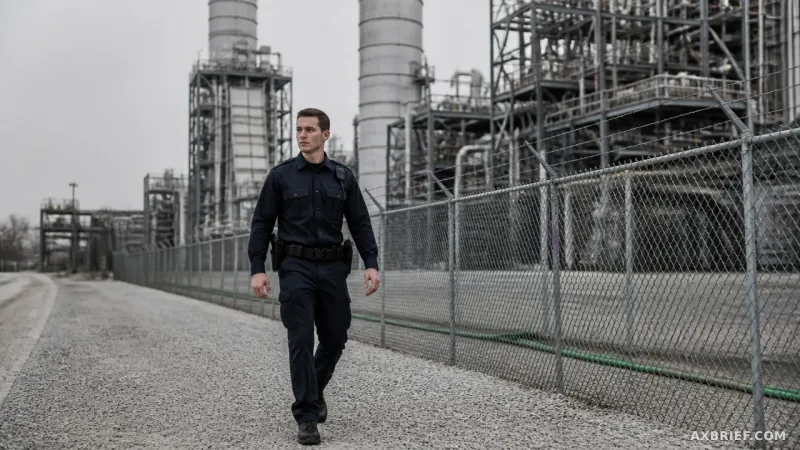
The battle for artificial intelligence supremacy has shifted from the architecture of the neural network to the physical reality of the power grid. For years, the industry focused on parameter counts and floating-point operations, but the current bottleneck is no longer just silicon—it is electricity. In a desperate bid to secure the massive, uninterrupted energy loads required by next-generation data centers, the world's largest hyperscalers are transforming into energy companies, bypassing traditional utilities to build their own power plants from the ground up.
The Gigawatt Land Grab
This infrastructure pivot is manifesting in massive capital expenditures across the American South. Meta is currently spearheading a project in Louisiana to construct a 7.5GW natural gas power plant specifically designed to feed its Hyperion data center. This is not an isolated experiment but a systemic trend among the AI elite. In Texas, Amazon has announced plans for a 7.6GW power plant, while Microsoft and Google are pursuing their own gigawatt-scale gas facilities in the same region. The scale of these projects reflects a fundamental shift in how AI infrastructure is planned, moving toward a model where the power source is as critical as the chip architecture.
Until now, the logic behind this pivot was simple: cost. Natural gas in the United States has remained remarkably affordable, with prices generally fluctuating between 2 dollars and 4.50 dollars per million BTUs. At the Henry Hub in Louisiana, the benchmark for North American gas, prices have recently hovered just below the 3 dollar mark. This pricing environment made natural gas the most attractive bridge fuel for companies needing immediate, high-capacity power. However, this perceived stability is being challenged by Noreva, an energy research firm that warns the market is far more fragile than it appears. According to Noreva CEO Peter Gardett, the arithmetic of current demand suggests that gas prices in certain regions could surge past 10 dollars per million BTUs within a few years.
The Stranded Gas Fallacy
To understand why a price spike is likely, one must look at the geographical anomaly that Big Tech has been exploiting. For a long time, regions like West Texas enjoyed artificially low gas prices because of a lack of infrastructure. The area produced vast quantities of natural gas as a byproduct of oil drilling, but because there were not enough pipelines to transport that gas to other markets, it became stranded. This created a local buyer's market where hyperscalers could secure fuel at a steep discount simply by placing their data centers next to the source.
This structural advantage is now evaporating. The very pipelines that are now being constructed to modernize the grid are acting as bridges, connecting these isolated, cheap pockets of gas to the global export market. As the physical barriers fall, the local discount disappears. The gas that once sat idle in Texas is now flowing toward Liquefied Natural Gas (LNG) export terminals, meaning local AI hubs must now compete with global demand. This convergence is happening exactly as the supply side begins to falter; gas production growth is slowing and older wells are seeing declining yields.
When you layer the explosive energy requirements of AI data centers on top of increasing LNG exports and slowing production, the result is a tightening market. The hyperscalers are investing billions in the plants themselves, but they have little control over the raw commodity fueling them. They have built the engines, but they are now exposed to a volatile global fuel market that no longer offers the regional protections they relied upon during the planning phase.
This energy volatility creates a direct pipeline to the cost of AI services. In a large-scale power plant, fuel costs typically account for roughly 50 percent of total operating expenses. For companies adopting a Bring Your Own Power strategy, a doubling or tripling of gas prices does not just impact the balance sheet—it fundamentally alters the unit economics of the AI model. If the cost of generating a kilowatt-hour spikes, that cost will inevitably migrate to the end user, potentially manifesting as an increase in the price per token for API consumers.
Beyond the corporate balance sheet, there is a growing social tension. Approximately 80 percent of consumers already express concern that the energy demands of data centers will drive up general electricity rates. If Big Tech is forced to supplement its own plants by drawing more power from the public grid during gas price spikes, the financial burden could shift to the average citizen. We are entering an era where the quarterly earnings calls of companies like Alphabet may no longer be judged solely by user growth or ad revenue, but by their correlation with natural gas indices. The economic viability of the AI revolution is now inextricably linked to the price of a commodity that the tech giants cannot control.



