
The invisible contract of the generative AI era is currently being rewritten in real-time. For years, the industry has operated on a silent assumption: that the vast ocean of human knowledge—digitized books, cinematic archives, artistic portfolios, and billions of social media posts—is a free resource for the taking. This collective intellectual heritage provided the fuel for the current AI explosion, yet the resulting wealth has flowed almost exclusively toward a handful of Silicon Valley firms and their venture capital backers. As the gap between the creators of the data and the owners of the models widens, a growing tension has emerged in the developer and policy communities regarding who actually owns the value generated by artificial intelligence.
The Architecture of the AI Dividend
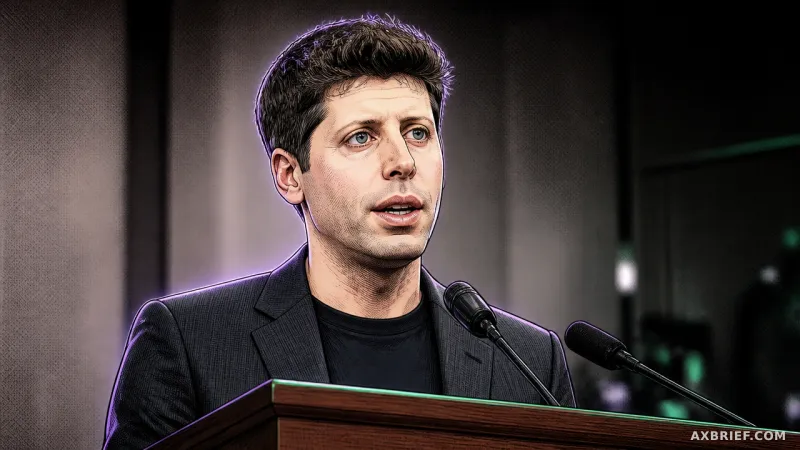
Sam Altman has begun to challenge the traditional concentration of AI wealth by proposing a radical redistribution of corporate value directly to the American public. This is not a new whim but a developing framework that Altman has refined over several years. As early as 2021, he suggested a model where any company exceeding a certain valuation threshold would contribute 2.5 percent of its annual market value into a public fund, which would then be distributed as annual payments to US citizens. By April of this year, OpenAI narrowed the scope of this proposal, aligning it more closely with the specific compensation structures Altman has reportedly been discussing with Donald Trump.
The logic underpinning this equity distribution is two-fold, addressing both historical debt and future instability. First, it serves as a retroactive payment to the data generators. Because AI models learn from human-generated works without paying the original authors, the provision of free equity acts as a delayed compensation mechanism for the global workforce whose creativity built the models. Second, it functions as a social safety net. With widespread anxiety mounting over the potential for AI to collapse traditional labor markets, the dividend is positioned as a financial buffer to stabilize the economy as automation accelerates.
This conversation has already moved beyond the boardroom and into the halls of government, where the numbers are becoming even more aggressive. Senator Bernie Sanders has pushed the envelope further, proposing that the American public receive 50 percent of the equity in major AI companies. While Altman's suggestions are more moderate, the fact that the debate has shifted from vague ethical guidelines to specific percentage points indicates that the ownership of AI wealth is now a primary political battleground.
The Financial Friction and the Political Deal
To understand why OpenAI is pivoting toward this public-sharing model, one must look at the friction between its astronomical valuation and its actual balance sheet. As of the March funding round, OpenAI's corporate value was pegged at 852 billion dollars. On paper, the company is a titan; in practice, it is consuming massive amounts of capital to build the data centers required for the next generation of intelligence. This immense infrastructure spend, coupled with a current lack of profitability, has created a precarious financial situation. Reports indicate that OpenAI is delaying its initial public offering until its valuation reaches the 1 trillion dollar mark, a target that is increasingly difficult to hit when expenditures on compute and energy are skyrocketing while revenue streams remain in their infancy.
When the math is applied to the current valuation, the AI dividend takes on a concrete form. If 5 percent of OpenAI's 852 billion dollar valuation were distributed among approximately 133 million US households, each household would receive roughly 320 dollars in equity. This is a strategic shift from a one-time cash payment to a shared-ownership structure, allowing the public to benefit from the company's future growth. However, this is less an act of corporate philanthropy and more a calculated move to manage regulatory risk.
By tying the financial success of the American public to the success of OpenAI, Altman is effectively building a grassroots shield against restrictive legislation. In an environment where public trust in AI companies is low, offering a piece of the pie transforms the public from critics into shareholders. Furthermore, securing a friendly relationship with the Trump administration is a survival imperative. Government alignment ensures that OpenAI's models are not classified as supply chain risks—which could lead to restricted usage or national security lockdowns—and provides the political leverage needed to block Chinese competitors from seizing technological hegemony.
The proposal is a sophisticated political trade. In exchange for a small fraction of equity, OpenAI gains the protection of the state and the tacit approval of a population that might otherwise demand more stringent regulations or higher taxes. The dividend is the price of admission for a company that wants to operate with the scale of a sovereign entity while avoiding the constraints of a traditional corporation.
This shift proves that the distribution of AI wealth has evolved from a moral debate into a strategic tool for corporate survival.



