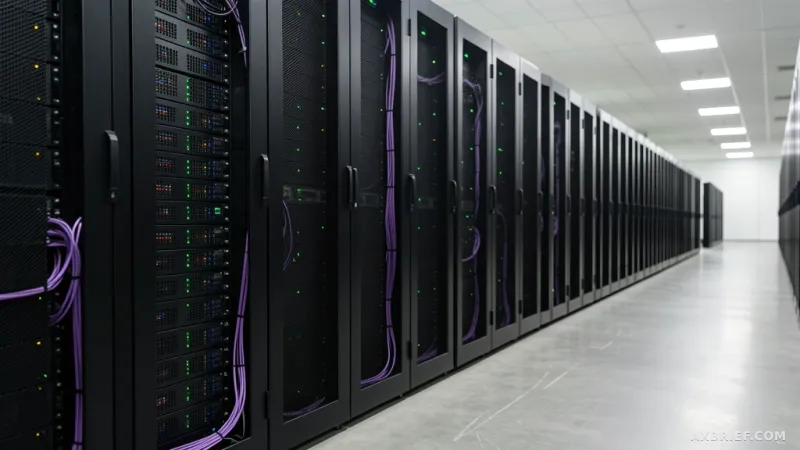
For the past few years, the global AI race has felt less like a software competition and more like a desperate scramble for physical silicon. Engineers and CTOs have lived through a period of extreme scarcity, where the ability to scale a model depended entirely on one's relationship with Nvidia or the depth of their cloud budget. The industry has largely accepted a singular reality: you either rent H100s from a provider or you wait months for a shipment of GPUs. This bottleneck created a rigid hierarchy in the AI ecosystem, leaving enterprises trapped between the high cost of proprietary hardware and the lock-in of the cloud platforms that host them.
The Scale of the Trainium Ambition
This status quo is facing a potential disruption from within the world's largest cloud provider. Peter DeSantis, the head of AI at AWS, recently revealed in an interview with Bloomberg that Amazon is in active discussions to sell its proprietary Trainium AI chips to other companies for use in their own data centers. This marks a fundamental departure from Amazon's long-standing strategy of keeping its custom silicon exclusively for internal use to power AWS services. The shift is not a sudden whim but a calculated move backed by staggering internal demand and a clear vision from the top.
In a shareholder letter released in April, Amazon CEO Andy Jassy highlighted the immense appetite for the company's custom AI hardware. Jassy provided a striking valuation of this potential pivot, estimating that if the chip business were spun off into an independent entity selling to both AWS and third-party customers, it could reach an annual revenue run rate of approximately $50 billion. To put that number in perspective, a $50 billion annual revenue stream would place this hypothetical chip business in the same league as the historical peak revenues of Intel, signaling that Amazon is no longer viewing Trainium as a mere cost-saving measure, but as a massive commercial engine.
The demand for this hardware is already outpacing Amazon's ability to produce it. According to Jassy, the current capacity for Trainium chips has been almost immediately sold out. Even more telling is the status of the next-generation hardware, Trainium4. Despite the fact that this chip is more than a year away from official release, its production capacity is already fully reserved. Amazon is not just looking to sell individual chips; the company is considering selling entire racks of hardware, providing a turnkey infrastructure solution that allows customers to deploy AI training clusters without needing to build the supporting architecture from scratch.
Breaking the Waterfall Effect
To understand why this move is a strategic pivot, one must understand the waterfall effect that has governed AWS's silicon strategy until now. Historically, Amazon had no incentive to sell a Trainium chip to a competitor or a third-party data center. The goal was to keep the hardware locked within the AWS ecosystem. By doing so, Amazon could charge customers for the processing of AI tokens while simultaneously capturing revenue from the surrounding cloud stack: storage, security, networking, and monitoring. In this model, the chip was the hook, and the cloud services were the high-margin product. Selling the hardware externally would, in theory, allow a customer to bypass the AWS cloud entirely, potentially cannibalizing the very services that make AWS profitable.
However, the current market dynamics have shifted the calculus. By moving into direct hardware sales, AWS is stepping directly into the arena dominated by Nvidia. While Nvidia's annual revenue run rate of $326 billion dwarfs Amazon's $50 billion estimate, the entry of a titan like AWS changes the nature of the competition. It transforms the AI hardware market from a monopoly into a diversified landscape where the world's largest cloud provider is also a primary hardware vendor. This move suggests that Amazon believes the Trainium architecture has reached a level of commercial maturity where the profit from hardware sales outweighs the risk of losing some cloud service attachment.
Yet, this ambition faces a critical physical constraint: the supply chain. AWS relies on TSMC to manufacture its chips, and TSMC's production lines are currently the most contested real estate in the tech world. With Nvidia already occupying the top spot as TSMC's largest customer, surpassing even Apple, Amazon faces a daunting logistical challenge. To succeed in external sales, AWS must secure enough additional wafer capacity to satisfy both its own massive internal cloud needs and the demands of external buyers. The battle for AI supremacy is no longer just about who has the best architecture, but who can command the most space on a TSMC fabrication line.
For the broader AI community, this shift represents a vital diversification of the infrastructure stack. For too long, the path to high-performance AI training has been a narrow corridor leading straight to Nvidia. If AWS successfully commercializes Trainium racks, enterprises will finally have a viable, high-performance alternative that doesn't require total dependence on a single GPU vendor. It signals a transition from an era of scarcity and monopoly to an era of commercial competition in AI acceleration.
The industry is now watching to see if Amazon can break the TSMC bottleneck and turn its internal tool into a global standard.