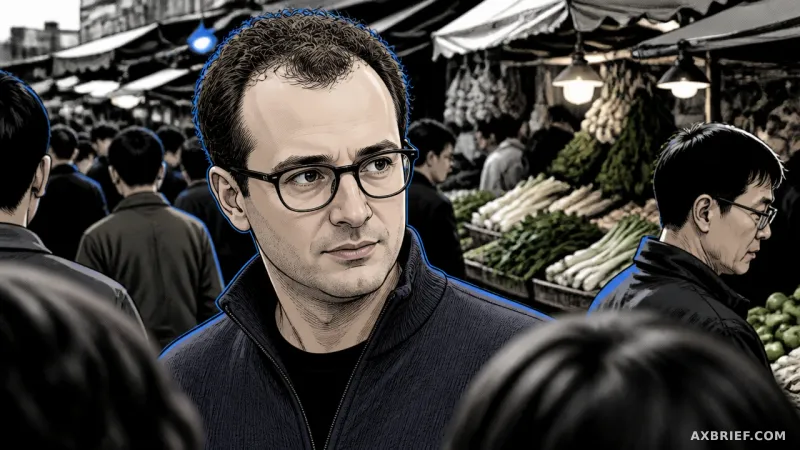
Across the United States, the physical footprint of the artificial intelligence boom is meeting a wall of local resistance. From zoning disputes over massive data center complexes to grassroots protests against energy consumption, the friction is no longer just theoretical or confined to academic papers on existential risk. There is a palpable sense of anxiety in the air, a feeling that a handful of opaque corporations are building a future that the average citizen neither understands nor invited. This tension has moved beyond the periphery of tech circles and into the boardroom, sparking a fundamental disagreement over why the world is suddenly pushing back against the AI trajectory.
The Clash Over AI Alarmism
This friction recently culminated in a public ideological clash between Anthropic CEO Dario Amodei and investor Gavin Baker. The core of the dispute centers on a provocative question: is the AI industry creating its own enemies? Baker argues that Amodei, who has long been a vocal proponent of highlighting the catastrophic risks associated with frontier models, has inadvertently fueled the fire. According to Baker, by emphasizing the dangers of the technology, Amodei has provided ammunition to those opposing AI infrastructure and development. Baker suggests that the leader of one of the world's most influential AI labs should act as a more positive advocate for the industry rather than a harbinger of doom, arguing that Amodei has lost his persuasive edge in the regulatory arena by focusing too heavily on the downside.
Amodei, however, views the situation through a different lens. He maintains that his communication has always sought a delicate balance between the immense benefits and the genuine risks of the technology. To counter the narrative that he is merely an alarmist, Amodei pointed to his essay, Machines of Loving Grace, where he attempts to paint a vivid, optimistic picture of how AI could fundamentally improve the human condition. While he acknowledges that public sentiment has soured, he rejects the notion that this is a direct result of warnings issued by AI leaders. Instead, Amodei diagnoses the problem as a systemic crisis of trust. He argues that the backlash is not about specific warnings regarding neural networks, but rather a deep-seated structural distrust that citizens feel toward corporations, governments, and the broader technology sector. In this view, the public does not fear the AI itself as much as they fear the people and institutions controlling it, suspecting that these entities will use the technology to exploit them in new and more efficient ways.
The Strategic Pivot Toward Asymmetric Regulation
This diagnosis of a trust crisis leads to a significant departure from the standard Silicon Valley playbook regarding regulation. For years, the dominant narrative in the tech industry has been the fear of regulatory capture. In this scenario, incumbent giants lobby for complex, expensive regulations not to protect the public, but to create insurmountable barriers to entry for smaller competitors. By making the cost of compliance prohibitively high, the incumbents effectively freeze the market, ensuring that no new startup can challenge their dominance. Most AI leaders have viewed regulation through this cynical lens, treating any government intervention as a potential tool for corporate consolidation.
Amodei is challenging this simplification. He recognizes that from the perspective of the general public, regulation is not a tool for capture but a necessary shield. To the citizen, a regulation is a mechanism to limit the power of a behemoth and ensure that the benefits of technology are distributed more equitably. This insight informs Anthropic's specific approach to policy. Rather than opposing regulation entirely or seeking a blanket set of rules, Anthropic is advocating for a more nuanced, asymmetric regulatory framework. The goal is to design policies that intentionally slow the breakneck speed of frontier AI development—the massive, general-purpose models—while simultaneously creating a permissive and supportive environment for smaller, specialized competitors.
This is a calculated strategic shift. By supporting transparency requirements and safety mandates for the largest models, Anthropic is not just playing the role of the responsible actor; it is helping to redefine the competitive landscape. If the cost and regulatory burden of maintaining a frontier model become significant, the market incentive shifts. The industry moves away from a winner-take-all race for the most powerful general intelligence and toward a diverse ecosystem of smaller, domain-specific models that can operate with more agility and less institutional friction. This approach suggests that the real battle for AI dominance is no longer about who can scale the most parameters or secure the most H100s, but about who can secure institutional legitimacy and social trust.
For developers and AI startups, this shift signals a change in how value is measured. The era of winning purely on benchmark scores is fading. As the trust crisis deepens, the market will likely reward companies that can demonstrate empirical, tangible benefits to the end-user rather than those that make grand promises about the future of intelligence. The opportunity now lies in the gap created by the regulatory constraints placed on the giants. While frontier labs navigate the complexities of government oversight and public scrutiny, smaller players who focus on transparency and specific, high-value utility may find a faster path to adoption.
The sustainability of the AI industry now depends on the ability of its leaders to close the gap between the utopian visions they sell and the actual results delivered to the public.