
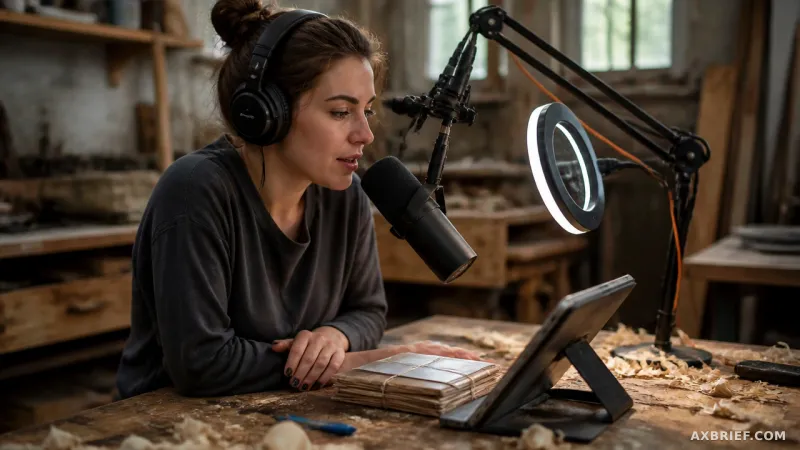
The modern content creator exists in a state of perpetual tension with the machines designed to mimic them. For years, streamers have watched as third-party scrapers harvested their voices and likenesses to fuel uncanny AI clones, often without a cent of compensation or a shred of consent. This week, that tension shifted from an external threat to an internal policy as creators discovered that the very platform hosting their careers is now integrating their output into the generative AI pipeline.
The Mechanics of the Opt-Out Mandate
Amazon has officially integrated the streaming archives of its subsidiary, Twitch, into the training sets for its generative AI models. The implementation is not based on a request for permission, but rather a presumption of consent. By adopting an opt-out framework, Amazon ensures that every single piece of content uploaded to the platform is fair game for AI training unless the creator takes specific, manual action to prevent it. This means the default state for every streamer, from the hobbyist to the top-tier partner, is to serve as a data provider for Amazon's AI ambitions.
The controversy reached a boiling point when the community questioned why Twitch avoided an opt-in system, which would have required creators to explicitly agree before their data was used. During a live broadcast, Twitch Chief Product Officer Mike Minton provided a candid admission that confirmed the company's priorities. Minton stated that if the company had pursued an opt-in approach, no one would have agreed to participate. This admission clarifies the strategic intent: the opt-out model was not a design oversight, but a calculated move to ensure a massive, uninterrupted flow of data.
For creators who wish to protect their intellectual property, the process is not intuitive. The option to disable AI training is not located within the primary Creator Dashboard. Instead, users must navigate to `Channel Settings`, select the `Security and Privacy` tab, and scroll to the bottom to find the toggle for `training for generative AI`. Because this setting is buried and defaults to on, a significant portion of the creator base is likely contributing their voice and video data to Amazon's models without their knowledge.
The Multimodal Data Land Grab
To understand why Amazon is willing to risk the ire of its most loyal users, one must look at the nature of the data. Thousands of hours of high-fidelity audio and video are far more valuable than the static text datasets that powered the first wave of LLMs. Streaming data is uniquely dynamic; it captures real-time human emotion, conversational nuance, and the intersection of visual and auditory cues. This multimodal richness is the holy grail for developers attempting to create AI that can interact naturally or generate realistic video content.
This strategy mirrors the aggressive data harvesting seen at Meta. Like Twitch, Meta utilizes public content from Facebook and Instagram to train its AI, offering very few avenues for refusal in certain jurisdictions. In the eyes of these platforms, public data is a resource to be mined. By shifting the burden of refusal onto the user, platforms maximize their collection efficiency while maintaining a thin veneer of choice.
However, Twitch operates in a more volatile ecosystem than a general social network. Streamers do not just post content; they build brands based on the uniqueness of their personality and voice. For a professional streamer, their voice is their primary asset. When a platform defaults to using that asset to train a model that could eventually automate or mimic that very personality, it creates a fundamental conflict of interest. The friction here is not just about privacy, but about the devaluation of human identity in the face of corporate efficiency.
This move signals a broader shift in the AI industry where the focus is moving from the quantity of data to the specific utility of the source. Amazon is not just looking for more data; it is looking for the specific kind of human-centric, interactive data that only a platform like Twitch can provide. By forcing an opt-out system, they are essentially treating creator content as a platform utility rather than a creative work.
The industry is now entering a phase where the legitimacy of data provenance will define the winners and losers of the AI race. While Amazon can leverage its market dominance to force an opt-out policy today, the long-term risk is a degradation of trust that could drive top talent toward platforms that offer explicit protections. The competition for AI supremacy is no longer just about who has the largest compute cluster, but about who can secure a sustainable and ethical supply of high-quality human data.



