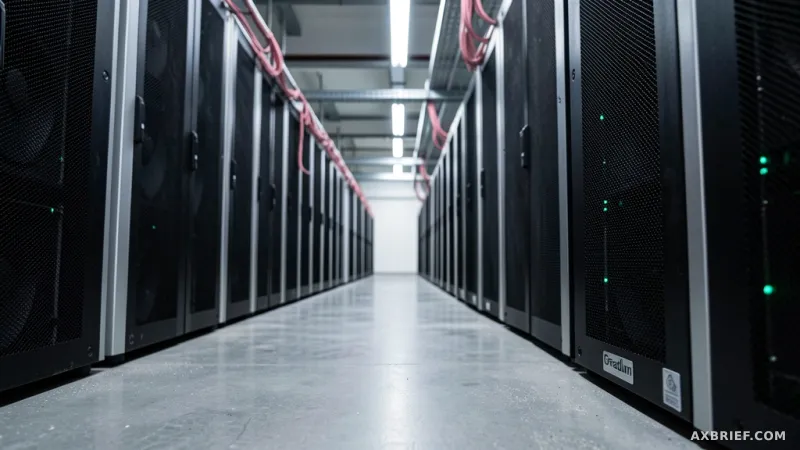
There is a specific, unsettling kind of silence that occurs during a conversation with a modern AI voice assistant. You finish your sentence, and for a fraction of a second—or perhaps a full second—there is a void. It is a digital hesitation, a momentary freeze that reminds the user they are speaking to a server in a distant data center rather than a sentient being. This latency is the final frontier of the uncanny valley for voice interfaces, and it is the exact problem Gradium is attempting to solve.
The Architecture of a Massive Seed Round
Gradium, a Paris-based voice AI startup, recently announced a seed funding round totaling $100 million. In the traditional venture capital lifecycle, a seed round is typically designed to prove a concept or build a minimum viable product, often ranging from a few million to perhaps twenty million dollars. A $100 million seed round is an extreme anomaly, signaling that investors are not betting on a prototype, but on a fundamental shift in how audio AI is deployed. The most telling signal in this round is the participation of Nvidia. By opening its seed round to new investors and securing the backing of the world's leading AI hardware provider, Gradium has aligned itself with the very company that powers the global compute infrastructure.
The company's technical lineage is equally prestigious. Gradium is a spin-out from Kyutai, an AI research laboratory funded by the billionaire entrepreneur Xavier Niel. This structure allows Gradium to bridge the gap between academic exploration and commercial application, taking the high-level research conducted at Kyutai and hardening it for the enterprise market. The leadership team is anchored by co-founder Neil Zeghidour, whose resume reads like a directory of the most influential AI labs of the last decade. With previous research roles at Google Brain, DeepMind, and Meta, Zeghidour brings a level of institutional knowledge regarding large-scale model training that few startups can match. This combination of academic rigor from Kyutai and big-tech execution from Zeghidour is what likely drove the valuation and investor appetite.
The Latency Gap and the Battle for the Interface
To understand why Nvidia is investing so heavily in a voice startup, one must look past the intelligence of the model and focus on the timing of the delivery. Most current voice AI systems operate on a pipeline: speech-to-text, text-to-LLM, and then LLM-to-speech. Each step adds milliseconds of delay. Even with optimized pipelines, the result is often a stilted interaction. Gradium is pursuing ultra-low latency technology to eliminate these pauses entirely, aiming for a system where the AI responds the moment the user stops speaking, mirroring the natural cadence of human dialogue.
This focus on speed is a strategic pivot in a market currently dominated by giants. Gradium enters a landscape where ElevenLabs, valued at $11 billion as of February, has set a high bar for voice synthesis quality. Simultaneously, Google is integrating multimodal capabilities into Gemini to make voice interactions more fluid. However, Gradium is not competing solely on the quality of the voice or the depth of the knowledge base. Instead, it is competing on the physics of the interaction. By prioritizing ultra-low latency, Gradium is targeting the B2B sector where a delay of 500 milliseconds can be the difference between a tool that feels intuitive and one that feels obstructive.
The real-world application of this is already evident in Gradium's partnership with Renault. In an automotive environment, the stakes for latency are higher than in a home office. A driver interacting with a vehicle's AI cannot afford a laggy interface that distracts them from the road or requires them to wait for a response while navigating traffic. For Renault, the immediate responsiveness of Gradium's models transforms the AI from a novelty feature into a safety-conscious utility. This successful deployment proves that the market values immediacy over raw parameter count.
To sustain this momentum, Gradium is expanding its physical footprint into the Bay Area. By establishing an office in the heart of San Francisco and San Jose, the company is positioning itself within the immediate orbit of OpenAI, Anthropic, Meta, and Google. This move is a calculated talent play. In the current AI arms race, the density of elite researchers in a single zip code acts as a force multiplier for innovation. By embedding itself in the Bay Area, Gradium can absorb the latest breakthroughs in real-time and recruit the engineers necessary to scale its ultra-low latency architecture for global enterprise use.
The industry is beginning to realize that the next leap in AI adoption will not come from making models smarter, but from making them invisible. When the latency disappears, the interface disappears, leaving only the conversation. Gradium's $100 million war chest is a bet that the winner of the voice AI race will be the one who can most effectively kill the silence.