
The AI industry is currently locked in a brutal war of attrition over physical space and electricity. From the struggle to secure enough megawatts to power H100 clusters to the bureaucratic nightmare of zoning laws and environmental impact reports, the bottleneck for artificial intelligence has shifted from algorithmic breakthroughs to the raw physics of real estate. As tech giants scramble to build massive campuses in the desert or the tundra, the friction of terrestrial infrastructure has become the primary constraint on the speed of intelligence.
The Orbital Escape from Red Tape
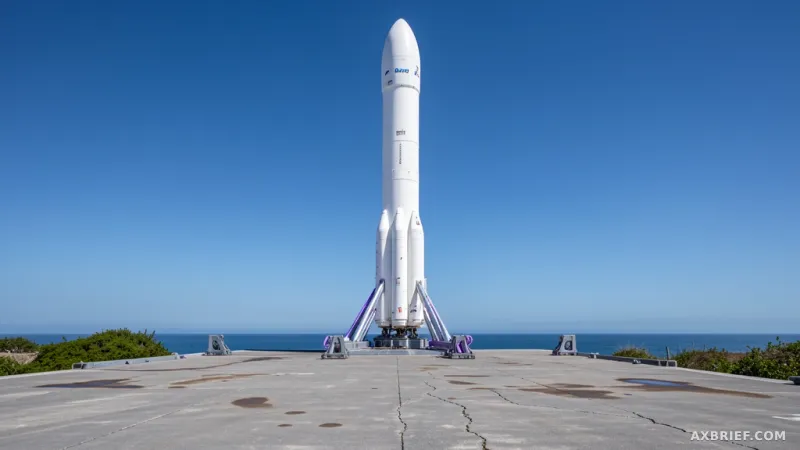
Elon Musk proposes a radical departure from this terrestrial struggle with the concept of the Orbital Data Center. The premise is straightforward: move the compute infrastructure into space to entirely bypass the administrative friction of Earth. Musk argues that the primary hurdles to scaling AI are not just technical, but political and social. By shifting data centers to orbit, SpaceX aims to eliminate the red tape of government permits and the NIMBY (Not In My Backyard) sentiment that often stalls large-scale industrial projects on the ground.
However, this vision has met significant resistance from the very people currently steering the AI revolution. During a recent shareholders meeting, SoftBank Chairman Masayoshi Son questioned the practical utility of the proposal. Son's critique centers on the temporal mismatch between the project's delivery and the industry's needs. He argues that an orbital infrastructure, which could take a decade to become viable, does nothing to solve the compute shortage of today. In the high-stakes race for AGI, where the window of opportunity is measured in months and years, a ten-year horizon is effectively an eternity.
Sam Altman of OpenAI shares a similar skepticism. For the leaders of the current AI wave, the critical metric is the immediate availability of floating-point operations per second. The urgency of the current compute constraint makes the prospect of space-based servers feel like a futuristic luxury rather than a strategic necessity. The tension is clear: while Musk views the orbital center as a way to solve the long-term scaling problem, the rest of the industry is focused on surviving the immediate resource drought.
The Launch Loop and the Market Illusion
To understand the Orbital Data Center, one must look past the cloud and toward the launchpad. The proposed architecture is not a single, monolithic space station, but rather a constellation of satellites working in tandem as a virtualized data center. This design choice reveals the true strategic objective. Because satellites in low Earth orbit have limited lifespans and are subject to harsh radiation and orbital decay, they must be replaced every few years.
This creates a perpetual maintenance pipeline. Every server upgrade or hardware failure in orbit necessitates a new launch. In this model, the Orbital Data Center is not just a service for AI developers; it is a guaranteed, recurring revenue stream for SpaceX's launch business. The data center becomes a mechanism to force constant demand for Falcon 9 or Starship flights.
This internal demand loop is already evident in SpaceX's current market dominance. On paper, SpaceX controls 80-90% of the global launch market. However, a significant portion of this volume is driven by the deployment and maintenance of Starlink. Analysis suggests that if internal demand from Starlink were removed, SpaceX's market share would likely drop to between 20-40%. The Orbital Data Center is a logical extension of this strategy, expanding the internal ecosystem to ensure that SpaceX remains the dominant force in space transport regardless of external market fluctuations.
For the developer or the infrastructure architect, the Orbital Data Center is an engineering marvel but a practical distraction. The real shift is happening not in orbit, but in the emergence of the Neo-cloud. This new paradigm sees specialized hardware providers and firms with idle compute resources renting out their capacity to the highest bidder, bypassing the traditional hegemony of the giant Cloud Service Providers (CSPs).
Companies like Groq are leading this charge by offering specialized AI accelerators that prioritize inference speed over general-purpose flexibility. Even firms recovering from bankruptcy are pivoting their business models to rent out their remaining GPU clusters. SpaceX has entered this fray as well, signing contracts to lease compute resources to smaller players alongside its partnerships with giants like Google and Anthropic. In the current climate, the only variable that matters is the speed of resource acquisition. The Neo-cloud provides immediate, tangible capacity, whereas the orbital vision remains a long-term play to solidify SpaceX's grip on the launch market.
While the idea of a celestial supercomputer captures the imagination, the immediate priority for the AI ecosystem is the efficiency of resource allocation on Earth.



