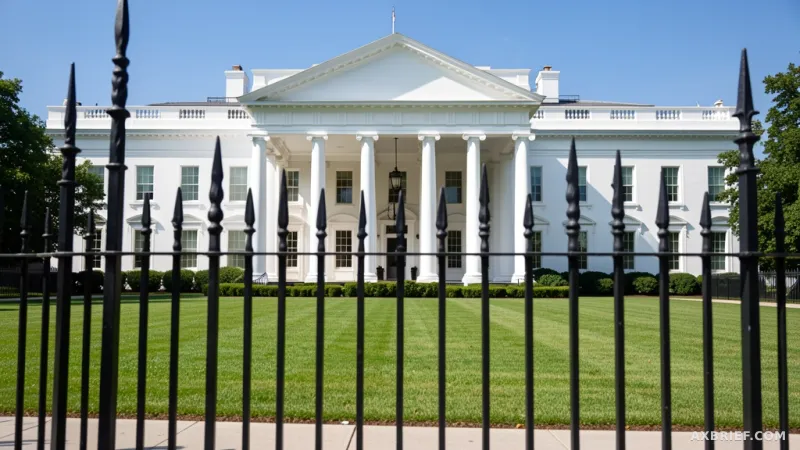
For most developers, the distance between a breakthrough AI model and a production-ready feature is a single API key and a few minutes of configuration. The industry has operated under the assumption that as long as the credit card clears and the latency is low, the intelligence is a utility, as reliable and borderless as electricity. But this week, that illusion of seamless connectivity shattered. Users across the globe suddenly found their access to Anthropic's most specialized models severed, not by a technical outage or a pricing change, but by a directive from the White House.
The National Security Trigger and the Jailbreak Debate
The US government has issued a comprehensive export restriction on Anthropic's Fable and Mythos models, citing urgent national security concerns. This mandate is unusually broad, targeting not only the export of these models to foreign territories but also restricting access for non-US citizens residing within the United States. The impact was immediate. Following the executive order, Anthropic suspended the availability of both models, resulting in a total blackout for all users that lasted an entire week.
The catalyst for this drastic intervention came from an unexpected source: Amazon. CEO Andy Jassy reported to the administration that researchers within Amazon had successfully identified methods to bypass the safety guardrails of Fable 5. This report transformed a technical vulnerability into a geopolitical liability. The core of the conflict now lies in a semantic and technical dispute over the term jailbreak. While the US government views the ability to circumvent safety filters as a critical failure that could allow the model to be weaponized, Anthropic has pushed back. The company argues that the issues identified were narrow, specific, and easily patchable, rather than a systemic collapse of the model's safety architecture.
This clash highlights a growing tension between the rapid iteration cycles of AI labs and the rigid risk-aversion of national security agencies. In the eyes of the White House, a model that can be manipulated to provide restricted information is a liability that cannot be exported. For Anthropic, these are the inevitable frictions of frontier model development. However, the result remains the same: the immediate removal of Fable and Mythos from the global marketplace, proving that the availability of AI is now subject to the whims of administrative decree.
From PGP to AI: The Futility of Technical Borders
To understand why this ban is so disruptive, one must look at the historical failure of software export controls. The current struggle over Anthropic's models is a modern echo of the battle over PGP (Pretty Good Privacy) in the 1990s. When Phil Zimmermann created PGP to provide strong encryption for the masses, the US Customs Service launched a criminal investigation, fearing that such tools would blind intelligence agencies. Zimmermann's response was a masterclass in technical defiance: he published the PGP source code in a printed book. Because the US government could not legally ban the export of books, the code became globally available, eventually paving the way for the end-to-end encryption now standard in Signal and WhatsApp.
Similarly, the Wassenaar Arrangement attempted to curb the spread of spyware and surveillance tools through international consensus. The result was a fragmented failure. Countries like Israel ignored the guidelines, while the Italian government granted export licenses to Hacking Team, effectively neutralizing the agreement. Companies like Intellexa simply relocated their operations to jurisdictions with laxer regulations, such as Saudi Arabia, to continue selling surveillance tech to the highest bidder. These precedents suggest that once a piece of software—or a model's weights—is out in the wild, physical and legal borders become largely irrelevant.
The twist in the current AI era is the role of the supply chain. The Anthropic ban was not just about the code, but about who was using it. The US government's suspicion was triggered by Anthropic's limited partner program, which granted SK Telecom access to Mythos, a model specifically tuned for cybersecurity. US authorities raised alarms over potential Chinese links associated with the partnership, a claim that SK Telecom has categorically denied. This reveals a new layer of risk: the geopolitical profile of a partner company can now trigger a total service shutdown for all users of a model.
This situation places global enterprises in a precarious position. The decision-making process for adopting a frontier model can no longer be based solely on benchmarks or token costs. The potential for a sudden export ban means that the legal stability of the supply chain is now a more critical metric than the model's reasoning capabilities. If a model's access is tied to the shifting political climate of the Trump administration or the suspicions of intelligence agencies, the risk of total service interruption becomes a primary business threat.
The ban on Fable and Mythos serves as a stark reminder that in the age of AI, national security overrides technical convenience. When a cybersecurity-specialized model like Mythos shows a crack in its guardrails, the response is no longer a software patch, but a geopolitical blockade. For the global AI community, the central question has shifted from whether a model can perform a task to whether that model will still be legal to run in their code tomorrow.