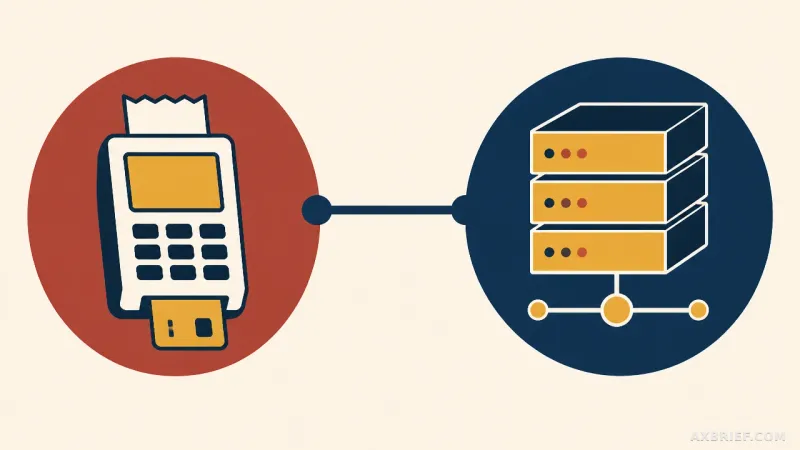
For decades, the gold standard of weather forecasting has been a game of brute force. Meteorologists relied on monolithic supercomputers and government-funded satellite arrays to crunch atmospheric variables, a process so expensive that it effectively locked the high-fidelity forecast market behind a state-sponsored wall. If you wanted a precise look at the eye of a hurricane or the erratic currents of the upper atmosphere, you didn't go to a startup; you went to a national weather service. But the paradigm is shifting as the bottleneck moves from the cost of computation to the exclusivity of the data itself.
The Architecture of a Planetary Nervous System
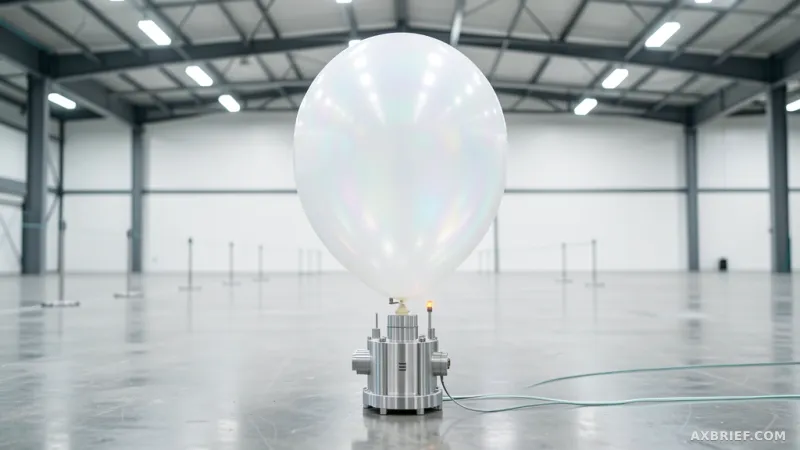
WindBorne Systems is positioning itself at the center of this shift, recently closing a $37 million Series B funding round co-led by Khosla Ventures and Galvanize. This injection of capital pushes the company's valuation to $250 million, providing the runway needed to scale a hardware-software hybrid that treats the atmosphere as a live data stream. Founded in 2019, the company does not rely on traditional stations; instead, it deploys a fleet of long-duration balloons equipped with low-cost sensors. Currently, WindBorne Systems operates approximately 600 balloons simultaneously across 20 global launch sites.
This network is specifically designed to penetrate the blind spots of traditional meteorology. By sending sensors into high-risk, high-reward zones like the eye of a typhoon, the company captures raw atmospheric data that satellites often miss and ground stations cannot reach. To further extend this reach, the company has implemented a system where aerial sensor packages, upon descending, transition into floating buoys. These buoys continue to transmit measurements from the ocean surface, creating a seamless data pipeline from the stratosphere to the sea.
Crucially, the way this data is processed has undergone a fundamental transformation. While traditional simulations required the aforementioned supercomputers, WindBorne Systems leverages deep learning architectures similar to those powering modern Large Language Models. By applying these AI techniques to atmospheric physics, the company has reduced the computational overhead to the point where complex weather simulations can now run on a standard laptop. This technical leap has effectively decoupled high-end forecasting from government-scale infrastructure, allowing a private entity to compete on a global scale.
From Government Research to Financial Alpha
The real disruption, however, is not the balloons or the AI models, but the shift in the economic moat of the industry. For years, private weather firms were essentially data brokers; they took public data from government agencies, repackaged it, and sold it to airlines for de-icing or to shipping companies for route optimization. WindBorne Systems is bypassing this middleman dynamic by building what it calls a planetary nervous system. By owning the sensors and the resulting dataset, they have moved the competitive advantage from computing power to data exclusivity.
This shift is reflected in the company's evolving client base. While early partnerships were rooted in government utility—working with the National Weather Service (NWS) and the US Air Force and Navy to develop models that could run on communication-limited naval vessels—the trajectory is now moving toward the private capital markets. There is a growing demand among investment funds to integrate high-precision weather data directly into their trading algorithms to predict commodity price swings and business performance. Weather is no longer just a safety concern; it is a financial variable.
To make this commercial transition sustainable, WindBorne Systems is using its new funding to overhaul its communication infrastructure. The current reliance on satellite links for data transmission is a significant operational expense. The company is now building a mesh radio network to handle data relay, a move designed to slash operating costs and increase the efficiency of data transmission. By optimizing the hardware layer, they are transforming a high-cost research project into a high-margin data product.
The success of this venture depends on whether WindBorne Systems can bridge the gap between raw sensing and actionable decision-making. The history of earth-observation startups is littered with companies that collected brilliant data but failed to integrate it into a business workflow. The goal now is to move beyond the question of accuracy and toward the question of utility. The true value lies in how a specific atmospheric shift in the Pacific is instantly translated into a portfolio adjustment for a hedge fund or a supply chain pivot for a global retailer.