In a crowded conference hall in San Francisco, a group of developers huddles around a single glowing screen. They are not debating syntax or architecture in the traditional sense; instead, they are dissecting the behavioral patterns of Claude Code. The atmosphere is one of intense curiosity, but the nature of this collaboration is on the verge of a fundamental shift. The era of the developer as the primary writer of code is beginning to fade, replaced by a new dynamic where the human acts as a conductor for an autonomous digital orchestra.
The $950 Billion Strategy and the Glasswing Protocol
Anthropic is currently navigating a massive investment round that signals a bold play for market dominance. Once finalized, the company is expected to reach a valuation of approximately $950 billion. This figure places it in direct competition with OpenAI, which was valued at $854 billion during its March funding round. This valuation surge is not merely speculative; it reflects a tangible shift in enterprise preference. Since May 2025, Anthropic's share of the business market has increased fourfold, suggesting that corporate clients are migrating toward Claude's ecosystem at an accelerating pace.
This growth is driven by a strategic pivot led by key figures such as Cat Wu, the lead for Claude Code and Cowork, and Boris Cherny, a technical staff member and the creator of Claude Code. Together, they have transitioned Claude from a general-purpose information chatbot into a specialized, high-performance coding instrument. The pace of iteration has reached a fever pitch, with Anthropic releasing at least six models last year and maintaining a similar velocity throughout the current year.
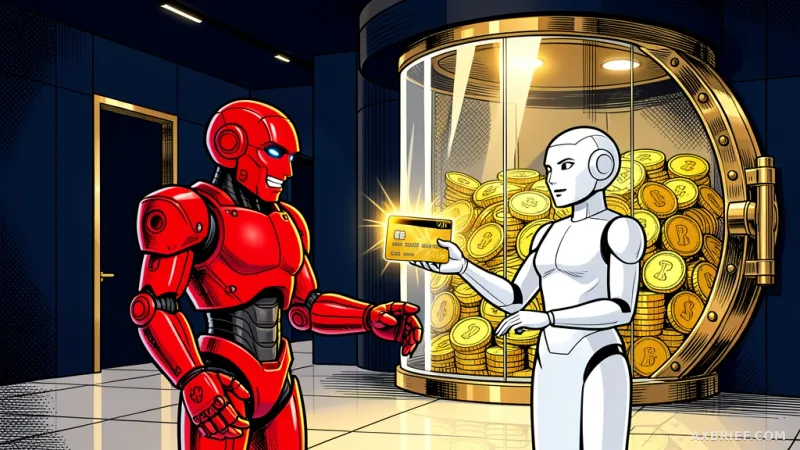
However, the company is adopting a tiered approach to deployment, recognizing that not every breakthrough is safe for public consumption. This is most evident in Project Glasswing, a specialized deployment initiative for cybersecurity models launched in April. Through this project, Anthropic developed Mythos, a model specifically engineered for code vulnerability analysis. Unlike the standard Claude models, Mythos was not released to the general public. Instead, it was restricted to a small circle of strategic partners, including Amazon, Apple, CrowdStrike, and Microsoft. The decision stemmed from a critical safety assessment: the model's capability to identify vulnerabilities was so potent that the development team feared it could be weaponized by malicious actors if released openly.
From Synchronous Response to Proactive Automation
For the past several years, the industry has operated on a synchronous development model. In this paradigm, the AI is reactive; it waits for a human to pose a question or provide a prompt before generating a response. We are currently seeing a transition toward basic automation, where AI handles repetitive tasks, such as responding to customer support tickets based on pre-defined routines. But Anthropic is pushing beyond this into the realm of proactive automation.
In this next phase, Claude will not wait for a command. Instead, the system will independently analyze a user's ongoing work, understand the underlying intent, and build the necessary automation frameworks before the user even realizes they are needed. This shift fundamentally alters the professional identity of the developer. The role is evolving from a creator who writes and reviews code into a manager who oversees a legion of AI agents.
This transition creates a new kind of tension. While the AI handles the execution, the human must provide the high-level oversight. The developer's value now lies in their ability to debug the agent's logic. When an agent fails or misinterprets a directive, the human manager must possess the deep domain knowledge required to identify whether the error was a result of a model hallucination, a misunderstanding of the instructions, or an insufficient initial request. The technical skill set is shifting from the act of construction to the act of auditing.
This evolution will likely lead to a contraction in traditional team sizes. The repetitive, entry-level tasks typically assigned to junior developers or interns are the first to be absorbed by these agents. While this reduces the headcount required for maintenance, it liberates the remaining human talent from the drudgery of routine emails and boilerplate code. The result is a professional environment where humans spend their time on creative architecture and high-level system design, treating AI not as a tool, but as a managed workforce.
AI is no longer content to be a digital encyclopedia that answers questions; it is becoming a system that anticipates needs and executes them autonomously.