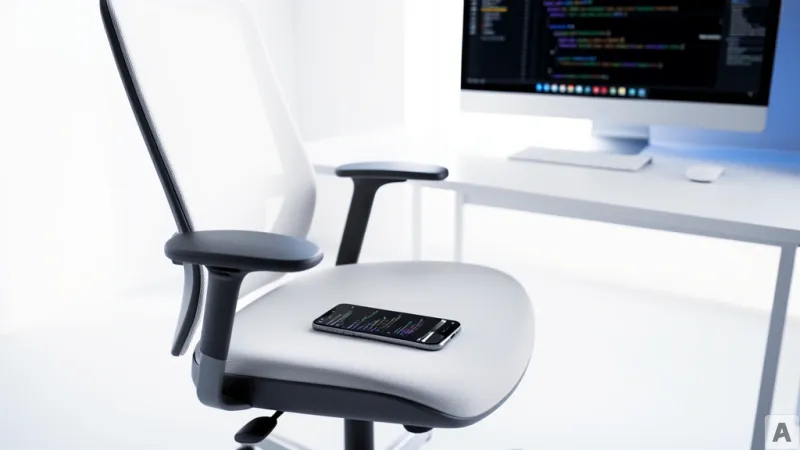
AI coding agents are rapidly evolving from simple autocomplete tools into autonomous workers, yet the human developer remains a physical bottleneck, tethered to a workstation to approve permissions or troubleshoot errors. This friction is exactly what Happy aims to solve. By decoupling the AI's execution environment from the developer's physical location, Happy transforms the coding process into a remote management task, allowing the human in the loop to step away from the desk without losing control of the machine.
The Architecture of Remote AI Orchestration
Happy functions as a sophisticated middleware layer that allows developers to operate tools like Anthropic's Claude Code and Codex via a smartphone or web browser. The setup begins with the Happy CLI, which the developer initializes on their primary workstation to start an AI session. To bridge the gap between the desktop and the mobile device, the system utilizes a simple QR code handshake, instantly linking the smartphone app to the active terminal session.
Under the hood, the system relies on four interdependent components to maintain a seamless connection. The Happy App serves as the primary user interface for mobile and web access, while the Happy CLI acts as the communication gateway between the user and the AI. Managing the session lifecycle is the Happy Agent, which monitors the AI's progress and handles remote commands. Finally, the Happy Server ensures that all data synchronization remains secure and encrypted, preventing unauthorized access to the codebase during transmission.
This infrastructure changes the fundamental interaction model of AI coding. Instead of sitting idle while an agent processes a complex refactor or scans thousands of lines of code, the developer receives real-time notifications on their phone. When the AI hits a permission wall or encounters a critical error, the developer can issue a command or grant access directly from their mobile device, keeping the momentum of the project alive without needing to return to the keyboard.
From Code Writer to AI Orchestrator
For decades, the developer's workspace has been defined by the physical constraints of the desk. Even with the advent of AI, the workflow remained largely synchronous; a developer would trigger a prompt and then watch the screen, waiting for the AI to finish before intervening. This created a passive dependency where the human was essentially a supervisor who could only act when the AI stopped moving.
Happy breaks this tether, shifting the developer's role from a manual coder to a high-level orchestrator. When the workspace expands from a single monitor to any location where a smartphone is present, the nature of productivity changes. The developer is no longer the person writing the syntax, but the manager of a highly skilled digital employee. This shift allows for a more fluid integration of deep work and administrative tasks. A developer can now attend a meeting, take a break, or move between offices while their AI agent continues to execute complex tasks in the background.
This evolution suggests that the core competency of the future developer will not be the ability to write code faster, but the ability to manage AI agents more efficiently. The bottleneck is no longer the speed of the AI, but the latency of human decision-making. By moving the control interface to the pocket, Happy reduces that latency, ensuring that the AI agent is never idling for long while waiting for human approval.
Solving the Enterprise Security Equation
Moving sensitive corporate codebases to a mobile-accessible interface naturally raises security concerns. Happy addresses this by implementing end-to-end encryption, ensuring that the code remains opaque to any intermediary servers. The data is encrypted at the source and decrypted only at the destination, meaning the Happy Server never sees the plaintext of the proprietary code it helps synchronize.
To further satisfy the requirements of security-conscious enterprises, the system supports self-hosting. Companies can deploy their own Happy Server within their private infrastructure, completely removing third-party dependencies from the data path. This architectural flexibility makes the tool viable for industries with strict compliance and intellectual property protections.
Transparency is another pillar of the project. The entire codebase is open source under the MIT license, allowing the global developer community to audit the security protocols and contribute improvements. Written in TypeScript, the project leverages a modern stack that ensures type safety and maintainability. The mobile application is built using Expo, providing a consistent and smooth experience across both iOS and Android platforms. Furthermore, the installation process is streamlined via npm, allowing developers to deploy the environment with a single command.
As AI agents take over more of the heavy lifting in software development, the physical relationship between the programmer and the computer must evolve. The transition from the desktop to the smartphone is not merely a convenience; it is a necessary adaptation to a world where AI does the bulk of the execution. By liberating the developer from the workstation, Happy signals the beginning of an era where coding is less about the act of typing and more about the art of orchestration.