The bottleneck in modern software development is no longer the speed of writing code, but the cognitive load of managing the AI agents that write it for us. As developers integrate multiple autonomous tools like Claude Code, Aider, and Gemini into their daily workflows, they encounter a frustrating paradox: the more AI assistance they have, the more time they spend managing windows rather than reviewing logic. This friction creates a fragmented experience where the developer acts less like an architect and more like a switchboard operator, manually toggling between terminal sessions to see which agent has finished its task and which is still hallucinating in a loop.
The High Cost of Terminal Context Switching
For years, power users have relied on tmux to divide a single terminal screen into multiple panes, allowing them to keep a server running in one corner and a text editor in another. However, the rise of agentic AI has changed the nature of the terminal. Unlike a static log file or a running process, an AI agent is a dynamic collaborator. When a developer assigns three different tasks to three different AI sessions—perhaps one for refactoring a database schema, one for writing unit tests, and another for documenting an API—they are essentially managing a team of invisible employees.
In a traditional tmux setup, these employees work behind closed doors. To check the progress of the database refactor, the developer must physically switch their focus to that specific pane. If the AI is still typing, the developer has wasted a mental cycle. If the AI has crashed, the developer only finds out after the switch. This is the equivalent of a chef managing five different pots on a stove but being forced to walk across the room to see if any of them are boiling over. Every time a developer switches contexts, they incur a cognitive penalty, losing the thread of their primary thought process and slowing down the overall velocity of the project.
How Mux Transforms the Terminal into a Control Tower
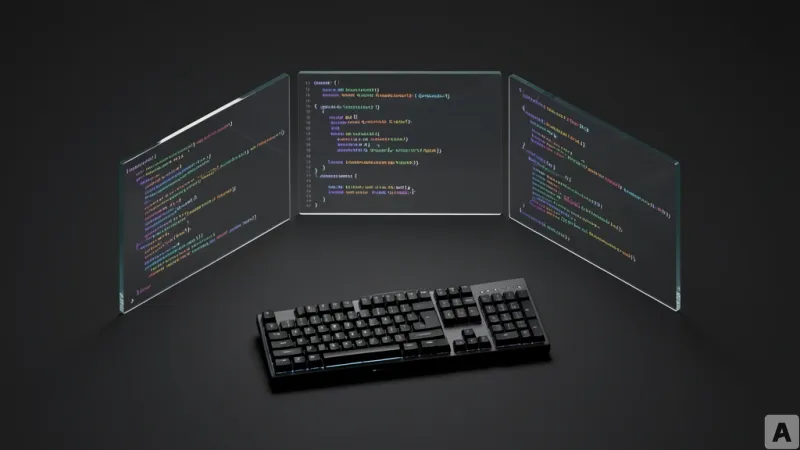
This is where mux enters the ecosystem. Built using the Go programming language and the Bubble Tea TUI framework, mux is designed specifically to eliminate the blind spots of AI session management. Rather than forcing the user to enter a session to see its state, mux provides real-time, miniature previews of what is happening inside each active window. It transforms the terminal from a series of isolated rooms into a transparent gallery.
By providing a glimpse of the current output before the user commits to switching panes, mux allows developers to prioritize their attention. If the preview shows that the Aider session is still churning through a complex codebase, the developer can ignore it and immediately jump into the Claude Code session that has just finished delivering a solution. This capability is further enhanced by integrated Git visibility, ensuring that the developer knows exactly which version of the code each AI agent is manipulating in real-time.
The technical choice of Go and Bubble Tea is significant here. It ensures that the tool remains lightweight and responsive, which is critical for a utility that sits between the user and their primary development environment. The goal is not to replace the terminal, but to add a layer of intelligence to how we observe the processes running within it. Mux effectively turns the terminal into a dashboard, providing the observability required to manage asynchronous AI workflows without the mental exhaustion of constant tab-switching.
The Evolution from Coder to AI Orchestrator
The emergence of tools like mux signals a fundamental shift in the identity of the software engineer. We are moving away from an era of manual implementation and entering an era of AI orchestration. In the traditional model, a developer's value was tied to their ability to write syntactically correct code and navigate complex libraries. In the new model, the primary skill is the ability to delegate tasks to a fleet of AI agents and synthesize their outputs into a coherent product.
Within the next few months, the standard development environment will likely evolve from a simple text editor into a sophisticated command center. The act of typing code line-by-line will become a secondary activity, reserved for the most critical architectural decisions. The primary activity will be the high-level management of AI-generated proposals. Developers will spend their time scanning multiple AI-generated solutions, comparing the efficiency of different approaches, and granting approval for the best one to be merged into the main branch.
This transition requires a new set of tools. If the developer is now a manager of an AI army, they need a control tower. Mux is an early example of this new category of software. It recognizes that the limitation is no longer the AI's ability to generate code, but the human's ability to monitor and direct that generation. As the number of agents per developer increases, the ability to maintain a bird's-eye view of the entire operation becomes the ultimate competitive advantage.
Ultimately, the tools we use shape the way we think. By removing the friction of context switching, mux encourages developers to think more broadly and manage more complexity. When the cost of monitoring five AI agents drops to near zero, the scale of what a single developer can achieve expands exponentially. The future of coding is not about writing more code, but about orchestrating more intelligence.