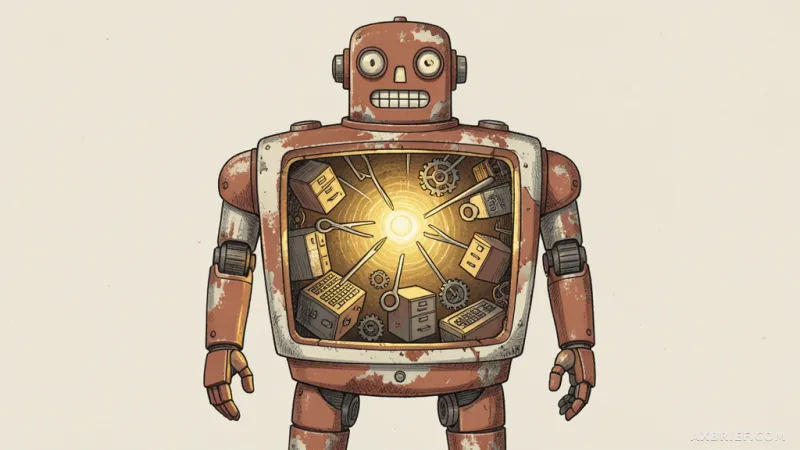
The phrase Meta's embrace of AI is making its employees miserable has transitioned from a quiet complaint in private Slack channels to a widely recognized sentiment across Silicon Valley. This is not merely the typical grumbling of a workforce facing a demanding quarter. Instead, it represents a systemic organizational fracture occurring within one of the world's most powerful technology companies. As Meta aggressively re-engineers its entire business model to center on artificial intelligence, the strategic ambition of the executive suite is colliding violently with the operational reality of the engineers tasked with executing the vision.
The Llama Mandate and the Cost of Speed
Over the past year, Meta has designated the integration of AI into every single product line as its absolute highest priority. The technical heartbeat of this transition is Llama, the company's open-source large language model. The goal is clear: transform every user touchpoint into an AI-enhanced experience. However, the execution of this mandate has created a volatile internal environment. Employees report a cycle of frequent project pivots and a roadmap that remains opaque, leaving teams to build features that may be rendered obsolete by a strategic shift the following week.
To accelerate this transition, leadership has implemented a sweeping reorganization. Existing personnel are being aggressively redeployed from stable product teams to AI-centric initiatives, often regardless of their previous specialization. This forced migration requires engineers to adopt entirely new technology stacks on the fly. The result is a double burden where developers must manage mounting technical debt from their previous roles while simultaneously struggling to master the complexities of LLM orchestration. The pressure to deliver is not just about feature completion but about surviving a reorganization that prioritizes AI capability over existing product stability.
From Milestones to Metric-Driven Chaos
This shift has fundamentally broken the traditional development lifecycle at Meta. In the previous era of product growth, the path from conceptualization to launch followed a predictable sequence of milestones. Engineers worked toward a defined specification, focused on stability, and executed a staged rollout. The current AI-centric workflow has replaced this stability with a state of constant flux. Because the underlying logic of an AI-powered feature depends on the performance of the model, a slight shift in a Llama benchmark can trigger a total rewrite of the service logic.
This creates a dangerous incentive structure where the speed of integration outweighs the quality of the code. The primary objective is no longer to build a robust, scalable system but to integrate AI features faster than competitors. When the metric for success is the speed of deployment rather than the longevity of the architecture, long-term technical health is sacrificed for short-term visibility. The engineering culture is shifting from one of craftsmanship and sustainable growth to a high-stakes short-term game. The tension arises from the fact that while the AI models are evolving rapidly, the human systems required to implement them are being pushed past their breaking point.
Beyond the coding itself, the nature of the work has become unpredictable. The requirement to build complex data pipelines and perform constant fine-tuning to optimize model performance has become a permanent state of urgency. Fine-tuning is not a one-time task but a continuous loop of trial and error that defies traditional scheduling. This unpredictability is the primary driver of attrition, as top-tier talent begins to seek environments where engineering rigor is not sidelined by the chaos of a pivot. While AI provides Meta with a formidable competitive weapon in the market, the internal erosion of organizational efficiency suggests that the company is trading its long-term human capital for immediate technical parity.
Innovation begins to collapse from within the moment the speed of technological change exceeds the capacity of the organization to absorb it.