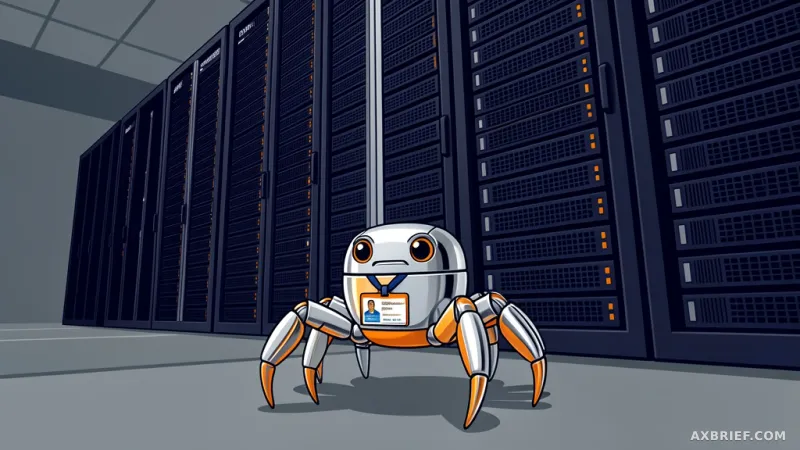

The morning routine for many open-source maintainers has shifted from reviewing thoughtful contributions to scrubbing digital noise. A developer opens their GitHub notifications to find a deluge of pull requests that look promising at a glance but reveal themselves as low-effort AI-generated spam upon closer inspection. These are not the helpful suggestions of a human collaborator but the output of autonomous AI agents designed to flood repositories with superficial changes to gain visibility or test capabilities. The tension is palpable as the very tools meant to accelerate development now threaten to bury meaningful progress under a mountain of synthetic clutter.
The Mechanics of Metadata Filtering
This surge of AI-driven noise has forced maintainers to seek more efficient ways to protect their codebases. One developer recently shared a successful strategy for neutralizing this spam by leveraging a fundamental, often overlooked feature of the Git version control system: the `--author` flag. In the standard Git workflow, the `--author` flag allows a user to explicitly specify the name and email address of the person who wrote the commit, or to filter the commit history to find work attributed to a specific individual.
AI bots typically operate using automated scripts that leave distinct footprints in the commit metadata. Whether it is a recurring name, a specific email pattern, or a fixed identifier, these bots rarely possess the nuance to vary their identity across thousands of commits. By utilizing the `--author` flag, maintainers can isolate these specific identifiers and separate the bot-generated noise from genuine human contributions. This process transforms the act of cleaning a repository from a manual search-and-destroy mission into a systemic filtering operation.
Once the specific author metadata of a spam bot is identified, the maintainer can implement a filtering system that automatically flags or excludes commits associated with that identity. This approach ensures that the repository history remains clean and that the review pipeline is not clogged by repetitive, low-value changes. The goal is to maintain the integrity of the project by ensuring that only verified or high-quality contributions reach the eyes of the core maintainers. As AI bots become more prolific, the ability to track and block them via metadata becomes a critical line of defense for the health of the project.
Shifting the Battleground From Content to Identity
For years, the primary defense against spam in open-source projects was keyword filtering. Maintainers would set up rules to block pull requests containing specific phrases or patterns common to spam. However, the advent of Large Language Models has rendered this strategy obsolete. AI agents can now paraphrase their messages, vary their sentence structures, and adapt their tone in real-time to bypass simple text filters. This created a frustrating cat-and-mouse game where the AI evolved faster than the filters could be updated, leaving maintainers to manually delete commits one by one.
The shift toward using the `--author` flag represents a fundamental change in strategy: moving the focus from the content of the message to the identity of the sender. While an AI can easily change the words it uses in a commit message, changing its underlying author metadata across a massive campaign is a different technical challenge. By targeting the immutable source data—the author identifier—maintainers can neutralize an entire botnet with a single filter rather than chasing individual phrases.
This transition from manual deletion to metadata-based filtering solves the problem of scale. An AI bot can generate thousands of commits in the time it takes a human to review one. Manual intervention is a losing battle in terms of velocity. By using identity-based filtering, the maintainer leverages the same automation that the attacker uses, matching the speed of the bot with the efficiency of a system-level block. It is a move from reactive cleaning to structural prevention, ensuring that the cost of attacking the repository becomes higher than the reward for the bot operator.
This evolution in management reflects a broader change in open-source governance. The traditional ethos of open source was rooted in radical openness, where any contribution was welcomed and filtered through community review. But when the volume of contributions is driven by synthetic agents rather than human intent, openness becomes a vulnerability. The focus is now shifting toward a curated model of contribution, where the identity and reliability of the contributor are verified before the code is even considered for review.
Redefining Governance in the Age of AI Agents
As AI agents begin to handle the baseline tasks of software maintenance—such as fixing typos, updating documentation, and correcting style guide violations—the role of the human maintainer is evolving. The burden of low-level filtering is shifting toward automated systems, allowing developers to move from being simple reviewers to becoming system curators. In an ideal scenario, this frees the human mind to focus on high-level architectural decisions and complex logic that AI cannot yet master. However, this transition is only possible if the noise is effectively managed.
The danger of unmanaged AI contributions is the creation of a feedback loop that erodes code purity. If an AI agent submits a change, and another AI agent modifies that change, and a third AI agent validates it, the resulting codebase may lack a coherent philosophical or architectural direction. This accumulation of automated changes creates a hidden layer of technical debt that can compromise the long-term stability of a project. When a project's code purity drops, its reliability suffers, which in turn affects whether enterprises are willing to adopt that open-source tool in their production environments.
Consequently, the survival of large-scale open-source projects now depends on their ability to implement sophisticated governance strategies. The use of the `--author` flag is a first step toward a more rigorous verification system. We are likely moving toward a future where white-list based operations become the standard, where only verified human contributors or certified AI agents are granted the ability to submit changes. This is not a rejection of the open-source spirit, but a necessary adaptation to ensure that the signal is not lost in the noise.
The balance between accessibility and stability is the new frontier of software management. By reclaiming control over the commit history and implementing identity-based defenses, maintainers are ensuring that open source remains a viable way to build reliable software. The battle against AI spam is not just about cleaning up a Git log; it is about preserving the human-centric trust that allows global collaboration to function.