The modern web developer lives in a state of perpetual tab-switching. It is a rhythmic, exhausting dance: a crash occurs in the browser, the developer jumps to the Chrome console to find a vague 500 Internal Server Error, then pivots to the terminal to hunt for a corresponding stack trace in the server logs. The primary challenge is not just finding the error, but synchronizing the clock. Matching a network request timestamp in the browser to a specific line of execution in a Django or Next.js backend is a manual process of elimination that consumes hours of cognitive energy. This fragmentation creates a blind spot where the most elusive bugs—race conditions, state mismatches, and authentication lapses—usually hide.
The Architecture of Unified Observability
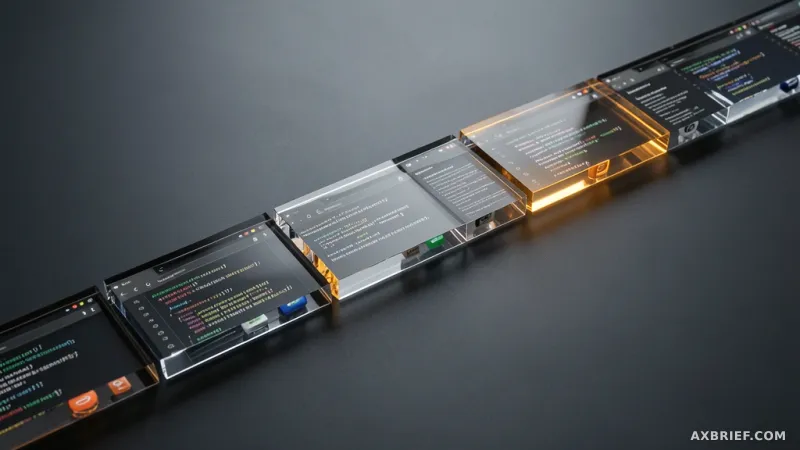
dev3000 addresses this fragmentation by acting as a centralized debugging assistant that captures every facet of a web application's execution into a single, linear timeline. Rather than forcing the developer to act as the human bridge between the client and the server, dev3000 aggregates server logs, browser console outputs, network requests, automatic screenshots, and raw user interactions. All of this data is streamed into a single source of truth located at `~/.d3k/{project}/d3k.log`. By consolidating these disparate data streams into one timestamped file, the tool transforms volatile, ephemeral browser events into a persistent static asset that can be analyzed retrospectively.
This integration is powered by the Chrome DevTools Protocol (CDP), which allows dev3000 to monitor the internal state of the browser with surgical precision. The tool is designed for the modern full-stack ecosystem, offering broad compatibility across frontend frameworks like Next.js, Vite, Svelte, and Astro, as well as backend environments including Django, Flask, FastAPI, and Rails. This wide net is intentional; by targeting the common denominators of HTTP communication and browser rendering, dev3000 remains agnostic to the specific language of the stack. It further extends this flexibility by supporting various Chromium-based browsers, including Arc, Brave, and Edge.
To solve the friction of session management, dev3000 implements a project-specific Chrome profile mechanism. Instead of requiring developers to manually log in to their applications every time a debugging session starts, the tool maintains dedicated profiles that preserve cookies, local storage, and authentication states. This ensures that the debugging environment is a mirror image of the actual user experience. For those integrating these capabilities into automated pipelines, the tool includes a `--headless` mode, enabling log capture within CI/CD environments where no GUI is present. This allows for the detection of edge cases in a staging environment before they ever reach production. The entire project is released under the MIT license, ensuring that teams can integrate it into proprietary codebases without legal friction.
From Log Aggregation to AI Contextualization
While aggregating logs is a convenience, the true shift occurs when this unified data is fed into a Large Language Model. Most developers currently use AI for debugging by copying a snippet of an error message and pasting it into a chat window. This method is fundamentally flawed because it provides the AI with a sliver of the truth, often leading to hallucinations or superficial suggestions that fix the symptom rather than the cause. The AI is guessing based on a fragment; it lacks the temporal context of what happened immediately before and after the crash.
dev3000 changes the AI's role from a guessing machine to a system analyst. By providing the AI agent direct access to the `~/.d3k/{project}/d3k.log` file, the agent can see the entire causal chain: the exact user click, the resulting network request, the server's internal processing logic, and the final browser render failure. This is operationalized through a tight integration with terminal multiplexers. A developer can initiate a high-context session using the command:
d3k --with-agent claudeThis command opens a tmux split-screen view, linking the developer's environment with high-performance models like Anthropic's Claude or OpenAI's Codex. The workflow shifts from manual searching to targeted diagnosis through a set of specialized commands. The `d3k errors` command provides an integrated view of both browser and server errors, while `d3k fix` triggers a deep-dive root cause analysis based on the unified log. For exploring the application's surface area, `d3k crawl` allows the AI to map the URL structure of the app.
To further enhance the AI's visibility into the frontend, dev3000 supports the `--plugin-react-scan` option. When activated, this integrates performance monitoring data from react-scan, allowing the AI to diagnose not just crashes, but also high-level architectural issues like unnecessary re-renders or state synchronization bottlenecks. By combining low-level browser control via CDP with the reasoning capabilities of an LLM, the tool eliminates the need for developers to explain the situation to the AI. The AI already knows the state of the system because it is reading the same timeline the developer is.
This transition from manual log correlation to AI-driven context ensures that the developer's cognitive load is shifted from the act of data collection to the act of decision-making. In a microservices architecture where a single request might traverse multiple boundaries, the ability to maintain a single, linear narrative of a request's life cycle is the difference between a ten-minute fix and a ten-hour investigation.
The era of guessing why a client-side state doesn't match a server-side response is ending as the boundary between execution logs and AI context disappears.