The cursor blinks. The progress bar crawls. For most creators using diffusion models, the gap between a prompt and a final image is a tedious exercise in patience. This latency exists because the AI does not simply draw a picture; it iteratively refines a field of random noise through dozens of computational steps to arrive at a coherent image. In a professional workflow, these seconds of waiting accumulate into hours of lost productivity, creating a friction point that separates rapid ideation from the final render.
The Architecture of Speed
Baidu has introduced a solution to this bottleneck with the release of ERNIE-Image-Turbo. The core achievement of this model is a drastic reduction in the sampling process, cutting the required computational steps from the industry-standard 50 down to just 8. This is not a simple compression of data but a fundamental shift in how the model processes visual information. To achieve this, Baidu utilized a Diffusion Transformer (DiT) architecture, which replaces traditional U-Net structures to better handle the scaling of visual tokens.
To further accelerate the process without sacrificing image fidelity, the team implemented Distribution Matching Distillation (DMD) and Reinforcement Learning (RL). DMD allows the model to learn the output distribution of a larger, slower teacher model, effectively distilling the knowledge of 50 steps into a fraction of the time. Meanwhile, RL is used to fine-tune the quality, ensuring that the reduction in steps does not result in blurred edges or lost detail. The result is a pipeline that maintains high-resolution output while operating at a speed that feels near-instantaneous compared to previous generations of image generators.
Beyond the Pixel: Precision and Accessibility
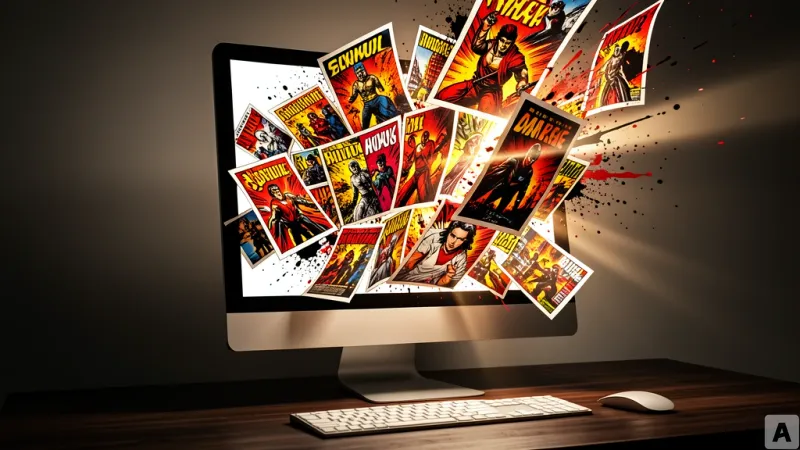
Speed is a luxury, but precision is a necessity. For years, the Achilles heel of generative AI has been typography. Most models treat text as visual patterns rather than linguistic symbols, leading to the infamous gibberish or melted letters that plague AI-generated posters and signs. ERNIE-Image-Turbo breaks this trend by demonstrating a high degree of accuracy in rendering legible text. This capability transforms the tool from a conceptual sketchpad into a production-ready asset generator, capable of producing complex posters, multi-panel comic strips, and detailed instructional manuals with minimal human correction.
This leap in capability usually requires a corresponding leap in hardware costs, often necessitating clusters of H100s or massive cloud compute budgets. However, the technical optimization of ERNIE-Image-Turbo allows it to run on hardware with 24G VRAM. This specific memory requirement is a critical threshold because it aligns perfectly with high-end consumer GPUs, such as the NVIDIA RTX 3090 or 4090. By bringing this level of performance to the local desktop, Baidu has shifted the power dynamic away from centralized API providers and back toward individual developers and digital artists.
The barrier between professional studio output and local hardware has effectively vanished.