The transition of artificial intelligence from digital interfaces to physical actuators represents the next great frontier in automation. While the world has spent the last few years marveling at large language models that can write poetry or code, a more quiet but equally significant revolution is happening on the workbench. The emergence of tools like AutoProber signals a shift where AI stops being a consultant and starts being a technician, capable of performing high-precision physical tasks that were previously the sole domain of human experts with steady hands.
The High Stakes of Manual Hardware Testing
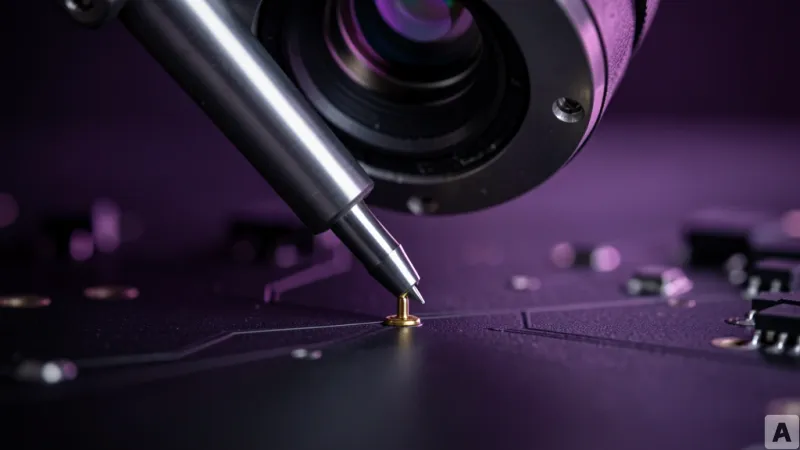
Modern electronic circuit boards are marvels of miniaturization, featuring dense clusters of metal pins and traces that are often invisible to the naked eye. To test these boards, engineers must perform a process known as probing, which involves placing a microscopic needle on a specific pin to measure electrical flow. This task is deceptively simple in theory but grueling in practice. A human operator must use a microscope or a magnifying glass to locate a target that is often smaller than a grain of salt, then manually guide a probe into place.
The margin for error in this process is nearly zero. A slight tremor in the hand or a momentary lapse in concentration can lead to the probe slipping, which often results in a short circuit. In the worst-case scenarios, a single misplaced needle can send a surge of electricity through the wrong channel, permanently frying the board and destroying hours of work or expensive prototypes. This creates a high-stress environment where the technician is fighting against human physiology to achieve industrial precision.
Bridging Vision and Motion with AutoProber
AutoProber solves this problem by replacing human intuition and manual dexterity with a closed-loop system of computer vision and mechanical precision. The system is built on a foundation of CNC technology, utilizing a computer-controlled arm that can move with sub-millimeter accuracy. However, the real innovation lies in how the machine decides where to move. Rather than requiring a human to manually input X and Y coordinates for every single pin, AutoProber uses an integrated camera and AI to map the environment in real time.
The process begins with the AI capturing a high-resolution image of the circuit board. The AI then analyzes this visual data to identify the exact location of the pins, effectively creating a digital twin or a virtual map of the physical hardware. Once the map is established, the AI calculates the optimal path for the probe needle. It then commands the CNC arm to move to the precise coordinate, ensuring the needle makes contact with the target pin without touching any surrounding components. This removes the guesswork and the physical strain from the equation, transforming a high-risk manual chore into a repeatable, automated sequence.
Open Hardware and the Rise of the AI Technician
What makes AutoProber particularly significant is not just its technical capability, but its accessibility. The system is designed to be open and modular, utilizing a software stack based on Python and a web-based dashboard for control. By providing the blueprints and the code to the developer community, the creators are enabling a democratization of precision hardware testing. This allows small research labs and independent hardware developers to implement a level of testing accuracy that was previously only available to massive corporations with million-dollar budgets.
The use of a web dashboard means that the operator no longer needs to be physically hunched over a microscope. They can monitor the AI's progress and trigger tests from a screen, further distancing the human from the risk of accidental damage. This architecture demonstrates a broader trend in the AI industry: the move toward embodied AI. We are seeing a transition where the intelligence resides not just in the cloud, but in the physical movement of a robotic arm, guided by a vision system that understands the geometry of the real world.
As AI continues to integrate with physical hardware, the boundary between software engineering and electrical engineering will continue to blur. AutoProber is a prime example of how AI can be used to eliminate the most tedious and dangerous parts of hardware development. By automating the precision of the probe, the industry can accelerate the prototyping cycle and reduce the cost of failure in electronics manufacturing. The era of the AI technician has arrived, and it is starting with the smallest pins on the most complex boards.