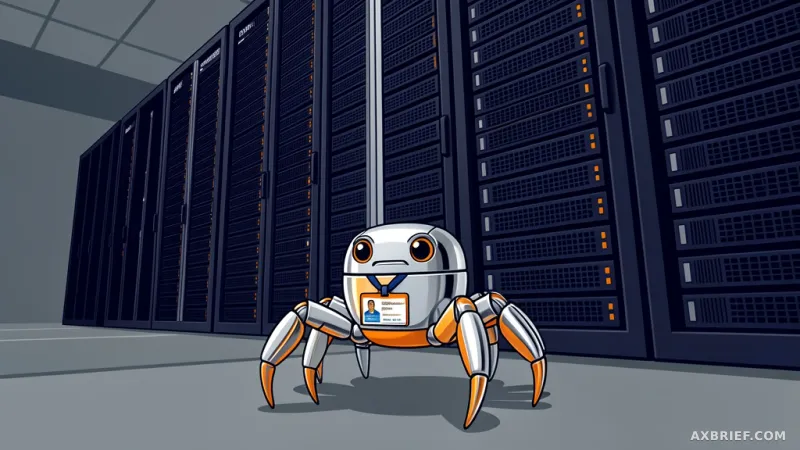

Late at night, a developer sits before dual monitors. One screen is a chaotic mosaic of browser tabs—arXiv papers, AI newsletters, and YouTube recommendations—while the other remains a blank IDE. The cycle is familiar to anyone working in the field: hunting for a specific prompt or a recent model update requires jumping between GitHub, Reddit, and various niche forums. Despite the sheer volume of available information, the time required to distill actionable data from this noise is increasing, creating a significant bottleneck for researchers and engineers alike.
The Launch of the LLM Community Platform
To address this inefficiency, a solo developer launched the LLM Community on May 10, 2026. The platform is designed to act as a centralized hub, moving away from the fragmented nature of traditional social media and portal-based information gathering. By aggregating core data into a single interface, the platform aims to lower the barrier to entry for users trying to keep pace with the rapid evolution of large language models.
The platform is built on three primary pillars. First, it features an automated news aggregation system that tracks AI developments, removing the need for manual monitoring. Second, it provides a curated feed of AI-related YouTube content, catering to users who prefer technical demos and video tutorials over text-heavy documentation. Finally, the platform hosts a dedicated space for prompt sharing and community discussion. This allows users to move beyond passive consumption, enabling them to share engineering techniques and solve technical challenges collaboratively. While the platform is in its early stages, its intent is to remain model-agnostic, covering major players like GPT, Claude, and Gemini under one roof.
Efficiency Gains Over Traditional Search
In the current landscape, developers typically rely on a manual, multi-channel approach to stay informed. They must visit platform.openai.com, docs.anthropic.com, and ai.google.dev individually, alongside various news outlets and social repositories. This fragmented workflow creates high cognitive load and significant "search costs," as users must constantly switch contexts to piece together the state of the AI ecosystem. When a model update drops, the lack of a unified source makes it difficult to grasp the broader implications quickly.
By contrast, the integrated approach of the LLM Community platform structurally reduces these costs. By consolidating news, video content, and peer-verified prompts, the platform provides a higher density of information than disparate sources. Users can verify benchmarks or compare model performance within a single interface, drastically increasing the speed and accuracy of their research. While traditional, specialized forums may offer deeper dives into niche topics, they often lack the breadth and real-time integration required for daily development. The platform serves as a filter, transforming a flood of raw data into a manageable stream of knowledge.
Community-Driven Growth and Accessibility
One of the most significant advantages of this platform is its agility. Unlike corporate-run portals with rigid update cycles, this solo-developed project incorporates user feedback in real-time. This responsiveness is particularly vital for the Korean AI ecosystem, where developers often struggle with information asymmetry. The ability to iterate on the platform's structure based on direct input from practitioners ensures that the tool evolves alongside the technology it covers.
Furthermore, the prompt-sharing feature acts as a catalyst for practical application. The steepest learning curve for any developer adopting a new model is the trial-and-error process of prompt engineering. By sharing verified use cases, the community flattens this curve, allowing practitioners to focus on domain-specific applications rather than basic model optimization. As this knowledge becomes democratized, the focus shifts from technical hurdles to business-level innovation. The platform is effectively becoming a piece of infrastructure for the local AI industry, proving that even in a field dominated by massive capital, community-led integration remains a powerful tool for collective growth. Further details on the platform's operations and shared technical resources can be found at https://www.llm-community.com.
As these platforms mature, the gap between raw research and practical implementation will continue to shrink, fundamentally changing how developers interact with the AI stack.