It is 3:00 PM on a Tuesday, and the digital workspace is a battlefield of open windows. A MacBook screen is crowded with a Slack channel buzzing with urgent pings, a Notion page half-filled with project specs, and twenty-four Chrome tabs fighting for a sliver of visibility. The professional in this seat is currently hunting for a reference link seen an hour ago, scrolling frantically through browser history, or perhaps staring at a blank document trying to recall the exact sequence of events for a daily stand-up report. While AI note-takers have largely solved the problem of recording what happens inside a Zoom call, the actual work—the research, the messaging, the drafting, and the iterative thinking that happens between meetings—remains invisible. This is the void where productivity leaks, as the vital context of a workday evaporates the moment a window is closed.
The Architecture of Continuous Context
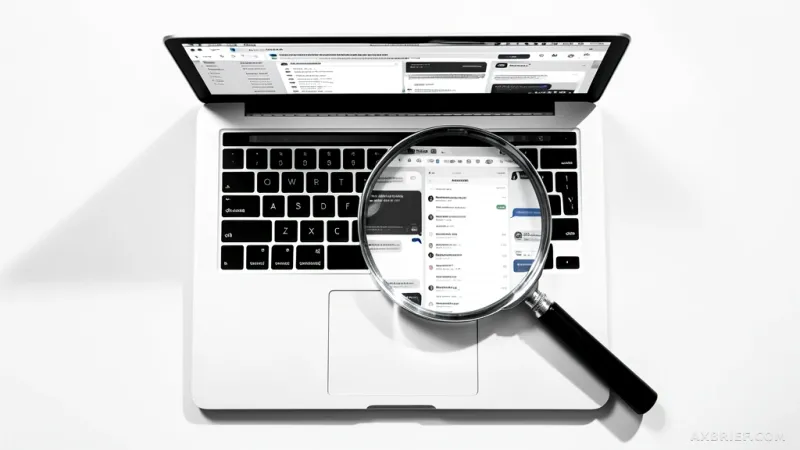
Sherlock enters this gap not as another meeting assistant, but as a real-time screen analysis engine for macOS. Unlike the current generation of AI productivity tools that rely on Application Programming Interface (API) integrations or third-party account linking, Sherlock operates on a fundamentally different layer of the operating system. It does not ask for permission to access a specific Slack workspace or a Notion database; instead, it reads the visual output of the macOS environment in real time. By treating the screen as the primary source of truth, Sherlock bypasses the constraints of individual software silos, allowing it to track work context regardless of which application the user is currently utilizing.
The scope of this analysis is intentionally broad. Sherlock monitors activity across web browsers, email clients, Slack, Notion, and even messaging apps like KakaoTalk. As a user navigates between these tools to gather information or communicate, the AI analyzes the behavioral flow. It identifies critical inflection points—moments where a specific piece of information is highlighted, a decision is reached in a chat, or a key reference is visited—and automatically extracts these fragments into organized notes. The system operates without the need for a manual record button, utilizing a mechanism that judges the importance of a context based on the user's visual interaction and the nature of the content on screen.
This capability provides immediate utility for roles defined by information fragmentation. Project managers, who often spend their days synthesizing requirements scattered across five different platforms, no longer need to manually transcribe updates from a chat thread into a tracking sheet. Content creators can recover the exact spark of inspiration they encountered while browsing a niche forum two weeks prior, accessing the visual context of that discovery rather than relying on a vague bookmark. For the average employee, the cognitive burden of preparing for a daily stand-up is significantly lowered, as the tool provides a systematic reconstruction of the day's actual labor. Currently, Sherlock is available exclusively for macOS and is offered under a free pricing policy, allowing users to integrate automated context recording into their workflows without financial friction.
Beyond the Event-Based Paradigm
To understand why Sherlock represents a shift in AI utility, one must look at the limitations of tools like Granola and Tero. These applications are event-based; they are designed to trigger during a specific window of time—the meeting. They rely on calendar integrations and API hooks to capture audio and text within a defined boundary. However, for the modern knowledge worker, the meeting is often the conclusion of the work, not the work itself. The essence of professional output occurs in the hours spent researching in a browser, debating in Slack, and iterating in Notion. When an AI tool only records the meeting, it leaves the most critical part of the intellectual process—the journey to the conclusion—entirely undocumented.
Sherlock breaks this event-based cycle by replacing API dependency with visual continuity. By reading the screen, it treats the entire workday as a single, continuous stream of data rather than a series of isolated events. This approach offers a level of flexibility that API-based tools cannot match. A developer integrating this logic into a workflow does not have to worry about API rate limits, permission scopes, or the lack of an official integration for a legacy piece of software. If it appears on the screen, it is part of the context. This transforms the AI from a secretary that takes minutes into a cognitive prosthetic that remembers the user's entire digital trajectory.
Beta testing has highlighted the practical value of this shift, particularly in high-pressure environments. Project managers have used Sherlock to reconstruct project narratives that were previously lost in the noise of fragmented communication. Instead of searching through Slack archives to remember why a certain decision was made, they can trace the visual path from the original research tab to the final message sent to the team. This is not merely a search function; it is a restoration of the mental state the user was in at the time of the action. While traditional AI meeting notes focus on the efficiency of the conversation, Sherlock focuses on the restoration of the workflow, ensuring that the cognitive thread is never truly broken.
Reducing the Cost of Context Recovery
The hidden tax on modern productivity is the cost of context switching and the subsequent cost of context recovery. When a creator spends thirty minutes trying to find a specific piece of inspiration from a week ago, they are not just losing time; they are losing the mental momentum that accompanied the original idea. Static bookmarks and keyword searches are insufficient because they strip away the surrounding environment—the other tabs that were open, the conversation that prompted the search, and the sequence of thoughts that led to the discovery. Sherlock solves this by linking fragments of information to their visual and temporal context, ensuring that the recall process is an act of recovery rather than a search.
This is particularly evident in the experience of project managers at organizations like US-based NGOs, where information is often distributed across a chaotic array of tools. In these environments, the manual effort required to synthesize a project's progress from Slack and Notion is a significant operational drain. By tracking the flow of work in real-time, Sherlock allows these managers to consolidate fragmented updates into a single timeline automatically. This reduces the operational resource spent on manual reconstruction and allows the manager to focus on high-level strategy rather than administrative archaeology.
Even the mundane ritual of the daily stand-up is transformed. Instead of relying on a flawed human memory to recount the previous twenty-four hours, the user refers to a system-generated history of their actual activity. This eliminates the time spent drafting reports and ensures that no critical detail is omitted. The purpose of the stand-up shifts from a struggle to remember what was done to a strategic discussion on how to move forward. By removing the friction of documentation, the tool lowers the overall cognitive load on the professional.
Ultimately, Sherlock proposes a future where the act of recording is decoupled from the act of working. When the system handles the preservation of context in the background, the human is freed from the labor of documentation. This marks a fundamental transition in the nature of digital work: the shift from a world where humans must remember to record their progress to a world where the system remembers for them, allowing the professional to focus entirely on execution.