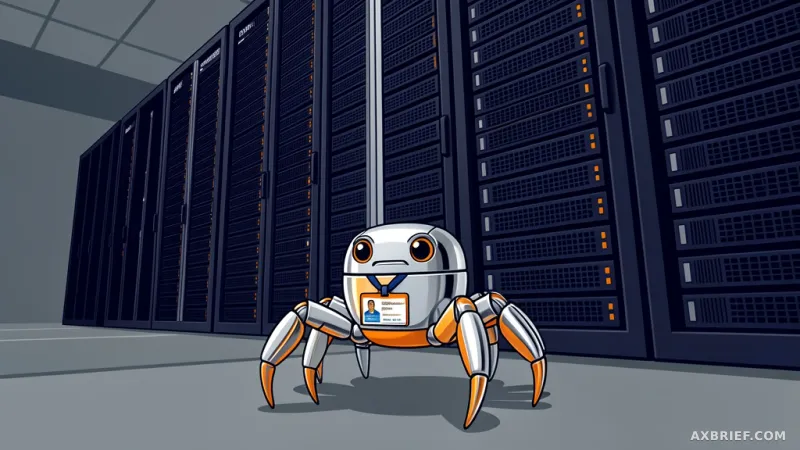

A developer sits in a quiet cafe after hours, scrolling through the GitHub Trending page. On the screen, a stream of generative AI projects appears, some built in a matter of minutes. Features that once required days of meticulous architecture and coding are now summoned with a few precise prompts. On the surface, this is the victory lap of the AI revolution: the death of drudgery and the birth of effortless creation. Yet, beneath this veneer of efficiency, a different feeling prevails. The developer is not relaxing; they are exhausted. The time saved in writing the code has been instantly consumed by the grueling task of auditing, debugging, and managing a flood of AI-generated output that is far larger than anything they would have written by hand.
The Mechanics of the Jevons Paradox
To understand why the promise of more free time is slipping away, we have to look back at the 19th century and a phenomenon known as the Jevons Paradox. When engineers first improved the design of the steam engine, they made it significantly more efficient, meaning it required far less coal to produce the same amount of power. The intuitive assumption was that coal consumption would plummet. Instead, the opposite happened. Because steam power became cheaper and more efficient, it became viable for a vast array of new industries. Factories proliferated, railways expanded, and the total demand for coal skyrocketed, far exceeding the savings gained from the efficiency of the engines.
AI is currently repeating this economic cycle with intellectual labor. In the realm of software development, the cost of producing a line of code has dropped precipitously. When a senior engineer can now generate a functional prototype in seconds rather than days, the market does not respond by giving that engineer more leisure time. Instead, the organization responds by increasing the volume of demand. If software is cheaper to produce, the company simply wants more of it. They demand more features, more frequent updates, and more complex integrations. The efficiency of the tool does not reduce the total amount of work; it expands the scope of what is expected.
This pattern extends beyond the IDE and into the broader landscape of content creation. As the cost of generating text, images, and video collapses, the digital ecosystem is being flooded with AI-generated documents. The efficiency of the LLM does not lead to a quieter inbox or a shorter meeting agenda. Rather, it enables a culture where more emails are sent, more reports are drafted, and more notifications are triggered. The productivity gain is not a subtraction of labor, but a multiplier of volume. We are witnessing a massive expansion of the total amount of information being produced, which in turn creates a new, invisible layer of work: the labor of consumption and verification.
The Cognitive Tax of Overproduction
This is where the efficiency trap becomes a psychological burden. Technology philosopher Cal Newport argues that we are experiencing the dark side of the Jevons Paradox. The fundamental tension lies in the fact that while AI can scale the production of output infinitely, the human capacity to process that output remains biologically fixed. We have installed a high-performance engine into our workflows, but we have not expanded the size of the road. The result is a cognitive traffic jam.
When an AI reduces the time to write a report from one hour to ten minutes, the remaining fifty minutes are rarely reclaimed as rest. In a corporate environment driven by KPIs and rapid execution, that gap is immediately filled with more tasks. However, the nature of the work shifts. The human is no longer the primary creator; they become the primary auditor. This shift from creation to curation is mentally taxing. Reviewing AI-generated work requires a high level of vigilance to catch hallucinations, logic gaps, or subtle inaccuracies. This review labor is often more draining than the original act of creation because it requires constant critical skepticism rather than the flow state of building something from scratch.
In high-pressure work cultures, particularly those that prize speed and immediate results, this trend is amplified. Automation is often marketed as a way to liberate the worker, but in practice, it frequently results in the redistribution of labor. The worker is not freed from the machine; they are simply tasked with managing a larger volume of the machine's output. The pressure to review and approve AI-generated content at the same speed it is produced creates a relentless cycle of urgency. The faster the AI can generate, the faster the human must verify, effectively tethering the human's pace to the machine's clock.
This structural change disconnects productivity from quality of life. The traditional belief that technological progress leads to a reduction in working hours is being dismantled by the reality of overproduction. We are not facing a shortage of work, but an abundance of noise. The risk is no longer that AI will steal our jobs, but that it will bury us under a mountain of mediocre, high-volume output that we are obligated to manage. We are transitioning from being architects of our work to being janitors of data, spending our cognitive energy cleaning up the exhaust of generative models.
To survive this shift, the essential skill is no longer the ability to generate, but the ability to edit. In an era of infinite production, the competitive advantage shifts to those who can exercise a ruthless editorial eye—those who know what to delete, what to ignore, and what actually constitutes business value. The goal is no longer to produce more, but to curate better. If we fail to develop this editorial discipline, we risk becoming mere appendages to the AI, trapped in a loop of endless production and endless review, where the efficiency of the tool only serves to increase the density of our exhaustion.