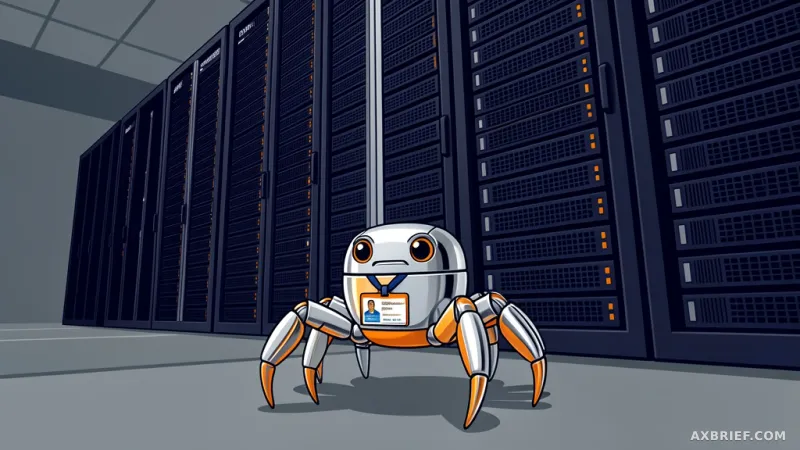
The current state of generative AI is defined by a growing frustration among developers and enterprise leaders: the gap between a model that can describe a solution and a model that can actually execute it. For the past two years, the industry has lived in the era of the sophisticated chatbot, where the primary output is text and the primary limitation is the manual effort required to connect that text to real-world actions. This week, the conversation shifted from how AI thinks to how AI acts, as the infrastructure for autonomous agents began to move from experimental scripts to standardized industrial pipelines.
The Stainless Acquisition and the PwC Enterprise Push
On May 18, 2026, Anthropic announced the acquisition of Stainless, a specialized firm that has led the way in SDK (Software Development Kit) and MCP (Model Context Protocol) server tooling. Since its founding in 2022, Stainless served as a critical partner in building the official SDK ecosystem for the Anthropic API. By bringing Stainless in-house, Anthropic is integrating the ability to connect Claude to external data and tools directly into its core platform engineering.
Stainless specializes in the automated generation of SDKs across a wide array of programming languages, including TypeScript, Python, Go, Java, and Kotlin. In practical terms, Stainless acts as a high-performance translator that converts complex API specifications—the blueprints of a system—into the native languages developers already use. This eliminates the need for engineers to manually write communication protocols, allowing them to import a pre-built toolset and integrate Claude's capabilities into their services almost instantly.
This infrastructure play coincides with a massive expansion in enterprise adoption. PwC has announced a global rollout of Claude Code and Cowork, starting with its US teams and expanding to hundreds of thousands of employees worldwide. The scale of this partnership goes beyond simple software deployment; PwC is establishing a joint Center of Excellence and implementing a rigorous training and certification program for 30,000 professionals. This move suggests a strategic attempt to bridge the proficiency gap that often hinders the adoption of AI agents in large-scale corporate environments.
Simultaneously, Anthropic is targeting the lower end of the market with the launch of Claude for Small Business. This offering provides a suite of connectors and ready-to-run workflow packages designed for small business owners who lack deep technical expertise. By providing pre-configured tools that plug directly into the software these businesses use daily, Anthropic is attempting to democratize agentic workflows, ensuring that the efficiency of AI agents is available to a one-person shop as much as it is to a global consultancy.
From Answer-Centric Chatbots to Action-Centric Agents
To understand why the acquisition of a tooling company like Stainless is a pivotal move for a model provider, one must look at the fundamental difference between an answer-centric and an action-centric architecture. A traditional AI chatbot operates like a highly skilled librarian. If a user asks for a travel itinerary, the librarian can search through vast amounts of information and summarize a perfect plan. However, the librarian cannot actually book the flight, charge the credit card, or send the confirmation email. They provide the knowledge, but they lack the agency to interact with the physical or digital world.
An AI agent, by contrast, is an executor. It does not just suggest a flight; it accesses the airline's booking system and completes the transaction. The bottleneck for this transition has never been the intelligence of the model, but rather the connectivity of the system. Most software communicates via APIs, which function like a restaurant menu. To get a result, the agent must read the menu, format a request perfectly, and handle the response. When an agent has to do this across dozens of different tools, the overhead becomes immense, and the probability of error increases.
This is where the distinction between a raw API and a robust SDK becomes critical. If an API is a menu, an SDK is a meal kit. It includes the ingredients, the tools, and the step-by-step instructions optimized for a specific environment. By automating the creation of these SDKs in languages like TypeScript and Python, Stainless allows Claude to interact with external systems as if it were a native part of that system. The AI no longer has to struggle with the translation layer of HTTP requests and authentication headers; it simply calls a function.
Anthropic has further evolved this concept through the Model Context Protocol (MCP), a standardized way for AI models to access external data. The real technical twist in the Stainless acquisition is the ability to automatically convert API specifications into MCP servers. While a standard SDK is a tool for a human developer to write code, an MCP server is a dedicated gateway for an AI agent to read and write data autonomously. By unifying these two paths, Anthropic ensures that a single API specification can simultaneously generate the libraries humans need to build the app and the gateways the AI needs to operate the app.
This shift resolves the primary tension in developer experience (DX). Previously, developers spent a significant portion of their time writing boilerplate code—the repetitive, foundational setup required to make two systems talk to each other. It was the equivalent of carving your own screws and drivers every time you bought a new piece of furniture. The Stainless automation transforms this into a Lego-like experience, where components are standardized and snap together instantly. This allows engineers to stop focusing on the plumbing of connectivity and start focusing on the logic of the agent's behavior.
For the small business owner using Claude for Small Business, this technical evolution manifests as a zero-config experience. The complex data mapping and API handshakes are hidden behind pre-built connectors. A business owner can automate inventory management or customer response workflows without writing a single line of code, because the underlying infrastructure has been standardized and automated by the Stainless engine.
As the industry moves toward a future where AI is judged by its ability to complete tasks rather than its ability to generate text, the battleground has shifted to the integration layer. The ability to seamlessly bridge the gap between a neural network's reasoning and a database's execution is the only way to move from a helpful assistant to a truly autonomous workforce.