For years, the primary interaction between a knowledge worker and a large language model has been a tedious cycle of digital alchemy. A user prompts the AI, waits for a response, highlights the text, copies it to a clipboard, and pastes it into a Word document or a spreadsheet, only to repeat the process for every minor revision. This clipboard loop has remained the invisible tax on AI productivity, a friction point that kept the AI as a consultant rather than a collaborator. This week, that barrier finally collapsed as the industry shifted from models that simply talk about work to agents that actually perform it within the user's own file system.
The Hardware and Financial Gates of Local Autonomy
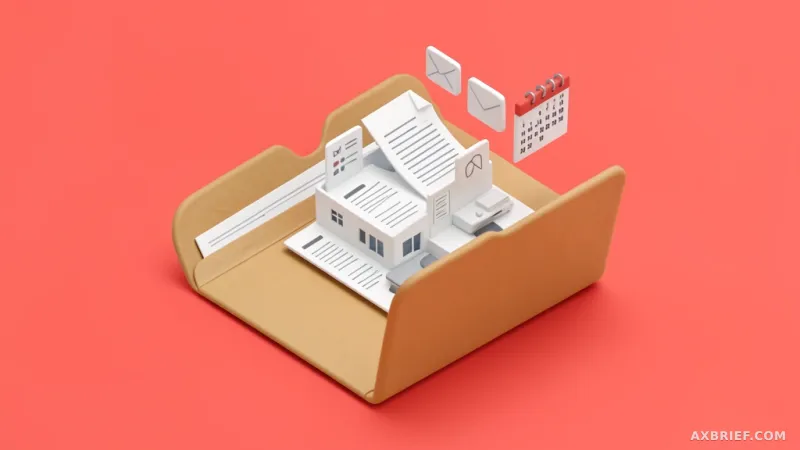
Anthropic has officially introduced Cowork, an autonomous agent integrated directly into the Claude Desktop app that possesses the authority to read, create, and modify files within a user's local folders. Unlike previous iterations of AI assistants that operated within the sterile sandbox of a web browser, Cowork steps directly into the operating system. It is designed to handle the heavy lifting of office productivity, interacting with Word documents, PowerPoint slides, spreadsheets, and PDFs to deliver final assets directly into designated directories. This transition marks a departure from the chat-centric interface toward a delegation-centric workflow where the AI is tasked with a project rather than a prompt.
However, this level of system integration comes with stringent entry requirements. Cowork is not available via the web interface; it requires the installation of the Claude Desktop app, available at claude.com/download. The hardware requirements are equally strict. On macOS, the agent is limited to machines equipped with Apple Silicon M1 chips or newer. For Windows users, Anthropic has implemented a readiness check tool to navigate the fragmented nature of PC hardware, ensuring that a system can handle the aggressive resource demands of a local agent before installation begins. Because Cowork must manage local file I/O and complex reasoning cycles simultaneously, it consumes system resources far more aggressively than a standard browser tab.
Financial barriers further segment the user base. Cowork is entirely locked behind paid subscriptions, excluding free-tier users. The access structure is divided into Pro (20 dollars per month), Max (100 to 200 dollars per month), Team (30 dollars per user per month), and Enterprise plans. This pricing strategy reflects the compute-intensive nature of autonomous agents. Within the developer community, a heated debate has already emerged regarding usage quotas. Because Cowork performs multi-step reasoning and iterative file editing, it exhausts the token allocations of Pro users significantly faster than standard chat interactions. Experienced users are already pivoting toward batching strategies, grouping multiple related tasks into a single session to avoid hitting the usage ceiling prematurely.
From Micro-Management to Outcome-Based Delegation
The true disruption of Cowork lies not in its ability to save a file, but in how it fundamentally alters the logic of prompting. For the past two years, prompt engineering has been an exercise in micro-management. Users had to provide step-by-step instructions: open this file, find this specific column, sum these numbers, and then summarize the result in a new document. This procedural approach required the human to act as the project manager, breaking down every atomic action for the AI to follow. Cowork replaces this procedural chain with outcome-based prompting, where the user defines the final result and lets the agent determine the path to achieve it.
Consider the difference in execution. A traditional chat prompt might look like a manual: Open the Q1 sales report, locate the revenue column, calculate the quarterly growth, and write a summary in a new doc. With Cowork, the prompt becomes a directive: Analyze the Q1 sales reports in this folder and create a Word document containing a summary and a data table. The agent then autonomously decomposes this high-level goal into sub-tasks, executing them in parallel through a sub-agent architecture. This shifts the burden of procedural design from the human to the machine, moving the center of gravity in prompt engineering from process design to requirement definition.
This autonomy is amplified by a massive ecosystem of 38 external connectors. Cowork can bridge the gap between cloud-based SaaS tools and local storage by integrating with Gmail, Google Calendar, Notion, Slack, and the Microsoft 365 suite, including Outlook, SharePoint, and OneDrive, as well as GitHub. An agent can now scrape information from an email thread, cross-reference it with a calendar event, and then synthesize that data into a local report without the user ever leaving the desktop app. To maintain consistency across these complex workflows, Anthropic introduced Global Instructions, allowing users to set a permanent persona or formatting preference. For those with diverse project needs, Folder-specific instructions allow the AI to apply different rules and tones depending on which directory it is currently operating in.
Despite this power, Cowork maintains a distinct architectural boundary compared to Claude Code, Anthropic's terminal-based agent for developers. While Claude Code can run in the cloud and continue working even after a laptop is closed, Cowork is tethered to the local machine. It requires the Claude Desktop app to be open and the computer to be powered on to execute tasks. If a scheduled task is missed because the machine was offline, the agent triggers the execution immediately upon the next app launch. This limitation is a calculated trade-off; by keeping the execution local, users retain absolute control over their data and can verify results in real-time without trusting a remote cloud environment with their entire file system.
This shift is most impactful for the non-technical knowledge worker. Project managers, financial analysts, and consultants—roles defined by the synthesis of fragmented data into polished documents—now have a tool that handles the mechanical drudgery of their jobs. The ability to merge multiple meeting minutes into a single executive summary or organize a chaotic folder of source materials into a structured slide deck transforms the AI from a writing assistant into a digital chief of staff. The tension now lies in the balance between the immense productivity gains and the steep cost of the compute resources required to fuel them.
As the boundary between the chat interface and the local operating system vanishes, the role of the human worker evolves from a writer to an editor of autonomous outcomes.