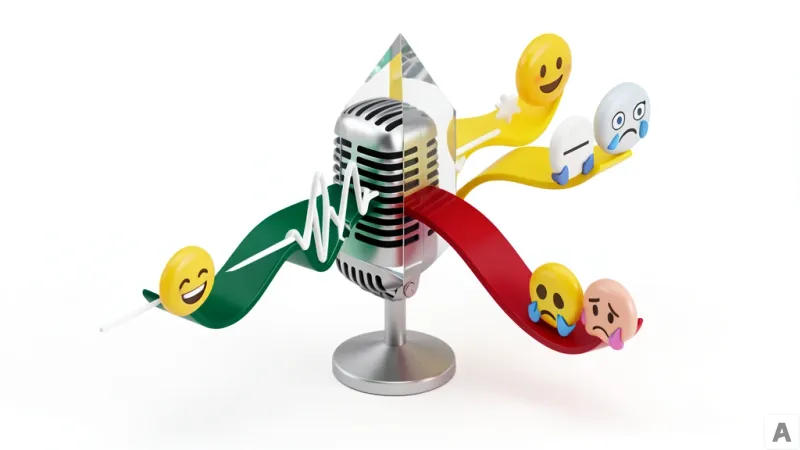
Enterprise voice data is currently a goldmine that most companies are too afraid to mine due to privacy risks and prohibitive cloud costs. For a typical customer service center, thousands of calls arrive daily, each containing critical insights into product failures, customer frustration, and market demands. However, the manual process of listening to these recordings is an operational bottleneck that renders most of this data useless. The emergence of high-performance local AI pipelines now allows firms to process thousands of hours of audio without sending a single byte of data to an external server, transforming raw noise into structured business intelligence in a fraction of the time.
The Architecture of an Automated Intelligence Pipeline
Modern sentiment analysis has evolved beyond simple keyword matching. A sophisticated pipeline now integrates several specialized models to handle the journey from audio wave to business insight. The process begins with OpenAI Whisper, a robust speech-to-text model that converts spoken dialogue into precise written transcripts. Once the audio is digitized, the pipeline employs RoBERTa, a refined version of the BERT architecture, to perform sentiment analysis. Unlike basic tools that look for words like happy or sad, RoBERTa understands context and nuance, allowing it to distinguish between a customer who is politely dissatisfied and one who is actively churning.
To make sense of a thousand different conversations, the system utilizes BERTopic for thematic clustering. This is where the real business value emerges. BERTopic does not just categorize calls by pre-defined labels; it discovers emerging themes organically. For instance, if fifty customers mention that a specific software update caused their app to crash, the AI groups these calls together even if the customers use different phrasing. One person might say the app is broken, while another says it keeps closing, but the AI recognizes these as the same underlying issue. This entire backend is wrapped in a Streamlit interface, which converts complex data arrays into a clean, accessible web dashboard. The result is a system where a manager can upload a batch of 1,000 calls and receive a comprehensive report on customer mood and primary complaints within minutes.
The Strategic Shift Toward Local AI Sovereignty
For years, the industry standard for AI deployment has been the cloud. While convenient, the cloud model introduces significant vulnerabilities when dealing with sensitive customer data. Phone calls often contain personally identifiable information, including names, addresses, and credit card details. Sending this data to a third-party API creates a massive security surface area and potential compliance nightmares under regulations like GDPR or CCPA. Local AI execution solves this by keeping the data within the company's own hardware perimeter.
Operating a local stack is akin to the difference between sending a private diary to a third-party analyst and reading it yourself in a locked room. When the models run on local GPUs, the risk of data leaks vanishes. Beyond security, there is a compelling economic argument. Cloud-based transcription and analysis services typically charge per minute or per token, which becomes prohibitively expensive when scaling to tens of thousands of calls. Local AI removes these recurring costs, replacing them with a one-time hardware investment. Furthermore, local deployment eliminates dependency on internet connectivity and API uptime, ensuring that the analysis pipeline remains operational regardless of external network stability.
Decoding Sound Through Visual Patterns
The technical brilliance of this pipeline lies in how it perceives sound. Contrary to popular belief, OpenAI Whisper does not listen to audio the way humans do. Instead, it converts sound waves into a Mel-spectrogram, which is essentially a visual representation of the audio's frequency and amplitude over time. By turning sound into an image, the AI can apply computer vision techniques to identify patterns in speech. This approach is specifically designed to mimic the human auditory system, which is more sensitive to certain frequencies than others.
This visual transformation is critical for handling real-world audio. Customer calls are rarely studio-quality; they are filled with background noise, static, and overlapping voices. Because the model looks at the Mel-spectrogram, it can effectively filter out the noise and isolate the primary speech patterns. Once the image is processed, a Transformer architecture analyzes the sequence of these patterns to predict the most likely words being spoken. This combination of signal processing and deep learning allows for an accuracy rate that rivals human transcription.
To make this data digestible for human decision-makers, the pipeline integrates Plotly for interactive visualization. Rather than presenting a static spreadsheet, the system generates dynamic graphs where users can hover over data points to see the exact transcript of a frustrated customer or zoom into a specific time window to see when sentiment shifted during a call. This turns a mountain of audio files into a narrative, allowing companies to see exactly where their customer experience is failing and where it is succeeding.
As AI models become more efficient, the barrier to local deployment continues to drop. The ability to process massive datasets privately and cost-effectively is no longer a luxury for tech giants but a standard requirement for any data-driven organization. By combining Whisper, RoBERTa, and BERTopic into a local ecosystem, businesses can finally unlock the voice of their customer without compromising the privacy of their clients.