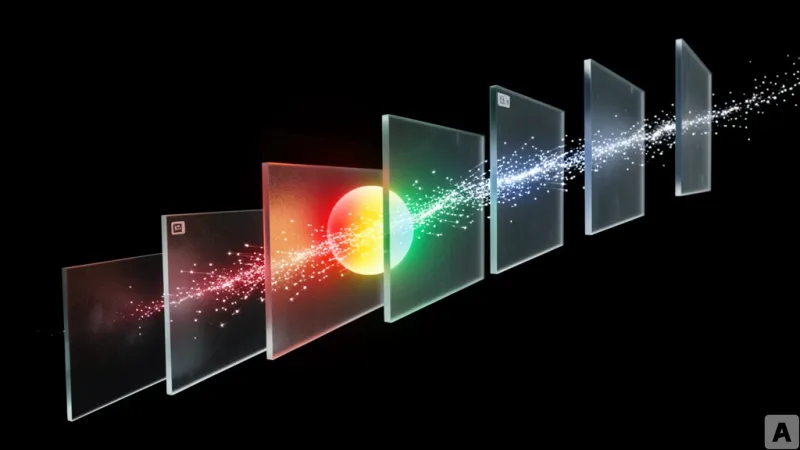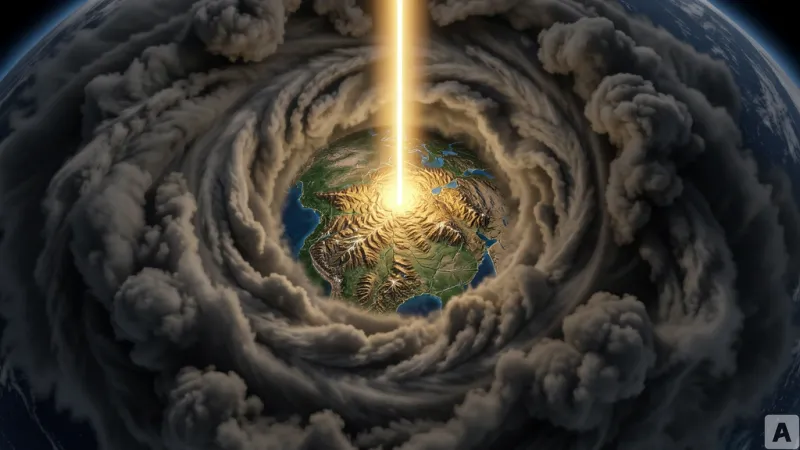
A meteorologist sits before a wall of monitors, staring at a deluge of raw observation data streaming in from satellites, ocean buoys, and ground stations. The storm is already forming, but the forecast is not yet ready. The delay is not caused by the complexity of the prediction itself, but by a hidden wall of computation known as preprocessing. Before a single prediction can be made, the raw data must be cleaned, aligned, and formatted into a state the model can actually read. In the current state of the art, this preparation phase consumes half of the available computing resources, creating a dangerous time gap between the observation of a weather event and the delivery of a warning.
The Architecture of the Earth-2 Stack
NVIDIA is addressing this systemic inefficiency through Earth-2, an integrated suite of AI models, libraries, and frameworks designed to accelerate every stage of climate and weather prediction. The stack is engineered to handle the entire pipeline, from the initial ingestion of raw observation data to the generation of 15-day global forecasts and hyper-local storm warnings. A critical component of this ecosystem is Earth-2 Nowcasting, which utilizes generative AI to bridge the gap between coarse national forecasts and high-resolution local realities. By transforming national-level data into kilometer-scale resolution, the Nowcasting model can predict localized storms and hazardous weather events occurring within a 0 to 6 hour window in a matter of minutes.
Parallel to the nowcasting capabilities, NVIDIA has released the Earth-2 Global Data Assimilation model, now available via Hugging Face and Earth2Studio. This model is built on the HealDA architecture, a specialized structure designed specifically for the rigors of data assimilation. Developed through a collaboration between the National Oceanic and Atmospheric Administration (NOAA) and MITRE, a non-profit research organization, the model represents a significant departure from traditional supercomputing requirements. Unlike previous systems that required massive clusters, Earth-2 Global Data Assimilation can operate on a single GPU. It is capable of generating a comprehensive global atmospheric snapshot—incorporating critical variables such as temperature, wind speed, humidity, and atmospheric pressure—within minutes.
Breaking the Preprocessing Tax
To understand the impact of this shift, one must look at the compute tax imposed by traditional data assimilation. In systems used by organizations like the National Weather Service, approximately 50 percent of the total computational workload is dedicated solely to the preprocessing stage. This means that for every hour of supercomputing time spent calculating where a hurricane will land, an equal hour is wasted simply preparing the data for the calculation. This bottleneck creates a ceiling on how often a model can be updated and how much data it can realistically ingest without delaying the final output.
Earth-2 Global Data Assimilation effectively collapses this bottleneck by moving the process from a distributed supercomputer environment to a single GPU. This is not merely a marginal speed increase but a fundamental change in resource allocation. When the preprocessing overhead is reduced from 50 percent of a cluster to a fraction of a single accelerator, the saved computational headroom can be reinvested into the model's resolution. This is where the synergy between data assimilation and nowcasting becomes evident. The efficiency gained in the preprocessing stage allows for the real-time integration of more data points, which directly feeds the generative AI's ability to produce kilometer-scale precision.
The result is a causal chain where lower latency in data preparation leads to higher fidelity in local predictions. While traditional national forecasts provide a macroscopic view of weather patterns, the ability to process data on a single GPU allows the model to capture micro-climatic shifts and localized risks that were previously invisible or too computationally expensive to track in real time. The industry is witnessing a transition where the primary challenge is no longer the raw power of numerical analysis, but the efficiency of generative inference.
Weather prediction is shifting from a paradigm of massive numerical simulation to one of accelerated generative inference on single-device hardware.