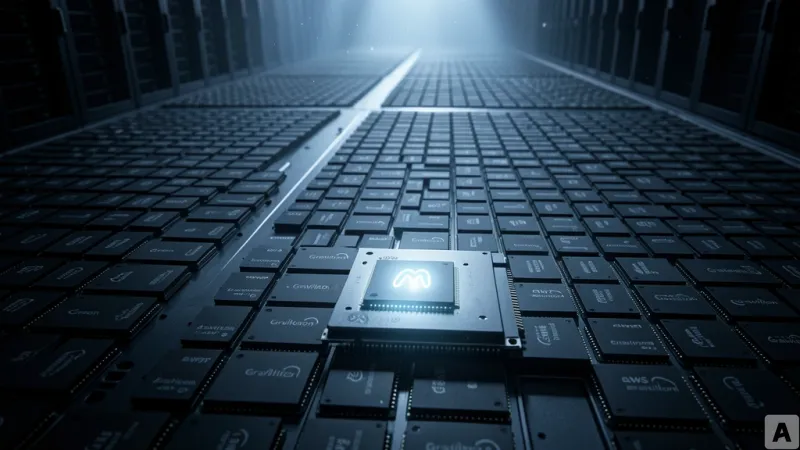
The image of thousands of GPUs packed into a single, climate-controlled facility is the standard blueprint for modern AI development, but it is a model rapidly hitting a wall. As power grid constraints tighten and real estate costs for massive data centers skyrocket, the industry is facing a physical limit to how much compute can be concentrated in one place. Developers are now shifting their focus toward a more fluid architecture, one that treats geographically separated data centers not as isolated silos, but as a single, unified supercomputer capable of training massive models without the need for a centralized physical footprint.
The Mechanics of Decoupled DiLoCo
Google recently unveiled Decoupled DiLoCo, a distributed training framework designed to bypass the traditional constraints of physical proximity. In a recent demonstration, the research team successfully trained a 12 billion parameter model by distributing the workload across four distinct geographic regions within the United States. The most striking aspect of this implementation is the network requirement; the system operated effectively on bandwidth between 2 and 5 Gbps. This range is significant because it does not require the installation of specialized, ultra-high-speed dedicated fiber lines, but instead leverages existing inter-data center internet connectivity.
By decoupling the synchronization process, the system effectively eliminates the traditional bottleneck where faster nodes are forced to idle while waiting for slower, distant nodes to complete their computations. This architectural shift resulted in a 20x increase in training speed compared to conventional synchronous distributed training methods. The core of this efficiency lies in the decoupling of the optimization step from the local gradient computation, allowing each cluster to progress through its local training iterations with minimal cross-region communication overhead. For teams looking to implement this, the underlying research and methodology can be explored in the official arXiv paper.
Breaking the Hardware Homogeneity Barrier
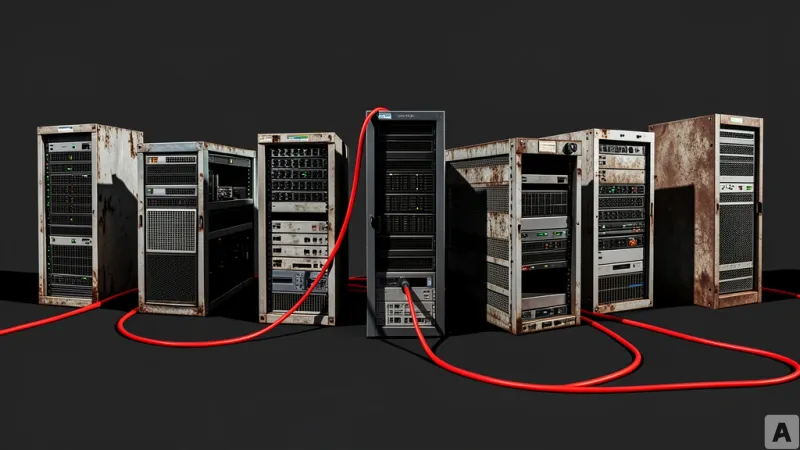
Historically, the golden rule of large-scale AI training has been strict hardware homogeneity. Mixing different generations of chips—such as pairing older TPU v5p units with the newer TPU v6e—was considered a recipe for failure, as the entire training loop would be throttled by the slowest piece of hardware in the cluster. Decoupled DiLoCo fundamentally changes this dynamic by allowing for heterogeneous hardware integration. Because the system no longer relies on tight, lock-step synchronization, it can accommodate varying compute speeds across different nodes without dragging down the global performance of the model.
This approach effectively extends the lifecycle of legacy hardware. Instead of decommissioning older chips that no longer meet the performance requirements of a primary cluster, developers can integrate them into a broader, distributed training pool. This strategy mitigates the logistical challenges of hardware procurement, where supply chain delays often prevent new chips from being deployed uniformly across all regions. By treating compute resources as a fluid, aggregate pool rather than a rigid, uniform stack, organizations can maximize their existing infrastructure investments while simultaneously scaling their total training capacity.
The Future of Resilient AI Infrastructure
This shift toward geographically agnostic training represents a move away from the fragility of centralized mega-centers. By tapping into underutilized compute resources scattered across different regions, developers can build AI pipelines that are not only more efficient but also more resilient to local power outages or hardware failures. As the industry moves toward this decentralized model, the physical location of a GPU will matter significantly less than its ability to participate in a distributed, asynchronous training loop. The future of AI infrastructure lies in this ability to stitch together disparate, heterogeneous resources into a cohesive, high-performance whole, effectively turning the global internet into a massive, distributed training laboratory.