For years, the interaction between a human and an AI has followed a rigid, synchronous rhythm. You type a prompt, you watch a cursor blink, and you wait for a response. Even the most advanced LLMs have remained fundamentally reactive, existing as sophisticated mirrors that only reflect the intent provided in the immediate session. If you close your laptop or lock your phone, the cognitive process stops. The AI does not work while you sleep; it does not organize your life while you are away from the screen. It is a tool that requires constant supervision and manual triggering.
The Scale and Rollout of Gemini 3.5
Google is attempting to break this synchronous cycle with the introduction of Gemini Spark, an active AI agent powered by the Gemini 3.5 model. This launch comes at a moment of massive scaling for the ecosystem. Gemini's monthly active user base has surged from 400 million last year to over 900 million today, extending its reach across 230 countries and supporting more than 70 languages. This vast user base provides the necessary feedback loop to refine agentic behavior at a scale few other companies can match, turning millions of real-world interactions into training data for reliability.
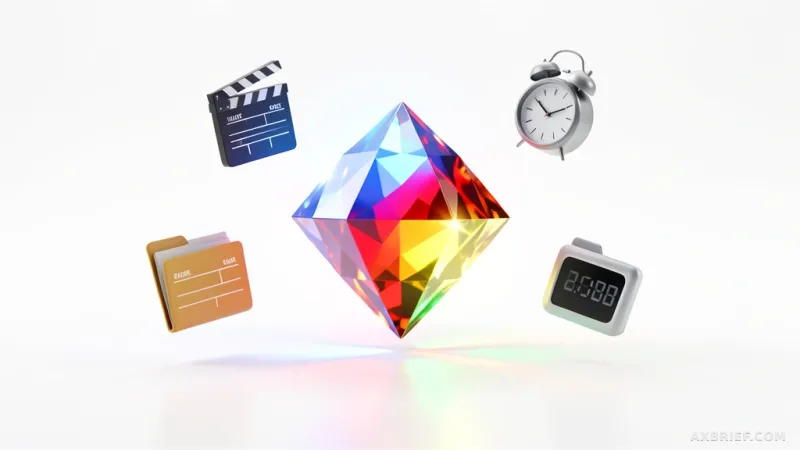
The deployment of these new capabilities is being handled through a tiered strategy based on subscription levels and geography. Gemini Omni, the multimodal engine capable of synthesizing text, images, and video into high-quality cinematic output, is rolling out starting today for Google AI Plus, Pro, and Ultra subscribers. Simultaneously, the Daily Brief—a personalized summary service that analyzes Gmail and Calendar data to suggest daily priorities—is launching first in the United States for all AI subscribers. By gating these high-compute features behind paid tiers, Google is stabilizing the infrastructure before a wider enterprise push.
Gemini Spark follows a more cautious release trajectory due to its autonomous nature. The agent is currently being deployed to a select group of trusted testers this week, with a beta version arriving for Ultra subscribers in the United States next week. Because Spark is designed to operate within the Google Workspace environment and perform tasks independently, this phased approach allows Google to monitor how the agent handles complex, multi-step workflows without human oversight. For those on the desktop, the macOS app is available for download today, though the more advanced Spark-powered local file manipulation and sophisticated voice-to-draft conversion features are slated for a late summer release.
From Chatbots to the Antigravity Harness
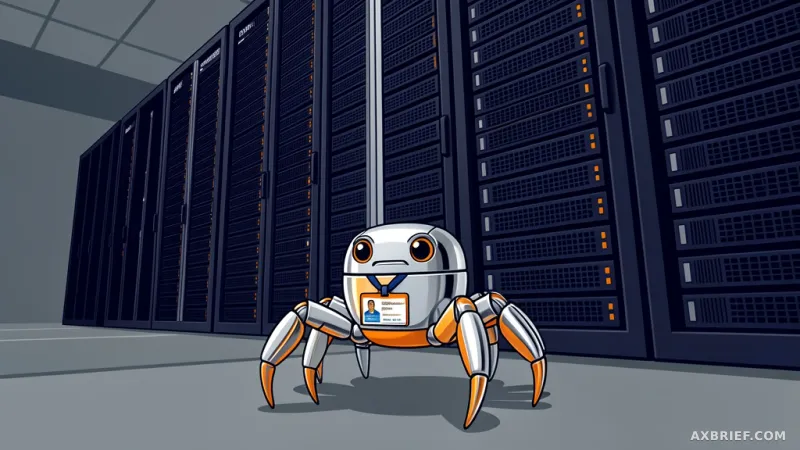
The fundamental shift in Gemini Spark is not about the quality of the prose it generates, but where the execution happens. Traditional AI assistants are client-dependent; they live and die by the active session on your device. Spark, however, is built on the Antigravity harness, an execution framework that shifts the agent's primary operational logic to the cloud. This means the agent is no longer tethered to the state of the user's hardware. You can close your laptop or lock your smartphone, and the task continues to execute on the server side. The session is maintained in the cloud, transforming the AI from a chat interface into a background process.
To make this autonomy useful, Google is implementing the Model Context Protocol (MCP). In the past, integrating an AI with external software required building bespoke API connectors for every single application, a fragmented process that limited the agent's reach. MCP standardizes how the model accesses external data and tools. Google has already initiated MCP integrations with Canva, OpenTable, and Instacart, allowing the agent to move beyond reading information to actually executing actions within those services. This protocol-based approach means that any application adhering to the MCP standard can be instantly absorbed into the Gemini ecosystem, rapidly expanding the agent's capability without requiring manual plugin development for every new tool.
This architectural evolution leads to what is being termed a zero-touch workflow. In a standard AI interaction, the user is the project manager, constantly checking in and prompting the next step. In a zero-touch environment, the user sets a high-level goal—such as planning a business trip and coordinating with three different stakeholders—and the agent handles the asynchronous execution. It checks calendars, drafts emails, and reserves venues in the background, reporting back only when the goal is achieved or a critical decision is required. To prevent the risks associated with full autonomy, Google has integrated a human-in-the-loop safety mechanism. Critical actions, such as processing payments or sending external emails to new contacts, require a final manual approval, ensuring that the user retains ultimate control over high-stakes outcomes.
Neural Expressive and the End of the Text Box
While the backend is shifting toward autonomy, the frontend is moving toward sensory integration. Google is introducing Neural Expressive, a design language that replaces the static text-box experience with a system of haptic feedback, fluid animations, and dynamic typography. The goal is to make the AI's state perceptible. Instead of wondering if the AI is thinking or stuck, the user feels and sees the cognitive rhythm of the model through the interface. This transforms the interaction from a series of commands into a synchronized collaboration.
This integration is most evident in the evolution of Gemini Live. Previously, users had to switch between a text mode and a voice mode, often losing the nuance of the conversation during the transition. The new interface allows for seamless modality switching. A user can start by typing, transition into a spoken conversation, and then return to text without any break in context. The redesigned microphone system is specifically tuned to human speech patterns, allowing users to tap the screen to add thoughts or interrupt the AI in a way that mimics natural human dialogue rather than a rigid turn-based system.
Furthermore, the way Gemini 3.5 delivers information has evolved from linear text to multi-dimensional responses. Instead of a long list of bullet points, the model now generates responses that combine interactive timelines, narrated video clips, and dynamic graphics. This shift recognizes that cognitive load is reduced when information is presented visually and spatially rather than sequentially. On macOS, this is further refined by a system-level audio processor that strips out filler words and disfluencies from the user's speech, converting raw spoken thoughts into polished, formatted drafts based on the on-screen context.
As the roadmap progresses, Google intends to extend this control to the local browser. By allowing the agent to interact directly with web interfaces, Gemini Spark will be able to navigate legacy systems that lack official APIs, effectively treating the entire web as a programmable interface. Combined with the planned introduction of hierarchical sub-agents—where a main agent delegates specialized tasks to smaller, expert models—the system is moving toward becoming a virtual operating system. The AI is no longer just an app you open; it is the layer through which you interact with all your other apps.
This transition from a reactive tool to an active agent marks the end of the prompt-engineering era and the beginning of the goal-setting era. The value is no longer in how well you can phrase a question, but in how effectively you can define a desired outcome.