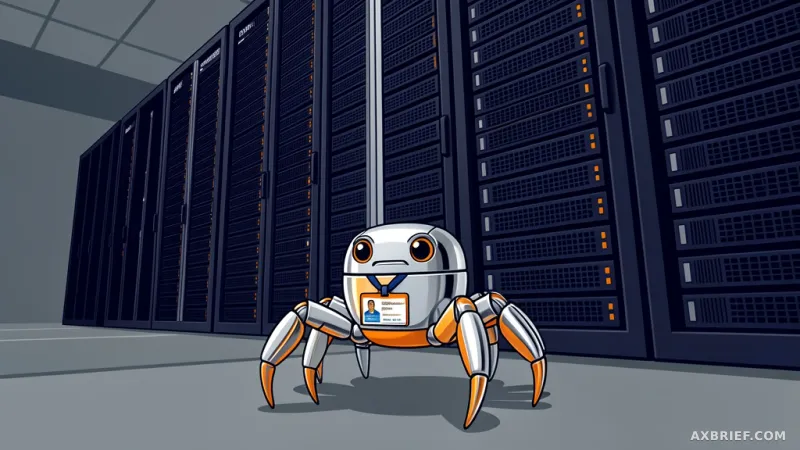

The atmosphere at Google headquarters in Mountain View is electric. Developers from across the globe are huddled around massive screens, watching a live demonstration of Gemini Omni. On screen, the AI is not merely processing a text prompt or a static image; it is consuming a video stream, generating new content from it, and editing that content through a fluid, conversational dialogue in real time. When the demo shifts to the Universal Cart, showing the AI autonomously navigating the complexities of a shopping journey to complete a purchase, the room shifts. This is no longer about a chatbot that provides answers. It is about a system that executes tasks.
This moment marks a fundamental pivot in Google's strategy. For years, the industry has treated AI as a sophisticated tool—a digital encyclopedia that can summarize or synthesize. But with the revelations at Google I/O 2026, the company has declared a full transition toward the agentic era. The goal is no longer just the refinement of intelligence, but the mastery of action. Google is moving the needle from providing information to completing objectives, effectively signaling that the era of the passive assistant is over.
The Architecture of Action and the 100 Dollar Tier
The new ecosystem is anchored by two distinct pillars: Gemini Omni and Gemini 3.5. Gemini Omni is designed as the creative engine, capable of generating and editing content across all modalities, including video, through a bidirectional conversational interface. By enhancing its understanding of video input, Google has expanded the model's perception of the physical world, allowing for a level of multimodality that makes the AI feel aware of its surroundings. In contrast, Gemini 3.5 is the execution engine. It is a frontier model specifically engineered to combine high-level reasoning with the ability to take action in digital environments. This strategic split suggests that Google recognizes a divergence in user needs: one path leads toward creative synthesis, while the other leads toward autonomous task completion.
Supporting this computational leap is a drastic shift in monetization. Google has introduced the AI Ultra plan, a premium subscription priced at 100 dollars per month. This price point is significantly higher than previous AI Plus or Pro tiers, reflecting the immense compute costs associated with agentic workflows. Unlike a standard LLM that generates a few paragraphs of text, an agent must plan, iterate, and interact with external APIs over extended periods. The AI Ultra plan is a structural response to these costs, creating a high-end segment for professional users who require the highest level of autonomy and reasoning power.
This intelligence is also breaking free from the smartphone screen. Google is launching Intelligent Eyewear this fall, a hardware form factor that integrates Gemini directly into the user's field of vision. These glasses allow users to receive real-time navigation, send messages, and capture photos without ever touching a phone. By embedding Gemini into the visual experience of daily life, Google is attempting to bypass the friction of the app-based interface. However, this move introduces a new variable: hardware adoption. By pairing high-cost software plans with dedicated hardware, Google is building a closed-loop ecosystem where the intelligence, the payment model, and the physical interface are tightly integrated.
From Static Tools to the Antigravity Framework
The real shift for developers lies in the transition from prompt engineering to agent orchestration. This is where Google Antigravity enters the picture. As an agent-first development platform, Antigravity allows developers to build experiences where the AI sets its own goals and executes them autonomously. While previous AI tools were limited to static tasks like drafting emails or summarizing documents, Antigravity provides the framework for agentic behavior. This is further integrated into the mobile experience via Android Halo, a service that embeds agent intelligence directly into the OS status bar. By placing the agent's state and current task at the highest level of the user interface, Google is treating the AI agent as a core system process rather than just another application.
To make these agents effective in the real world, Google is leveraging its most massive data asset: Street View. Through Project Genie, a virtual world simulation tool, Google has connected 20 years of actual street-level imagery to create a grounded virtual environment. Unlike other simulations that rely on synthetic data or limited 3D models, Project Genie uses real-world spatial data to teach AI agents about physical structures and geographic contexts. This allows agents to learn the laws of physics and the layout of the human world in a simulated environment before they are deployed into real-world applications, drastically reducing the cost of training and increasing the reliability of their actions.
As these agents generate more content and take more actions, the risk of digital deception grows. Google is addressing this through a system-level integration of SynthID and C2PA Content Credentials. By expanding the reach of digital watermarking and provenance tracking, Google is creating a technical boundary between human-generated data and AI-generated output. This is not just a safety feature; it is a necessary control mechanism for an agentic world. If an agent can autonomously create a video or a document, the system must be able to prove its origin to prevent the collapse of trust in digital media. The pipeline from generation to identification is now a unified system designed to block the misuse of synthetic media.
The Death of the Keyword and the Rise of the Collaborator
The most immediate impact for the average user is the transition from keyword search to AI Mode. For decades, searching the web was a manual process of combining specific words to find a relevant link. AI Mode replaces this with natural language queries, where the system understands intent and navigates the web on the user's behalf. Google Search is evolving from a directory of links into a network of information agents. These agents do not just point to a website; they explore, synthesize, and combine information to deliver a final solution. This shifts the cognitive burden of search from the human, who previously had to optimize their keywords, to the AI, which now optimizes the discovery process.
This evolution extends into the creative arts through Google Flow and Google Flow Music. These are no longer tools that follow a template; they are creative collaborators. A tool takes an input and provides an output, but a collaborator understands context and suggests alternatives. In these new workflows, the AI interacts with the creator in real time, refining the output based on a shared understanding of the project's goals. This represents a shift toward an agentic creative environment where the AI is an active participant in the artistic process rather than a passive instrument.
In the commercial sector, the Universal Cart is the first glimpse of agentic commerce. Shopping is moving away from a step-by-step process of searching, selecting, and checking out. The Universal Cart understands the user's intent and manages the entire purchase journey, including payment and delivery optimization. For developers, this means the focus is shifting from UI improvement to workflow design. The goal is no longer to make the checkout button easier to find, but to make the agent's execution of the purchase seamless.
This agentic approach is also accelerating scientific discovery through Co-Scientist and Gemini for Science. Co-Scientist utilizes a multi-agent system where different specialized agents collaborate to form hypotheses and verify them, mimicking the structure of a real research team. Gemini for Science focuses on expanding the scale and precision of data analysis, removing the bottlenecks of manual literature review. This infrastructure allows researchers to accelerate the cycle of hypothesis and verification, turning AI into a fundamental piece of research infrastructure.
Even in public safety, the results are concrete. WeatherNext AI, working with the National Hurricane Center, successfully predicted the landfall timing and location of Hurricane Melissa in Jamaica. Unlike traditional numerical models that often struggle with precision, the agentic workflow analyzed real-time weather data alongside historical patterns to provide a high-accuracy forecast. This proves that when domain-specific data is paired with agentic execution, AI can move beyond text generation and into the realm of managing real-world risks.
The transition from intelligence to action is now complete. By integrating Gemini 3.5 into the OS, the hardware, and the very way we search the internet, Google is redefining the relationship between humans and computers.