For decades, the gold standard of industrial safety has been the manual walk-through. A technician, equipped with a handheld thermal camera, traverses the labyrinth of a power plant or a manufacturing floor, pausing at critical junctions to scan for heat signatures that signal impending failure. It is a process defined by intermittent sampling and human subjectivity, where a single missed hot spot or a slight miscalculation in temperature can lead to catastrophic downtime or life-threatening accidents. This tension between the need for absolute oversight and the physical limitations of human inspection has created a critical vulnerability in the global energy and manufacturing infrastructure.
The Convergence of Thermal Intelligence and Robotics at STK 2026
From June 10 to 12, the 15th Smart Tech Korea 2026 (STK 2026) Robotech Show at COEX in Seoul serves as the staging ground for a fundamental shift in this paradigm. MDS Tech, the domestic distributor for FLIR, is unveiling a suite of industrial safety and smart automation solutions that effectively merge the eyes of thermal sensing with the body of autonomous robotics. This is not merely a hardware demonstration but a presentation of a fully unmanned inspection ecosystem designed for the most demanding environments in manufacturing, plant operations, and energy production.
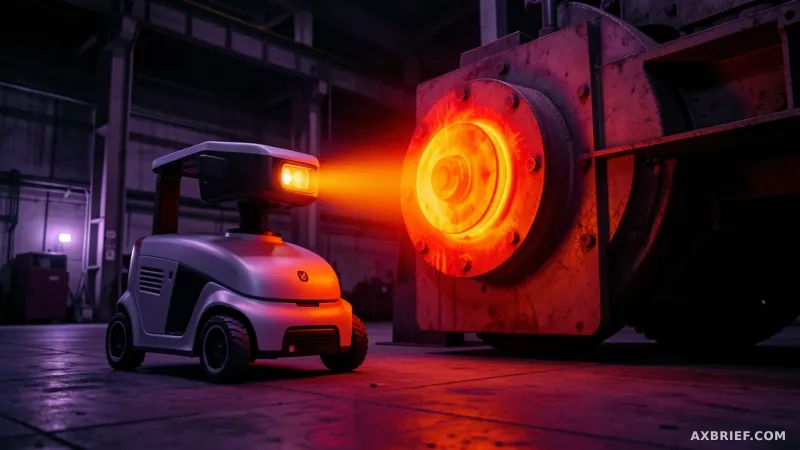
As labor shortages intensify and the cost of safety failures rises, the demand for unmanned automation has surged. MDS Tech is addressing this by integrating FLIR's advanced infrared thermal technology into Autonomous Mobile Robots (AMRs) and drones. While traditional fixed thermal cameras are limited to a static field of view, these mobile platforms allow for active monitoring across vast industrial zones. The solution focuses on the organic link between non-contact temperature monitoring and AI-driven automation, ensuring that anomalies are detected in real-time without requiring a human to enter high-risk zones.
At the STK 2026 exhibition, the focus remains on the practical application of these technologies. Visitors can observe how thermal data is fed into AI systems to facilitate early anomaly detection and predictive maintenance. By identifying the precursors to failure—such as a bearing overheating or an electrical overload—the system allows operators to determine the precise moment for maintenance, thereby optimizing the lifecycle of the equipment and ensuring the safety of the facility.
From Passive Monitoring to Closed-Loop AI Control
The true technical leap here is not the mobility of the camera, but the transition from data collection to autonomous decision-making. In a traditional setup, a camera records a temperature, and a human interprets the image. The MDS Tech and FLIR integration replaces this linear process with a closed-loop control mechanism. When a thermal sensor is integrated into a robot's hardware interface, it creates an automated loop where the robot follows a predetermined path, streaming thermal data in real-time to an AI analysis module.
This process begins with the sensor detecting infrared energy and generating a thermal map. The AI then compares this real-time map against a known baseline of normal temperature profiles for that specific piece of equipment. When the system identifies a heat point that exceeds a predefined threshold or detects a pattern that deviates from the norm, it does not simply log the event. It triggers a response. The system can automatically modify the robot's path, commanding the AMR or drone to move closer to the anomaly for a high-resolution re-inspection, all while simultaneously alerting the facility manager.
From a technical implementation standpoint, this relies on the streaming of data via sensor APIs and the configuration of triggers within an AI inference engine. The thermal data is converted into structured tensors, which are then processed by the AI model to track pixel-level temperature changes. This allows the system to distinguish between a benign temperature rise due to ambient conditions and a genuine defect-driven heat signature. By removing human error from the detection phase, the system transforms the inspection process into a high-precision data pipeline where quantitative time-series data, rather than qualitative human reports, drives the maintenance workflow.
The Paradigm Shift Toward Predictive Maintenance
This evolution marks the end of the reactive maintenance era. For years, the industry has operated on a post-incident basis: a component fails, the system shuts down, and technicians repair the damage. This reactive approach results in massive operational losses and unpredictable downtime. Even scheduled preventive maintenance is often inefficient, as parts are replaced based on time intervals rather than actual condition, leading to wasted resources.
By shifting the subject of inspection from humans to robots, MDS Tech is enabling true Predictive Maintenance (PdM). Because AMRs and drones can perform comprehensive scans without the gaps inherent in human schedules, they eliminate blind spots and ensure data continuity. This constant stream of high-resolution thermal data allows the AI to detect microscopic temperature fluctuations that are invisible to the human eye. These subtle changes are often the first indicators of component wear or electrical stress, allowing the system to predict a failure before it occurs.
This redesign of the data pipeline fundamentally changes how industrial facilities are managed. Instead of relying on a technician's logbook, the maintenance trigger is now a digital event. When a specific thermal pattern is observed, the system can automatically generate a maintenance ticket or adjust the load on the equipment to prevent a total shutdown. The role of the human shifts from the one who finds the defect to the one who verifies the AI's prediction and executes the precision repair.
Scaling Unmanned Safety Across High-Risk Industries
The urgency for this transition is most acute in the energy and plant sectors, where the scale of a potential accident can be catastrophic. In these high-risk environments, the ability to monitor hazardous areas without exposing personnel to extreme heat or toxic atmospheres is a strategic necessity. The integration of FLIR thermal solutions into mobile platforms transforms safety from a periodic check into a constant state of vigilance.
In practice, this means that a large-scale power plant can be scanned entirely and autonomously every hour, rather than once a month. The resulting data provides an objective basis for setting maintenance cycles, moving away from guesswork and toward data-driven reliability. As these systems are deployed, the reduction in human error—such as missing a critical valve or misreading a gauge—directly translates to a reduction in industrial accidents.
For the South Korean smart factory market, MDS Tech acts as the critical bridge, adapting global thermal standards to the specific constraints of local manufacturing environments. By optimizing robot paths and AI thresholds to fit the unique layouts of domestic plants, they are establishing a new standard for industrial safety. The result is a system where the physical risks of the factory floor are mitigated by the intelligence of the cloud and the mobility of the robot.
This convergence of infrared sensing and autonomous navigation suggests a future where the industrial floor is a self-diagnosing organism, capable of sensing its own fever and calling for a cure before the system ever breaks.