Astronomers are currently facing a crisis of abundance. For decades, the primary bottleneck in space exploration was the scarcity of data—waiting for a clear night, a stable orbit, or a long-exposure capture. Today, that bottleneck has inverted. As the James Webb Space Telescope (JWST) continues to stream high-resolution infrared imagery back to Earth, the challenge is no longer finding the light, but making sense of the deluge of information contained within it. The transition from manual observation to automated data processing is no longer a luxury; it is the only way to prevent the most powerful telescope in history from becoming a digital archive that no one can actually read.
The Terabyte Flood of 2022
When the first data packets from the JWST arrived in 2022, the astronomical community was met with a scale of information that fundamentally shifted the research landscape. Brant Robertson, a professor at the University of California, Santa Cruz, and his team were among the first to grapple with this influx. The data arrived in terabytes, revealing a universe far more crowded than previous models had predicted. Robertson noted that the sheer density of galaxies in these early deep-field images was staggering, with objects appearing in every direction. To manage this, his team released a series of public datasets, most recently timed for Spring Astronomy Day, which allow researchers to probe the early universe with unprecedented depth. These datasets contain hundreds of thousands of galaxies, some dating back over 13 billion years, effectively capturing light from the dawn of time.
From Manual Interpretation to Algorithmic Decoding
Historically, the workflow of an astronomer was linear: observe, record, and interpret. A researcher would look at a plate or a digital image, identify features, and categorize them based on established physical laws. However, the JWST data has rendered this human-centric approach obsolete. The complexity and volume of the images mean that what once took years of manual labor must now be processed in a matter of days. The role of the scientist has shifted from that of a map-reader to a system architect. In this new paradigm, the computer does not merely assist in the analysis; it acts as the primary filter. Without computational models to classify the noise and identify the signals within the terabytes of data, the raw observations remain effectively invisible to the human eye. The telescope provides the raw material, but the code provides the map.
Bridging the Observational Gap with Computational Models
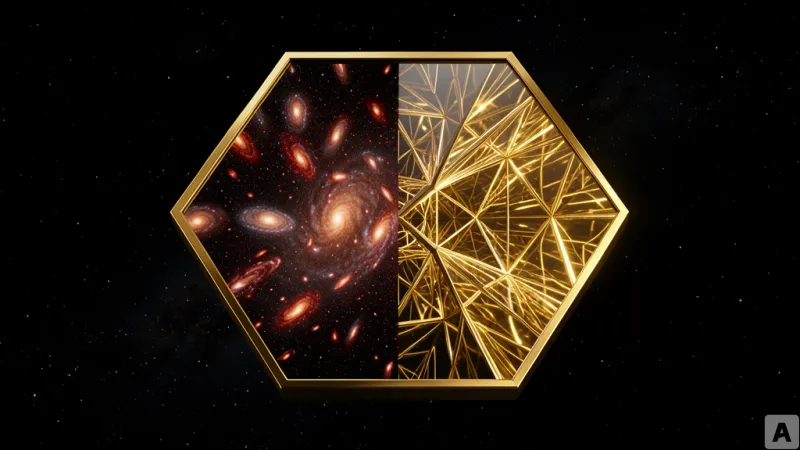
Just as Nicolaus Copernicus once used mathematical models to resolve the inconsistencies between planetary observations and the prevailing geocentric theory, modern astrophysicists are using computational models to reconcile the "richness" of JWST data with our current understanding of galaxy formation. The JWST is the most powerful infrared observatory ever launched, capable of detecting light that has traveled for over 13 billion years. Yet, this power creates a paradox: the more we see, the more the data conflicts with simplistic, manual interpretations. By applying complex computational frameworks, researchers can simulate the formation of the early universe and test those simulations against the JWST deep-field images. This process allows scientists to account for the "observational limits"—the physical constraints of the telescope itself—and extract meaningful physics from the overwhelming density of the images. The goal is to ensure that the data is not just stored, but understood.
The New Era of Computational Astrophysics
For the modern researcher, the ability to write code is now as critical as the ability to operate a telescope. The gap between the rate at which the JWST collects data and the rate at which human beings can analyze it is widening, forcing a permanent shift in how science is conducted. Robertson’s work underscores a reality that is becoming standard across the hard sciences: the most significant discoveries are no longer found by looking through a lens, but by interrogating the massive, complex datasets that the lens leaves behind. The future of understanding the early universe lies in the efficiency of the algorithms that turn raw pixels into cosmological history.