This week at Hannover Messe 2026 in Hannover, you can watch industrial AI move from slide decks to shop-floor behavior, as NVIDIA and partners demonstrate digital twins that don’t just predict outcomes but actively guide simulation, operations, and robot testing.
Section 1: April 20–24, NVIDIA and partners demo factory-scale AI
NVIDIA and its partners will demonstrate AI-driven manufacturing at Hannover Messe 2026, running April 20–24 in Germany’s Hannover. The pitch is that the building blocks of modern industrial AI—accelerated computing, AI physics, agents, and robotics—are no longer theoretical components. They are presented as a working stack that can be experienced on-site.
The demo scope spans agent-based design and engineering, real-time simulation, vision AI agents, and humanoid robots operating in a factory environment. In other words, the event is framed around the full pipeline: from how engineers explore designs, to how systems simulate and validate behavior, to how perception-driven agents and robots execute tasks in realistic settings.
Section 2: From “AI adoption” to “acceleration, physics, agents, and infrastructure”
The narrative shift is explicit. In earlier industrial AI conversations, the key question was whether a company should adopt AI at all. At Hannover Messe 2026, the tension moves to a different problem: how quickly can AI be deployed, and at what scale can it run across real factories and supply chains?
NVIDIA’s framing starts with a premise that many industrial teams already feel in practice: running AI across large manufacturing and logistics environments requires security, scalability, and infrastructure designed for industrial scale. From there, NVIDIA pushes a European “sovereign AI” platform approach, emphasizing a single foundation intended to accelerate AI and robotics across European industry.
Industrial AI Cloud is presented as one of the largest European AI factory initiatives built in Germany, using NVIDIA AI infrastructure deployed by Deutsche Telekom. The platform is positioned as a blueprint for providing secure, sovereign foundations to accelerate AI and robotics across European industry.
On the show floor, partners including Agile Robots, SAP, Siemens, PhysicsX, and Wandelbots describe how they run AI-accelerated workloads on top of Industrial AI Cloud. Agile Robots and others outline use cases that range from real-time simulation grounded in AI physics to factory-scale digital twins and software-defined robotics.
EDAG, an independent engineering services company, adds another layer by announcing that it will run its industrial metaverse platform, metys, on Industrial AI Cloud. The message is that sovereign AI infrastructure isn’t limited to one vertical; it is meant to extend into automotive and industrial engineering, where simulation and design workflows can become tightly coupled to AI-driven infrastructure.
Section 1: Dell, IBM, Lenovo, and PNY bring NVIDIA-accelerated systems from edge to data center
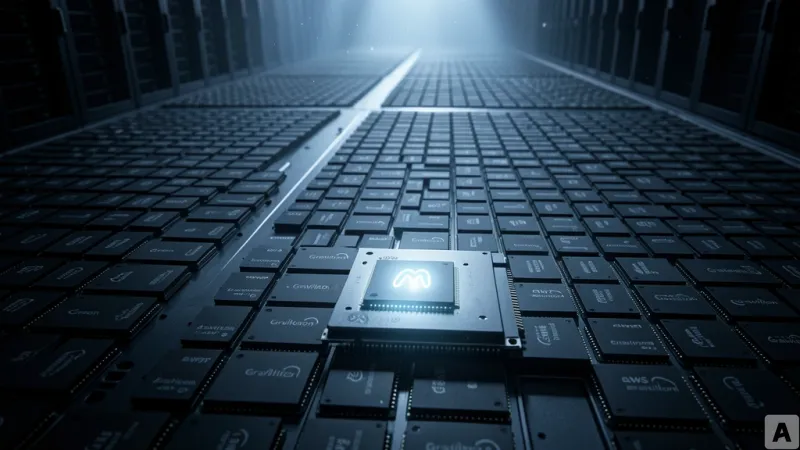
While Industrial AI Cloud anchors the platform story, the event also makes the infrastructure visible. With demand for AI infrastructure rising, Dell Technologies, IBM, Lenovo, and PNY are showcasing NVIDIA-accelerated systems across the stack.
The display range runs from edge environments to data centers. The underlying promise is consistent: manufacturers can run faster simulations, and then develop and deploy computer vision, AI agents, and robotics at production time—without having to redesign the entire compute strategy for each new workload.
Section 2: Design and simulation software reorganizes around AI physics and agent workflows
As manufacturing systems become more complex, the software engineers rely on—design, simulation, and testing—also needs to change. Hannover Messe 2026 emphasizes a shift toward AI physics and agent-based AI workflows.
NVIDIA partners demonstrate how AI-accelerated design and simulation can unlock new possibilities. Cadence, Dassault Systèmes, Siemens, and Synopsys state that they are integrating NVIDIA CUDA-X, AI physics, NVIDIA Omniverse libraries, and NVIDIA Nemotron open models across their software portfolios.
The integration is described as enabling real-time, physics-based simulation, AI-driven design exploration, and agent-style workflows. The goal is not just faster computation; it is to support engineering decisions by turning simulation and exploration into an interactive process rather than a one-off batch job.
Section 1: Digital twins connect to process simulation, operations, and robot fleet testing
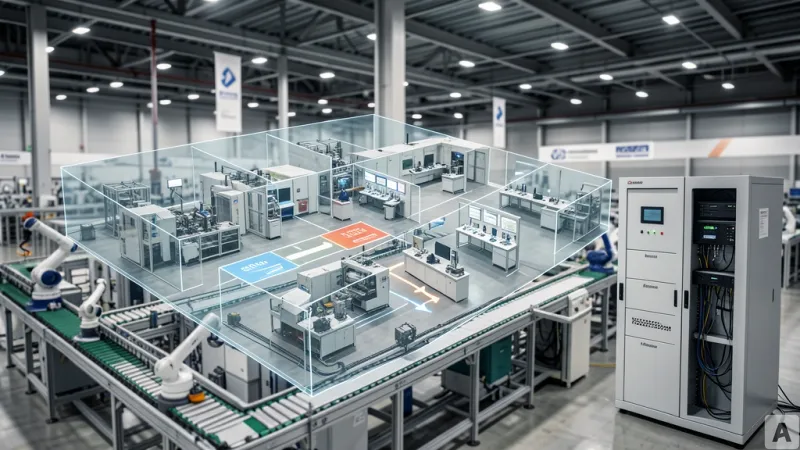
Factory-scale digital twins are positioned as the central bridge between engineering and execution. The event frames them as the key to opening process simulation, real-time operations, and robot fleet testing and orchestration.
In live demonstrations, teams build digital twins using Omniverse libraries and OpenUSD. The point is to let customers perform design work, stress testing, and continuous optimization—inside a shared simulation environment rather than scattered across disconnected tools.
ABB demonstrates an end-to-end integration approach by combining NVIDIA Omniverse libraries and Microsoft Azure cloud services into ABB Genix Industrial IoT and AI Suite. The demo emphasizes understanding asset performance across a broader context and accelerating root-cause analysis using AI agents.
Dassault Systèmes shows how a virtual twin experience can drive a future AI-driven factory, while Kongsberg Digital highlights its integration of NVIDIA Omniverse libraries into the Kognitwin platform to provide spatial intelligence across energy infrastructure.
Taken together, the combination is meant to bind digital twin models, operational data, and AI agents into a workflow where teams can test virtual scenarios before making physical changes, then optimize performance based on what the virtual environment reveals.
Section 2: Omniverse becomes the operational decision layer across cloud, simulation, and digital twins
The most concrete “so what” emerges when the event ties simulation and digital twins directly to operational decision-making.
Microsoft demonstrates integrating NVIDIA Omniverse libraries into Microsoft Fabric Real-Time Intelligence and IQ, describing the result as physically accurate real-time simulation. It also explains how the Azure Physical AI Toolchain, built on the NVIDIA Physical AI Data Factory Blueprint, accelerates production deployment of physical AI and autonomous robots.
Siemens, meanwhile, emphasizes integrating NVIDIA Omniverse libraries into Digital Twin Composer. The claim is that this enables multi-domain engineering and operational data to be assembled into a single digital twin that can be simulated.
The approach is presented as a way to help customers achieve throughput improvements and identify production issues before physical changes occur.
Wandelbots adds a practical path for turning real facilities into physically accurate digital simulations. It proposes combining the Wandelbots NOVA Platform with Omniverse libraries, including NVIDIA Omniverse NuRec, to create a route for digitalizing real-world environments.
In solutions like Gessmann’s GESSbot robot, the opportunity is described as accelerating commissioning and reducing the risks that come with deploying complex industrial setups.
This is where the event’s tension becomes visible: the shift is not only about better models, but about where the intelligence sits in the workflow. Developers can feel the change when tasks move from “fixed answers under fixed conditions” to systems that observe the situation and act through agent-driven behavior.
Hannover Messe highlights this with a vision AI agent built on the NVIDIA Metropolis library. The agent is said to combine Nemotron and the NVIDIA Cosmos open models so that, using existing camera infrastructure, it can merge multiple data streams and raise the bar for quality management, operational efficiency, and worker safety.
Invisible AI also announces that it is releasing a Vision Execution System, with the expectation that the way vision AI systems operate will be shown in the same on-site context.
The overall signal from the exhibition is that the competitive center of gravity has moved. It is less about “model competition” and more about the infrastructure and software stack that gets attached to real factory operations. Industrial companies, the event suggests, are aligning investment, M&A, and partnership strategies around sovereign AI cloud foundations and digital twin workflows—so the next wave of industrial AI looks less like a single breakthrough model and more like an operational platform that keeps getting deployed.