For years, the divide between writing a web application and programming a physical robot has been a chasm of frustration. A software engineer can spin up a cloud-based development environment in seconds, yet a robotics developer often spends days trapped in environment setup hell. This process involves fighting with specific Linux kernel versions, resolving conflicting ROS dependencies, and wrestling with proprietary SDKs that only work on a single, specific workstation. The physical world has always demanded a level of local configuration that feels archaic compared to the fluidity of modern software engineering.
OLO Robotics and the Shift to Web-Based Control
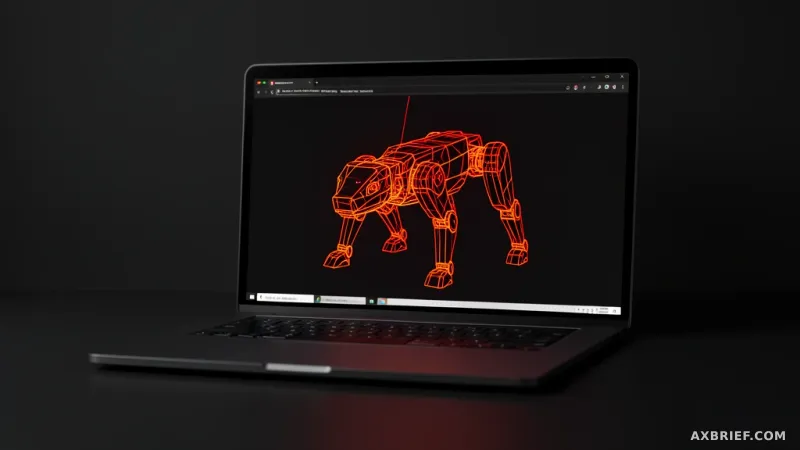
This friction is exactly what OLO Robotics, a startup based in Sheffield, UK, aims to eliminate. The company has officially completed its commercial launch, introducing a platform that migrates the entire robot development environment into the web browser. By removing the need for local OS installations and complex toolchain configurations, OLO Robotics allows developers to access and control hardware through a simple browser tab. This transition effectively treats robot hardware as a cloud resource, drastically reducing the time between writing a line of code and seeing a physical machine execute it.
To ensure this software has a physical footprint, OLO Robotics has secured strategic partnerships with three key industry players: Deep Robotics, inMotion Robotic, and Fiction Lab. Deep Robotics provides the core hardware manufacturing capabilities, while inMotion Robotic brings expertise in robot automation solutions, and Fiction Lab contributes applied robotics research. These partnerships create a comprehensive pipeline that spans from hardware production and distribution to high-level software deployment. By integrating these three entities, OLO Robotics ensures that its browser-based interface is not a theoretical exercise but a functional tool compatible with industrial-grade hardware.
The technical core of this launch is the abstraction of the development environment. In traditional robotics, the software is tightly coupled with the hardware, meaning the local machine must understand every physical nuance of the robot. OLO Robotics shifts this burden to the server side. The platform handles the hardware interface and low-level communication, presenting the developer with a standardized web interface. This allows a developer using Windows or macOS to design and deploy control logic without ever installing a single robotics-specific package on their own machine. The result is a development cycle that mirrors the agility of web services, where iterations happen in real-time rather than across weeks of firmware updates.
The Collision of Specialist Robotics and Mainstream Software
This shift represents more than just a change in tooling; it is a fundamental redistribution of power within the robotics ecosystem. For decades, the field has been the exclusive domain of specialist roboticists. These are engineers with deep expertise in kinematics, control theory, and low-level hardware communication. Because the barrier to entry was so high, the ability to innovate on robot behavior was locked behind a wall of specialized academic knowledge. If a company wanted to implement a new service logic for a robot, they had to rely entirely on a small group of specialists who could navigate the complex SDKs and shell environments.
OLO Robotics is effectively breaking this monopoly by opening the door to mainstream software teams. By abstracting the low-level complexity into a browser API, the platform allows generalist software engineers to focus on business logic and service implementation rather than the physics of the actuator. The tension here is palpable within the developer community. Some veteran roboticists argue that over-abstraction is dangerous, suggesting that ignoring the physical constraints of the hardware can lead to unpredictable or risky machine behavior. However, the prevailing sentiment among software teams is one of liberation. The ability to treat a robot as an API endpoint allows for a level of creativity and rapid prototyping that was previously impossible.
This democratization is accelerated by the partnership with Deep Robotics, inMotion Robotic, and Fiction Lab. Previously, hardware manufacturers provided closed ecosystems that forced developers into a specific, often rigid, workflow. Now, these manufacturers are opening their hardware to a standardized interface. The hardware is no longer the constraint; it is simply a resource that the software consumes. This transition from a shell-based control model to a browser-based API model marks a turning point where the speed of software innovation finally catches up to the capabilities of the hardware.
As the barrier to entry drops, the robotics ecosystem is poised for a surge of new applications. When the cost of experimentation is reduced from days of setup to a few clicks in a browser, the volume of iterations increases exponentially. We are moving toward a world where robot logic is developed with the same iterative, agile methodology used for mobile apps. The focus is shifting from how to make the robot move to what the robot should actually achieve for the end user. This shift in perspective is likely to trigger a wave of specialized robotics services that were previously too expensive or complex to develop.
OLO Robotics is positioning itself as the connective tissue between the physical machine and the modern developer. By removing the requirement for a dedicated workstation and a PhD in robotics to get a machine moving, they are inviting a massive influx of talent into the field. The integration of manufacturing and distribution through their three partners ensures that this accessibility scales beyond the lab and into actual commercial environments.
The era of the isolated robotics workstation is ending, replaced by a world where the browser is the primary interface for the physical world.