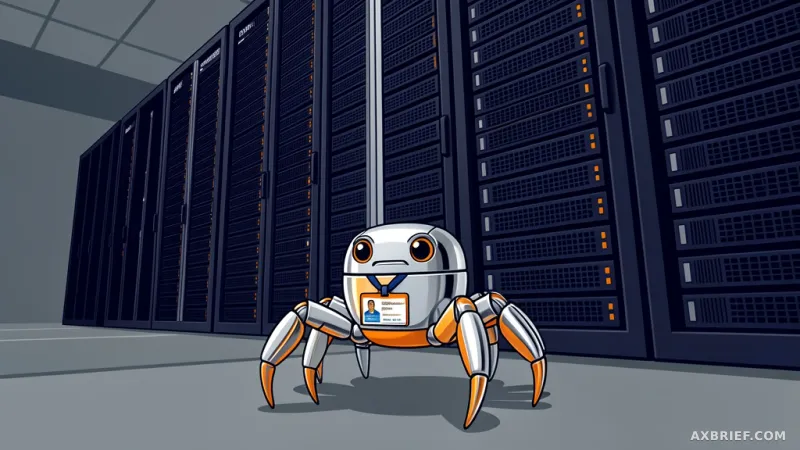

Imagine an ML engineer staring at a terminal where an AI coding agent is trapped in an infinite loop of failure. The agent writes a block of systems code, the compiler throws a descriptive, human-friendly error message, and the agent attempts to parse that prose to find the bug. Because the error message is written for a human—full of nuance, descriptive warnings, and shifting formats—the agent misinterprets a hint, applies a hallucinated fix, and triggers a new error. The developer is forced to step in, not to write the code, but to act as a translator between the compiler's English and the agent's logic. This friction is the current tax on AI-driven development: we are using agents to write code in languages designed for humans to debug.
The Architecture of Zero
Vercel Labs, the research arm of the frontend platform giant, is attempting to break this cycle by rethinking the system language from the ground up. They have introduced Zero, an experimental system programming language that occupies the same design space as C or Rust. Zero is not a high-level scripting language; it compiles to native executables, provides explicit memory control, and targets low-level environments. However, while C and Rust were designed to be read and written by humans, Zero is designed to be read, written, and deployed by AI agents.
To minimize the cognitive load on an AI, Vercel Labs has collapsed the fragmented toolchain typical of system languages into a single, unified CLI binary. Instead of forcing an agent to navigate a dozen different tools, Zero integrates every core function into one interface. The binary includes subcommands such as `zero check`, `zero run`, `zero build`, `zero graph`, `zero size`, `zero routes`, `zero skills`, `zero explain`, `zero fix`, and `zero doctor`. By consolidating these into a single entry point, the agent no longer needs to reason about which tool to call for a specific task; it simply interacts with the Zero binary to move from diagnosis to execution.
Getting started with the language is designed to be frictionless for both humans and agents. Installation is handled via a single command:
curl -sSL https://zero.build/install.sh | shTo initialize a new project, the following command creates the necessary scaffolding:
zero new cli <name>The resulting project structure is intentionally lean, consisting of a `zero.json` manifest file and a `src/` folder for source code. This separation of metadata from implementation allows an AI agent to quickly map the project's architecture and pinpoint exactly where a modification is required without scanning thousands of lines of irrelevant code. For developers who still wish to oversee the process, Vercel Labs provides a VS Code extension located in the `extensions/vscode/` directory. Detailed implementation details and the latest updates are available on the official GitHub Repo and the Project Page.
From Human Intuition to Machine Execution
The fundamental shift in Zero is the transition from unstructured text to structured data. In traditional compilers, an error message is a string of text. An AI agent must parse this string, infer the cause of the error, and guess a solution. If the compiler version updates and the wording of the error changes slightly, the agent's success rate plummets. Zero eliminates this fragility by treating diagnostics as data. When an agent runs `bash zero check --json`, the compiler does not return a sentence; it returns a JSON object.
This JSON output includes stable diagnostic codes, such as `NAM003`, and typed repair IDs. Instead of analyzing the nuance of a sentence, the agent identifies a fixed token. This transforms the debugging process from a task of linguistic inference into a task of data processing. The agent no longer asks, "What does this error mean?" but rather, "What action is associated with repair ID X?"
This machine-centric philosophy extends to the entire recovery loop. If an agent encounters a diagnostic code it doesn't recognize, it doesn't scrape a web forum or a PDF manual—which often leads to version mismatch and hallucinations. Instead, it calls `bash zero explain <diagnostic-code>` to get a precise, machine-readable explanation directly from the toolchain. When it comes time to apply a fix, the agent can run `bash zero fix --plan --json <file-or-package>`. This command provides a structured JSON plan for the repair, allowing the agent to execute a verified path to resolution rather than guessing the correct line of code to change.
To solve the problem of version drift, Zero introduces `zero skills`. In most environments, an agent's knowledge is frozen at the time of its training, while the compiler it uses is updated weekly. Zero embeds the current version's workflow guide directly into the CLI. By running `bash zero skills get zero --full`, the agent retrieves a comprehensive guide covering syntax, diagnostics, build processes, package management, and the specific editing loop for the installed version. This ensures the agent is always synchronized with the compiler, effectively eliminating the performance degradation that occurs when an AI relies on outdated documentation.
Explicit Capabilities and the World Parameter
Beyond the toolchain, Zero introduces a radical change to how system resources are accessed to ensure AI safety. In traditional languages, functions often have implicit access to the environment—they can print to the console, read a file, or make a network call without it being obvious from the function signature. For an autonomous AI agent, this is a security nightmare, as a misplaced line of code could accidentally delete a directory or leak data.
Zero solves this by introducing the `World` parameter and the concept of Capabilities. In Zero, any function that needs to interact with the outside world must explicitly declare its requirements in its signature:
zero
fn main(world: World) raises Error { ... }
In this model, the `World` parameter is the sole gateway to external resources. If a function does not receive a `World` object or a derived Capability object as an argument, it is physically impossible for that function to perform a side effect. This restriction is enforced at compile time, not runtime. This means an AI agent can look at a function signature and know with absolute certainty whether that function can touch the disk or the network. It creates a sandbox by design, allowing the agent to generate code with a mathematically guaranteed limit on its impact on the system.
Error handling is similarly explicit to prevent the "silent crashes" that often baffle AI agents. Zero uses the `check` keyword for fallible operations and the `raises` annotation to mark the path of error propagation in the signature. By making the failure paths visible in the type system, the agent doesn't have to guess where a program might crash; the evidence is written directly into the code's structure. This turns the act of error handling from a defensive guessing game into a structured implementation of the type system's requirements.
By aligning the language's syntax, its diagnostics, and its safety model with the way LLMs process information, Zero moves the AI agent from the role of a clumsy user of a tool to a native inhabitant of the development environment.